Zero-Day Expiry Mechanics and Dealer Flow
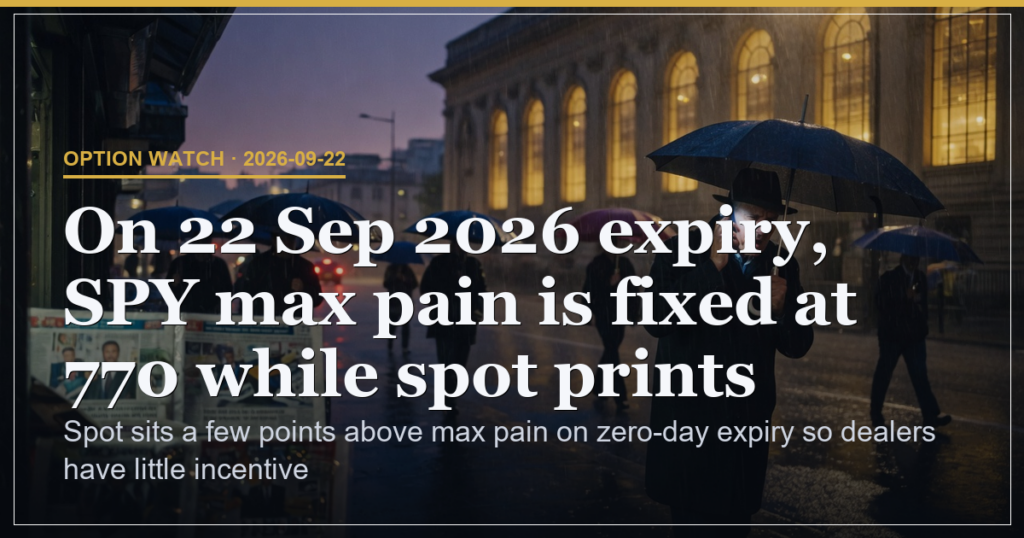
SPY options settle today with max pain fixed at 770 while spot trades at 773.21. This narrow gap leaves dealers with minimal incentive to hedge aggressively away from the pin. Building on yesterday’s view where max pain sat at 761 and forced selling pressure above that level, the update to 770 shows modest dealer repositioning overnight yet still points to a mechanical grind toward the strike into the close. As our Positioning Pressure read notes, concentrated call buying in tech has not translated into broad index defence because zero-day gamma decays rapidly and offers little room for re-hedging flows once positions roll off.
Positioning Walls and Gamma Exposure Profile
Strikes cluster most heavily between 750 and 800, creating a tight zone where positive gamma above 780 reverses quickly as expiries settle. Call dominance earlier in the week built walls that now flip negative on any drift lower, so dealers face forced delta sales into strength rather than supportive buying. The put side at 750 supplies only thin support once hedging volume thins, leaving price exposed to a pin at 770. This structure overrides the bullish options signals from mega-cap names because the overall book lacks the depth to defend levels materially above max pain.
| Strike Zone | Gamma Bias | Tactical Insight |
|---|---|---|
| 750-760 | Negative below pin | Thin put support means any break lower accelerates dealer selling and widens the gap to 770. |
| 770-780 | Neutral to positive | Spot hovers here so dealers shed calls into rallies, capping upside and reinforcing the pin. |
| 800+ | Heavy negative | Wall above offers no defence and increases unwind pressure if volume spikes. |
Tech Cluster Influence on Broader Tape
Bullish structures remain concentrated in eight mega-cap names where put-call ratios sit at 0.45 and show clear call-side dominance. AAPL, NVDA and TSLA lead the flow, yet this activity fails to lift the index because zero-day SPY mechanics dominate. Institutions appear to roll hedges into upside strikes in these names, supporting near-term stability above 770 in isolation, yet the absence of listed bearish prints across broader market names leaves the tape vulnerable once gamma hedging turns mechanical. High gamma in NVDA can amplify moves if spot holds, forcing dealer re-hedging into the close, but that same exposure reverses quickly on any weakness.
| Name | Flow Bias | Tactical Insight |
|---|---|---|
| AAPL | Call heavy | Institutions roll hedges into fresh upside strikes, supporting near-term stability above 770. |
| NVDA | Call heavy | High gamma exposure amplifies moves if spot holds and forces dealer re-hedging into the close. |
| TSLA | Call heavy | Concentrated buying adds local support yet cannot override SPY pin once expiries settle. |
Scenarios and Probability Weightings
Three outcomes capture the range of dealer responses into expiry. Pin at 770 carries 55 percent probability as spot sits only three points above max pain with little gamma to push away. Drift toward 775 holds 30 percent odds while any break below 765 sits at 15 percent given thin put walls and rapid gamma decay. These weights reflect the neutral regime and low VIX environment that limits follow-through in either direction.
Risk Parameters and Experience Guidance
Risk sits at 25 percent driven by zero-day expiry where small flows can produce outsized pinning effects once hedging volume dries. Beginners should avoid new positions after midday and focus on observing how max pain shifts relative to spot. Intermediate traders can scale into tight ranges around 770 with defined stops at 765 and 775. Advanced desks monitor gamma flips in real time across the 750-800 cluster and adjust delta hedges only when volume confirms a break. Every position must respect the mechanical cap on upside that dealers enforce to stay neutral.
Market Evolution Since Yesterday
The view has evolved modestly from yesterday’s assessment of forced selling above 761. Max pain has lifted to 770 and spot has eased only slightly, reducing the immediate unwind pressure yet preserving the core pin dynamic. Broader bullish options positioning in tech now sits against this tighter expiry structure, so any stabilisation relies on call interest exhausting rather than dealer defence. The net result remains a neutral close with limited room for directional conviction.
One-line bias: Spot remains pinned near max pain with dealers forced to neutralise rather than defend.
This is analysis, not financial advice. Always manage your risk.