Session Open and Range Dynamics
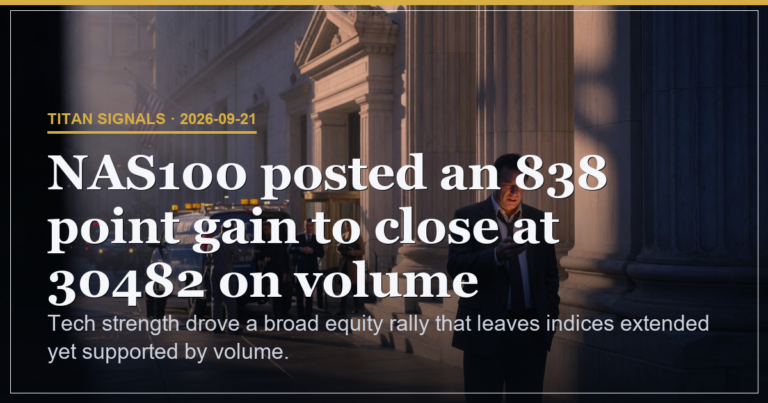
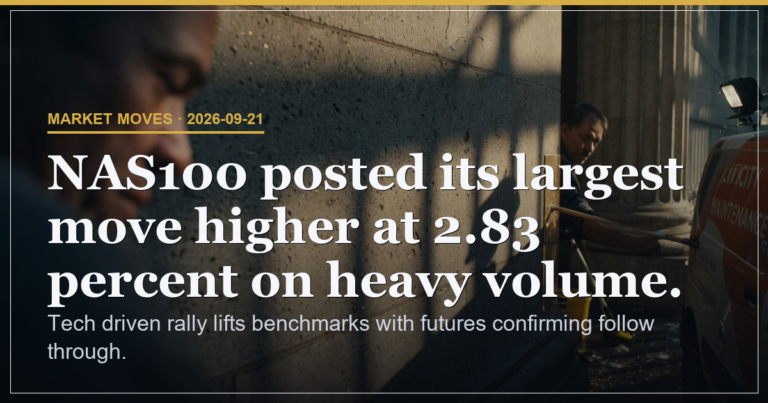
The S&P 500 opened near 7693 and traded up to 7779 before settling around 7765, confirming the bullish direction with Nasdaq futures leading at a 1.34 percent gain. Price holds comfortably above the session low near 7690, so any pullback into that zone sets up entries as long as volume supports the advance. Building on yesterday’s view from the Sentiment Shift pod, extreme retail bearishness at 53 percent now faces concentrated institutional call buying, which limits downside follow through once fear exhausts itself. As our Positioning Pressure read notes, this mismatch creates room for further upside provided the front end term structure stays calm under 15 on the VIX.
Options Flow and Institutional Bias
Call dominance remains the standout feature with the put call ratio at 0.59 and no listed bearish prints across mega cap names. This one sided activity clusters in seven growth leaders and points to real money accumulation rather than defensive positioning. The absence of put protection in names such as AAPL and NVDA suggests institutions are rolling hedges into fresh upside strikes, which supports near term stability on any dip. Cross referencing the Macro Pulse pod shows neutral rates and FX leaving risk exposure steady, so the call flow can extend without immediate macro pushback.
| Name | Flow Bias | Tactical Insight |
|---|---|---|
| AAPL | Call heavy | Institutions appear to be rolling hedges into fresh upside strikes, supporting near term stability on dips to the open. |
| NVDA | Call heavy | High gamma exposure can amplify moves if spot holds above key strikes into week end, favouring scale outs into strength. |
| TSLA | Call heavy | Retail follow through may extend the move yet leaves room for sharp reversal on any profit taking, so tight stops apply. |
| META | Call heavy | Positioning aligns with ad revenue momentum, offering a clean long bias on dips to the session open with one percent equity risk. |
Trade Execution and Position Sizing
The tactical plan centres on buying dips to the opening range with stops just below 7690. Size modest positions so that a full stop represents no more than two percent of equity, driven by the contained volatility reading under 15. Scale out half the position into strength toward 7780 and let the remainder run if volume confirms the breakout. This approach respects the one liner bias while keeping risk defined and allowing participation in the tech led advance without overexposure.
| Level | Role | Action |
|---|---|---|
| 7690 | Support | Entry zone on dip, stop placement just below for defined risk. |
| 7765 | Current | Monitor for continuation or partial profit taking on any stall. |
| 7780 | Resistance | First scale out target, reassess for extension if cleared on volume. |
Scenario Probabilities and Drivers
Bull case holds 55 percent probability with continued call flow and tech leadership extending the move. Base case sits at 30 percent for a tight range around current levels as expiry flows pin price. Bear case carries 15 percent odds if growth names stall and volume fades into the European open. The two percent risk allocation stays driven by the low volatility regime that keeps stop distances modest without widening exposure.
Experience Level Application
Beginners should focus on single entry at 7690 with the full two percent risk and exit at 7780 to build discipline. Intermediate traders can add a second scale in at 7765 if the first dip holds and cross check the options cluster for confirmation. Advanced participants may layer gamma aware adjustments around NVDA strikes while maintaining the overall two percent cap and monitoring basis edge for conviction shifts.
Session Close Bias
Buy dips to the opening range on the S&P 500 with one percent risk and scale out into strength toward 7780.
This is analysis, not financial advice. Always manage your risk.