Session Snapshot
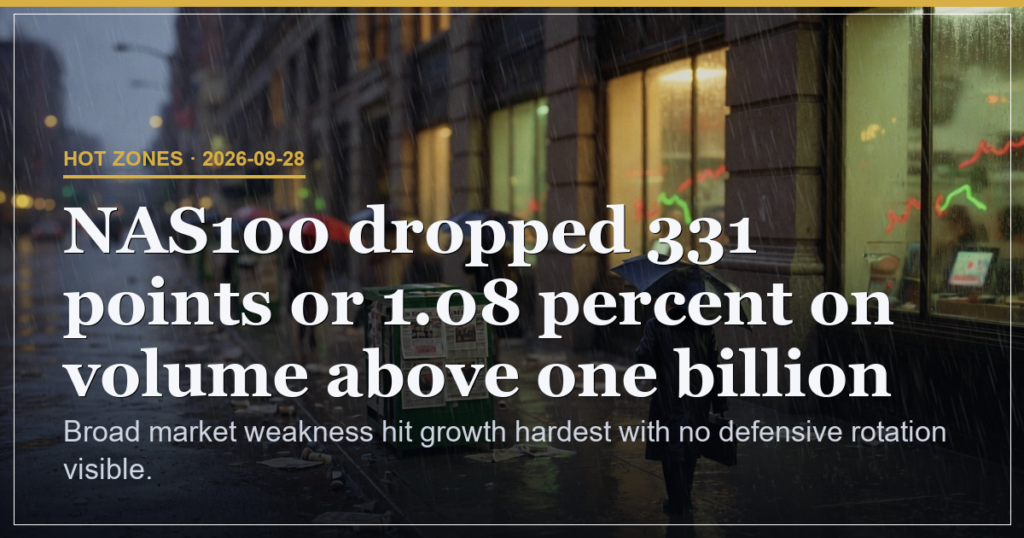
Major indices finished lower as technology names led the selloff and small caps offered no shelter. Nasdaq and QQQ both dropped more than one percent while the S&P eased 0.77 percent and the Russell 2000 closed in the red as well. Volume on the Nasdaq exceeded one billion shares, confirming the move carried institutional weight rather than retail noise. This leaves growth exposure under direct pressure without any visible rotation into defensives to absorb the flow.
Hot Zones in Focus
Technology and growth stocks absorbed the brunt of the decline with no sector stepping forward to offset the losses. The absence of defensive rotation means capital is not rotating into staples, utilities or health care, so the pressure stays concentrated in high-beta names. As our Positioning Pressure read notes, call heavy whale flow in NVDA and SPCX keeps some upside bets alive, yet the tape action shows those positions are now swimming against the current. Broad weakness across risk assets therefore sets up continued downside risk until resistance levels are reclaimed.
| Index | Close | Change | Tactical Insight |
|---|---|---|---|
| QQQ | 736.53 | -1.07% | Support at 731.60 now critical; breach opens room for further growth liquidation |
| SPY | 765.61 | -0.77% | Tested 763.70 support; hold here needed to prevent broader index cascade |
| IWM | 280.02 | -0.69% | No outperformance signals small caps remain vulnerable to same growth unwind |
Flow and Positioning Cross Check
Institutional call buying remains concentrated in NVDA and SPCX with over 180 million dollars in large trades, yet the price action shows these positions are not yet translating into bid support. The put call ratio at 0.73 and zero bearish options listings in the tech complex continue to reflect one sided positioning, building on yesterday’s view from the Institutional Insight pod. Without fresh put prints to balance the tape, any downside acceleration could catch these long call holders off guard and amplify the move lower.
Levels and Volume Context
SPY tested support near 763.70 while QQQ held above 731.60, both levels that now act as immediate markers for continuation or relief. Volume above one billion shares on the Nasdaq underscores that the decline carried real participation rather than thin trading. Cross referencing the Setup Radar pod, sustained pressure below the open keeps the downside bias intact until those resistance zones are reclaimed with conviction.
| Level Type | Price | Implication |
|---|---|---|
| QQQ Support | 731.60 | Break targets next technical zone and raises risk of growth capitulation |
| SPY Support | 763.70 | Failure here widens the move to broader equity indices |
| Nasdaq Volume | 1.17bn shares | Confirms institutional involvement and reduces chance of quick snap back |
Scenarios and Risk Management
Further downside carries a 45 percent probability if growth names continue to lead without rotation. Consolidation holds a 35 percent chance as call flow attempts to pin near max pain. A rebound scenario sits at 20 percent and would require defensive sectors to attract flow and push indices back above opening levels. Risk sits at 60 percent driven by the lack of any defensive rotation to absorb selling pressure. Beginners should reduce position size and focus on single index exposure only. Intermediate traders can monitor the 731.60 and 763.70 levels for clear breaks before adding. Advanced desks may layer in volatility hedges while keeping core size light into expiry.
Bias stays bearish on growth until rotation into defensives appears on the tape.
This is analysis, not financial advice. Always manage your risk.