3 July 2026
Airbnb at $134: Travel’s Disruptor Becomes the Disrupted
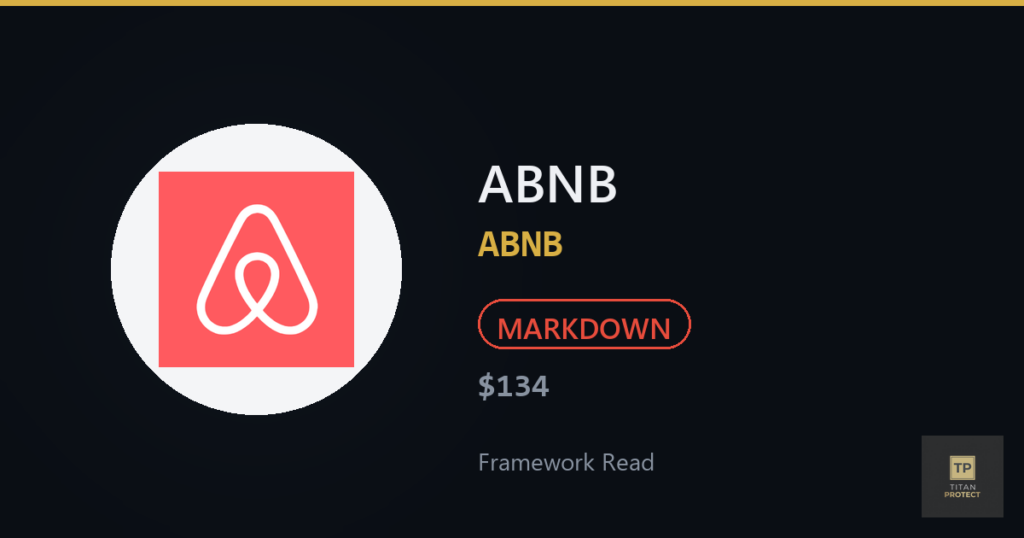
ABNB is in markdown. The travel platform that redefined hospitality is watching institutional capital walk out the door.
Regime Classification: Markdown
| Metric | Reading | Implication |
|---|---|---|
| Current Price | $134 | Down from $220 highs, persistent decline |
| Regime | Markdown | Institutional selling pressure dominant |
| Sector | Consumer Cyclical | Travel/hospitality exposure to economic cycles |
| Volume Profile | Weak rallies, heavy selling | No accumulation footprint |
What the Regime Data Actually Says
Airbnb’s markdown regime is the market’s verdict on a maturing growth story. The explosive post-pandemic travel rebound that sent ABNB to $220 has faded, and what remains is a profitable but decelerating platform facing regulatory headwinds in nearly every major market.
At $134, the stock has shed nearly 40% from its highs. Retail traders see a dip. The regime data sees continued institutional selling. These are fundamentally different interpretations of the same price action.
The Regulatory Wall
Airbnb’s biggest challenge is not competition from hotels or Booking.com. It is governments. New York’s registration requirements effectively banned most short-term rentals. Barcelona announced a complete phase-out by 2028. London, Paris, Tokyo, and dozens of other cities have imposed or tightened restrictions.
Each new regulation removes supply from Airbnb’s platform. Less supply means fewer bookings, lower revenue per market, and a growth story that relies on expansion into new cities that increasingly do not want short-term rentals.
The Profitability Trap
Airbnb is profitable. Free cash flow margins exceed 30%. The balance sheet carries over $10 billion in cash. By traditional financial metrics, this is a high-quality business.
But profitability alone does not prevent markdown regimes. The market prices growth, and Airbnb’s growth rate has decelerated from 40%+ post-pandemic to single digits. When a stock is priced for growth and growth slows, profitability becomes a consolation prize rather than a catalyst.
The Experience Pivot
Brian Chesky has pivoted Airbnb toward “Experiences” and longer-term stays. These initiatives generate revenue, but they lack the explosive growth profile that drove the IPO narrative. “We are becoming a platform for living” is a compelling vision statement. It is not a compelling reason for institutional capital to reverse a selling programme.
Comparing Markdown Peers
Airbnb joins PayPal, Coinbase, and Palantir in the markdown cohort. What these companies share is not business failure. It is the transition from “growth at any price” to “prove it at a reasonable price.” The market loved all of them when rates were zero and growth was all that mattered. Now rates are higher, growth has slowed, and institutional capital demands a different standard.
Strategy Considerations by Tier
| Approach | Consideration |
|---|---|
| Value Investors | Profitability and cash flow are genuine strengths. But markdown regimes punish early entries. Patience pays. |
| Growth Investors | Growth deceleration is the core problem. Until a new growth catalyst emerges, the regime stays hostile. |
| Tactical | Earnings-driven bounces in markdown regimes are selling opportunities, not buying opportunities. |
The Bottom Line
Airbnb at $134 is a well-run, profitable company in the wrong regime. The regulatory environment is tightening, growth is slowing, and institutional capital is exiting. The business will likely survive and potentially thrive over a multi-year horizon. But regime data says the current trend favours sellers, not buyers. Wait for accumulation signals before treating this as an opportunity.