What Are Options?
A Simple, Smart Introduction for New Traders
If you’re new to trading, you’ve probably heard the term “options” — and maybe felt a bit intimidated.
Calls, puts, premiums, greeks, expiration…
It sounds complex, and many avoid it.
But at its core, options are simply contracts that give traders more flexibility, leverage, and risk control.
This is your no-fluff, plain-English guide to understanding what options are — and why traders use them.
What Is an Option?
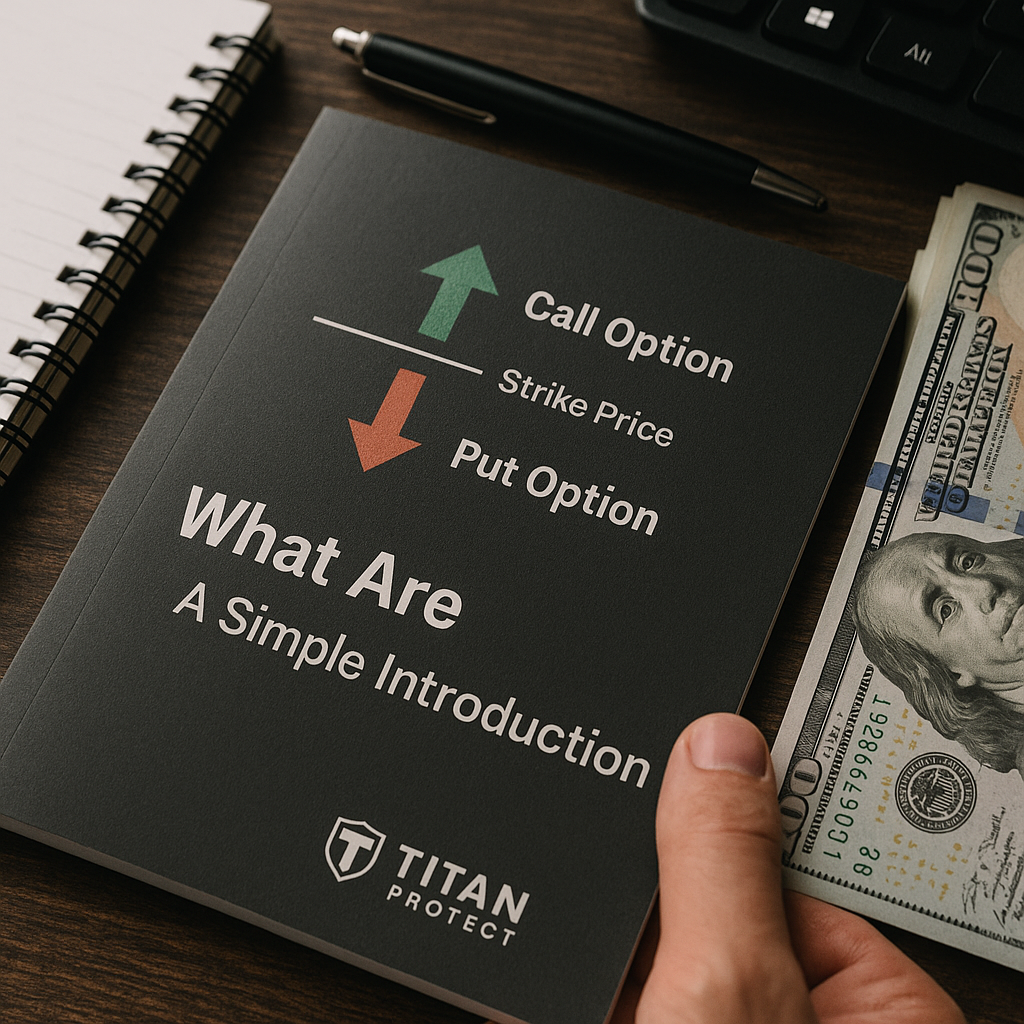
An option is a contract that gives you the right — but not the obligation — to buy or sell a stock (or index) at a specific price, within a specific timeframe.
There are two types:
-
Call Option: Right to buy at a set price
-
Put Option: Right to sell at a set price
You don’t have to exercise them. You can also just trade the contracts themselves, which is what most traders do.
🟢 Example: Call Option
You buy a call option on SPY with a strike price of 500, expiring next month.
This means:
You have the right to buy SPY at $500 — even if it goes to $510 or $520.
If SPY rises, your call becomes more valuable.
Example: Put Option
You buy a put option on AAPL with a strike price of 180.
This means:
You have the right to sell AAPL at $180 — even if it drops to $170 or $160.
If AAPL falls, your put increases in value.
Why Use Options?
Traders use options to:
-
Speculate
-
Leverage small capital for big moves
-
Profit from directional bets on movement (up or down)
-
-
Hedge
-
Protect a stock position in case of a reversal
-
Think of it as “insurance” for your trade
-
-
Generate Income
-
Sell options to collect premium (advanced strategy)
-
Basic Terms to Know
-
Strike Price: The price you agree to buy/sell the asset
-
Expiration Date: When the contract ends
-
Premium: The cost to buy the option
-
In the Money: The option has intrinsic value
-
Out of the Money: The option only has time value
️ Risk vs Reward
Options offer:
✅ Big upside with small capital
❌ But they can expire worthless if the move doesn’t happen in time
This is why traders often say:
“Options decay. Stocks don’t.”
Understanding the time + price + volatility relationship is key to success.
️ Learn With Titan
At Titan Protect, we don’t just show you where price is going — we help you understand why options activity may be behind it.
Our tools:
-
✅ Highlight price zones impacted by options flow
-
✅ Track time-of-day risk shifts (pre/post OPEX, etc.)
-
✅ Visualise potential trap areas based on smart money hedging
-
🧠 Connect expiry, volume, and structure for better setups
We’re building smarter retail traders — and that means introducing options the right way.
Get the daily framework intelligence
Trade the framework, not the noise.
The principles in this article are how we read markets every day. Members get the live application: daily Pre-Asia, Pre-London, Pre-NY and Post-Close briefs across 20+ instruments, the indicator suite, the Foundry library, and live community.
Free Explorer tier · No card required · Upgrade when you’re ready