Australian Labour Data Signals Softening
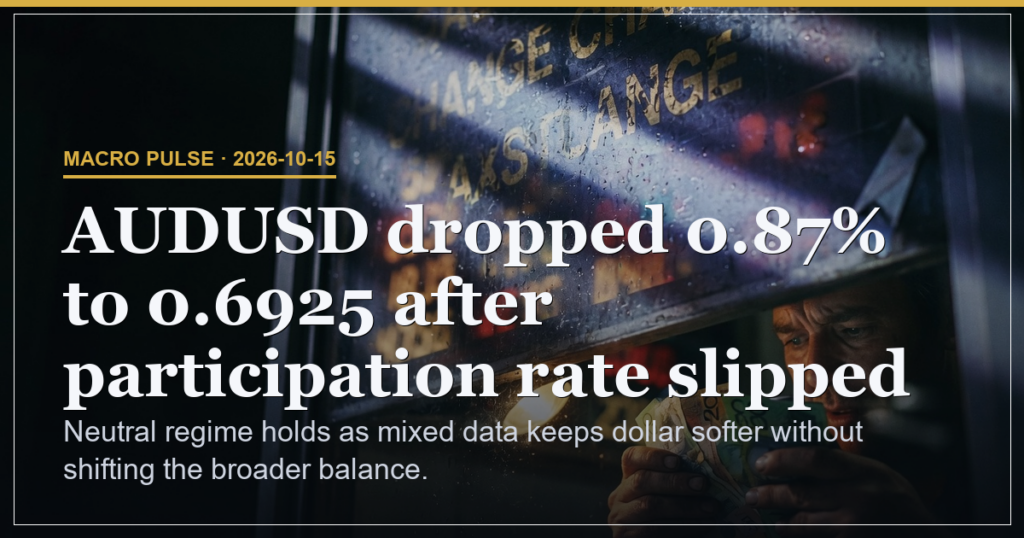
Australian employment fell 39.3K against a 20K forecast which means labour market softening that eases rate pressure because weaker hiring reduces the chance of tighter policy. Participation rate slipped to 66.8% which signals further downside risk for the currency because fewer workers entering the market widens the gap between actual and potential growth. Full time employment rose 34.4K yet part time jobs dropped 73.7K which means the net loss concentrates in lower hours and limits any rebound in household spending. Unemployment rate held at 4.7% versus the 4.6% expectation which means the headline masks the underlying participation decline and keeps AUD vulnerable near current levels.
UK GDP Shows Modest Resilience
UK GDP printed 0.1% versus a -0.1% expectation which means modest growth resilience that limits sterling downside because positive momentum counters earlier contraction fears. Industrial production rose 0.8% against a -0.1% forecast which means factory output added support to the services led gain and narrows the path for further Bank of England cuts. Goods trade balance improved to £-18.01B from £-19.3B which means narrower deficits reduce immediate pressure on the pound yet still leave the currency exposed to global risk swings.
Dollar Index Reverses on Mixed Releases
DXY fell 0.53% to 102.00 on the mixed releases which means dollar breadth remains capped near current levels because Australian and UK prints offset each other without delivering a clear directional driver. This marks a reversal from yesterday’s 0.35% climb to 102.539 because the fresh data flow removed the prior relative strength narrative. Support sits at 101.88 with resistance at 102.28 which means any sustained move outside that band would require a clearer surprise from upcoming US or European releases.
Cross Currency Reactions and Levels
| Pair | Last | Daily Change | Implication |
|---|---|---|---|
| EURUSD | 1.1222 | +0.16% | Tests resistance at 1.1244 because dollar softness lifts the pair yet lacks follow through volume. |
| GBPUSD | 1.3273 | +0.12% | Holds gains from UK GDP resilience which means downside stays limited unless DXY reclaims 102.28. |
| AUDUSD | 0.6925 | -0.87% | Breaks lower after participation rate drop which means further tests of 0.6890 remain possible on labour weakness. |
Forward Calendar and Regime Implications
Japanese machinery orders rose 5.2% month on month against a 3% forecast which means external demand for capital goods stays firm and caps any sharp yen rally. South African inflation held at 1.9% year on year which means no fresh pressure on emerging market currencies from that quarter. Twenty four releases printed today with no dominant theme which means the neutral regime persists until a larger surprise arrives from US or euro area speakers later in the session.
Risk Framework and Experience Watchpoints
Risk sits at 40% because mixed data prints leave the dollar softer without shifting the broader balance which means volatility can reprice quickly on any single strong release. Scenario weights are 35% DXY breaks 101.88 on further labour misses which would cap risk assets, 40% range holds between 101.88 and 102.28 on continued balance which keeps tone neutral, and 25% EURUSD clears 1.1244 on sterling follow through which would signal broader dollar retreat.
| Level | Watch |
|---|---|
| Beginner | Track DXY moves against 101.88 and 102.28 to see how data surprises shift the index. |
| Intermediate | Compare participation rate changes to employment prints to gauge hidden labour slack. |
| Advanced | Map UK GDP components against BoE speaker tone to judge policy reaction functions. |
Neutral regime holds as mixed data keeps dollar softer without shifting the broader balance.
This is analysis, not financial advice. Always manage your risk.