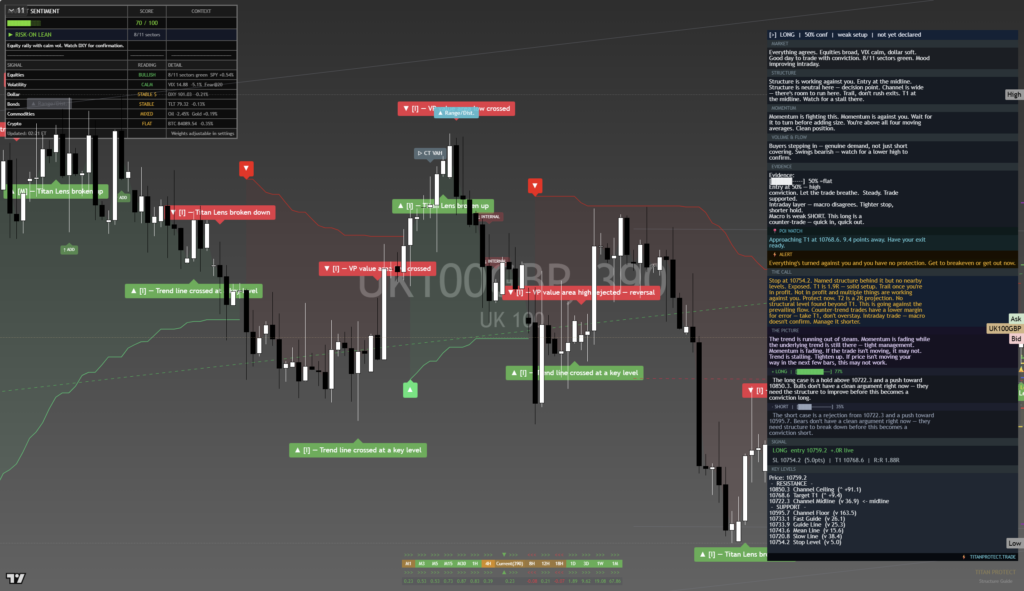
FTSE 100 (UKX) – Daily Read
26 September 2026 | Index | Titan Macro Desk
10,695.2
The FTSE 100 is attempting to stabilise, but the balance of evidence still favours caution until buyers reclaim lost ground. Last price 10,695, 0.1 percent higher on the day. That gain is too modest to change the broader structure: the index is trading in the lower half of its one-month range, momentum is roughly 0.1 percent down over the last two weeks, and sellers retain control of the medium-term tape. The practical view is neutral to bearish below nearby resistance, with room for a tradable recovery only if demand becomes more persistent.
The macro backdrop is unusually conflicted. Persistent energy-driven inflation pressure is keeping the Bank of England cautious, while elevated bond yields challenge equity valuations and financing-sensitive sectors. At the same time, softer oil prices can improve risk appetite and ease pressure on consumer-facing businesses, even though they may weigh on the FTSE’s heavyweight energy exposure. Sterling remains another important transmission channel because a firmer currency reduces the translated value of overseas earnings. These crosscurrents explain why the index can advance at the margin without establishing a convincing direction. The specifically defensive, internationally exposed composition of the FTSE offers some protection, but it does not remove the drag from tighter financial conditions and uncertain commodity leadership.
The one month average is 10,718; price is below it, and the structure reads as a downtrend, price under both its one-month and longer averages. That makes 10,718 an immediate test of whether buyers can turn a bounce into repair. The nearer round number handle at 10,750 then becomes the first meaningful defence for sellers, because acceptance above it would show that supply is being absorbed rather than merely revisited. The month swing high is 10,868, about 1.6 percent above the current price. It is the key ceiling because clearing it would overturn the recent sequence of weakness. Above there, the upper boundary of the three month range 10,397 to 10,990 becomes the natural objective.
On the downside, a shelf of support at 10,586, about 1.0 percent below, is where buyers must prove that the recent range still has integrity. The nearer round number handle at 10,500 adds psychological support beneath it, but it would be a weaker line of defence once the shelf has failed. If the index retakes 10,718 and holds above 10,750, then demand should build toward 10,868; a decisive move above 10,868 opens the path toward 10,990. If rallies fail beneath 10,718 and pressure returns, then 10,586 comes back into play; losing 10,586 exposes 10,397.
The main risk to the bearish lean is a durable easing in energy and bond-market stress that revives broad equity demand and carries the index through 10,868. Conversely, renewed energy disruption, firmer sterling, or another rise in yields would strengthen the downside case. Holding 10,586 keeps this a pressured range rather than a breakdown. Net, the FTSE is stabilising but not repaired, and sellers keep the advantage until resistance is reclaimed.
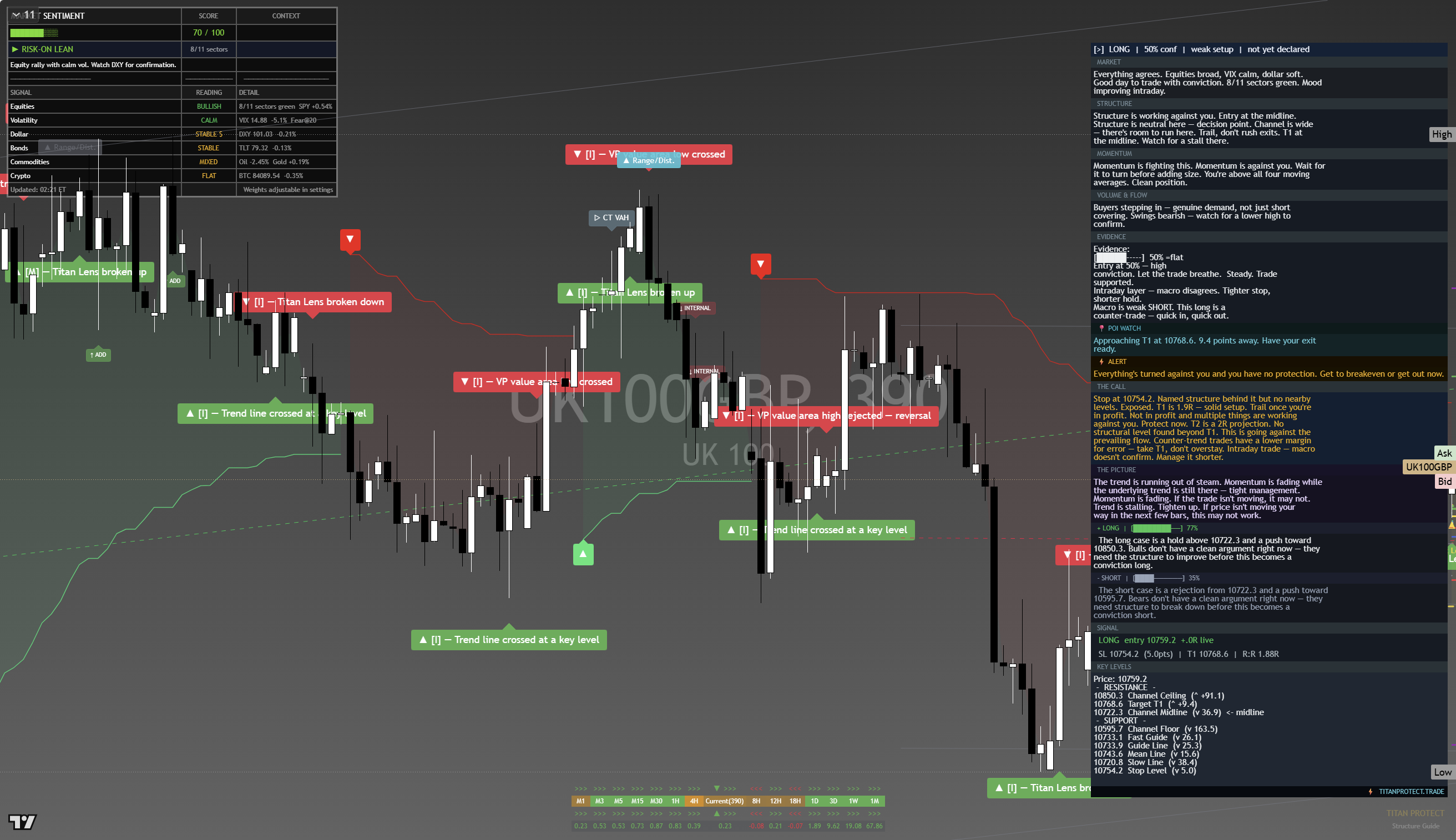
The chart above is the full daily read: structure, momentum, the levels that matter, and where the current price sits against them. Read it top to bottom for the complete picture, and pair it with our session briefs for the wider market context.
This is analysis, not financial advice. It reflects our multi-factor framework and is not a recommendation to buy or sell. Always do your own research and manage your risk.