Session Review and Key Drivers
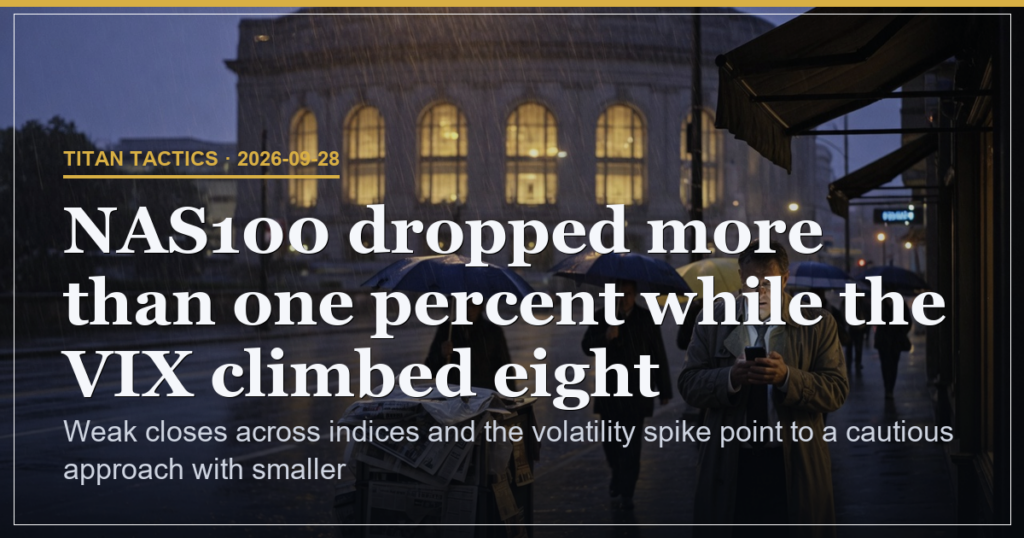
Major indices closed lower with technology stocks leading the fall and volatility rising sharply. The Nasdaq dropped more than one percent while the VIX climbed eight percent to sixteen, confirming that downside pressure dominated price action through the final hours. Building on yesterday’s view from the Positioning Pressure pod, whale call flow in names such as NVDA remains heavy yet failed to prevent the broad selloff, which leaves the tape vulnerable to further tests until that flow translates into sustained buying. Traders should reduce position size into any early session bounce and respect the wider range until a clear break develops, because the combination of weak closes and elevated volatility raises the chance of sharp intraday swings.
Range Dynamics and Tactical Levels
SPY support sits near 763 with resistance at 769. Price action respected these boundaries in the prior session, yet the failure to reclaim the open sets up continued downside risk until resistance is reclaimed, as the Setup Radar pod notes. The lead index now trades inside a compressed zone that favours smaller size on any approach to the upper bound, because a clean break higher would require fresh institutional follow-through that has not yet materialised.
| Level | Role | Tactical Insight |
|---|---|---|
| 763 | Support | Watch for volume spike on approach; hold size below 0.5 percent until confirmed hold. |
| 769 | Resistance | Reduce exposure on test; only add if price closes above with expanding volume. |
| 766 | Pivot | Neutral zone where intraday scalps remain viable but swing bias stays cautious. |
Positioning Context from Options Flow
Institutional call buying dominates the tape with eleven large trades exceeding 180 million dollars concentrated in NVDA and SPCX, as the Positioning Pressure read details. NVDA alone absorbs 130.87 million dollars across two million contracts, all call heavy, which places direct short term upside pressure on the underlying and its related indices. This pattern builds on the Institutional Insight pod that big money accumulates long exposure via calls in tech and growth, yet the weak close shows that flow has not yet overcome selling pressure. The average put call ratio rests at 0.73 with zero bearish options names recorded across the major technology complex, so institutions continue to price in further upside rather than hedge aggressively. Cross referencing the Sentiment Shift pod shows high retail bearishness acting as a contrarian bullish signal, yet the session close suggests that signal has not yet triggered.
Volatility Implications
Volatility has lifted but the term structure keeps the regime contained, leaving the desk neutral on further escalation as the Volatility Lens pod records. The VIX term structure shows VIX9D at 14.39 against spot at 16.07, which implies near term fear has risen without a full curve inversion. Traders must therefore size positions with the 1.5 percent risk budget driven by the volatility spike itself, because an eight percent VIX jump widens expected daily ranges and increases the cost of stops. Any early bounce should be treated as a reduction opportunity rather than an addition point until the VIX stabilises.
| Scenario | Probability | Action Plan |
|---|---|---|
| Downside break below 763 | 45% | Scale out longs, add shorts only on retest with tight stops above 766. |
| Range bound between 763-769 | 35% | Trade small scalps inside the band, exit by session close. |
| Upside reclaim above 769 | 20% | Re enter on volume confirmation, keep risk at half normal size. |
Risk Management and Experience Guidance
Risk sits at 1.5 percent of capital per trade, with the volatility spike as the driving factor because wider ranges demand tighter position sizing to preserve capital. Beginners should focus on single name observation only and avoid any futures or options entries until the range resolves. Intermediate traders may take one reduced size test of support or resistance with defined stops. Advanced participants can layer spreads that benefit from elevated volatility while keeping total book risk inside the same 1.5 percent limit. Experience level guidance therefore centres on matching size to skill rather than conviction alone.
Forward Bias
Weak closes across indices and the volatility spike point to a cautious approach with smaller size into the next session. This is analysis, not financial advice. Always manage your risk.