Nikkei 225 Daily Framework Read | Monday 18 May 2026
Session Summary
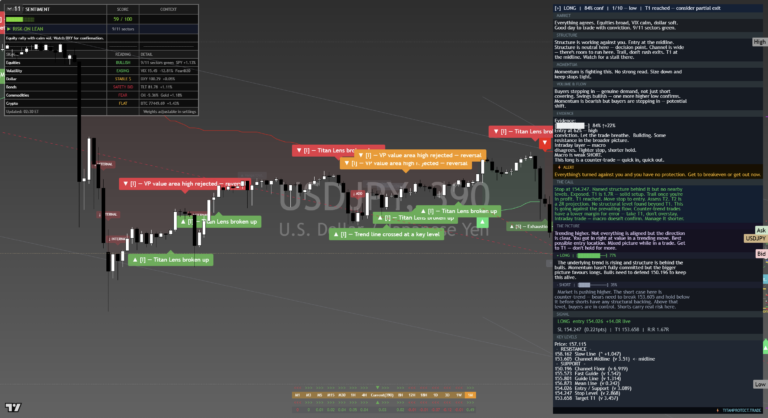
The Nikkei 225 closed at 61,048 on Monday, down 0.59% as yen strength applied its familiar pressure on Japan’s export-heavy index. The USD/JPY pair failed to reach the short entry level that the Pre-NY brief had flagged — it closed at 158.84 — but the yen’s broader tone remained firm enough to create headwinds for the large exporters that dominate the index. Toyota, Sony, and the major electronics manufacturers all felt the currency translation pressure. The session was not a collapse — volume was measured and there were no panic signals — but it was a clear demonstration of the Nikkei’s sensitivity to even marginal yen moves at current levels.
Daily Read
The analysis framework is reading the Nikkei as neutral-to-slightly-bearish on the short-term timeframe. The longer-term story remains compelling — Japan has been one of the structural return stories of the past two years, with corporate governance reform, dividend growth, and foreign institutional buying all supporting the case. But the short-term setup is a battle between that structural bull case and the yen, and right now the yen is winning.
The framework’s USD/JPY read is important context here. The level that matters is 158.50 — that was the short entry flagged in today’s brief. Price stayed above it all session, which means the full yen strength signal has not triggered. But the direction of travel is clear: if USD/JPY moves toward 157.00 as the framework targets, the Nikkei faces an additional headwind of roughly 1-1.5% from currency translation alone, on top of any equity-specific selling pressure. The two cannot be separated.
Key Levels
| Level | Price (Nikkei) | Why It Matters |
|---|---|---|
| Resistance | 61,800 | Where sellers appeared on Friday. Recovery above here would signal the yen pressure has eased meaningfully. |
| Current Close | 61,048 | Sitting at the lower end of the week’s range. Yen direction will determine whether this holds or breaks. |
| Support | 60,500 | First meaningful floor. A break here would signal the yen strengthening move has accelerated beyond what the index can absorb quietly. |
| USD/JPY Key Level | 158.50 | The trigger level on the currency pair. A break below here confirms yen strength is extending and Nikkei pressure follows. |
Entry: 60,600 with USD/JPY holding above 158.50 and stabilising. Stop: 60,200 (400pt risk). Target 1: 61,400. Target 2: 61,800. Risk-to-reward: 2.0:1 to T1. Do not take this long if USD/JPY is breaking lower simultaneously.
Tomorrow’s Setup
Bias: Neutral, heavily USD/JPY dependent. Tuesday’s Nikkei session (Tokyo opens before Europe and New York) will react to any overnight headlines from the Iran Situation Room. If de-escalation is confirmed and the dollar firms broadly on reduced safe-haven yen demand, the Nikkei gets a relief rally. If escalation or uncertainty persists, safe-haven flows into the yen continue and the Nikkei faces further selling.
Iran de-escalates. Yen safe-haven demand fades. USD/JPY bounces above 159.50. Nikkei recovers toward 61,800 in the Tokyo session.
Iran escalation confirmed. Yen safe-haven demand surges. USD/JPY drops through 158.00. Nikkei gaps lower at the open, tests 60,500.
What to watch: USD/JPY in the overnight session — this is the single most important input for the Nikkei right now. Any move below 158.00 before the Tokyo open is a signal to stand down on long positions. Also watch for Bank of Japan commentary: any hint of further rate normalisation from Tokyo would strengthen the yen and amplify the headwind on the index.
Experience-Level Guidance
The Nikkei and the yen almost always move in opposite directions — when the yen strengthens, Japanese exporters earn less when they convert their foreign revenues back into yen, which pushes the index lower.
Before taking any Nikkei position, check USD/JPY first — the currency pair is the leading indicator and the equity market is the lagging one; trade the lead, not the lag.
The structural long case for Nikkei through the year remains intact given corporate governance reform and dividend growth, but position sizing needs to account for the fact that the entry point on the currency adds or removes roughly 10% of potential P&L before the equity trade has even started.
This is analysis, not financial advice. Always manage your risk. Past performance does not guarantee future results.