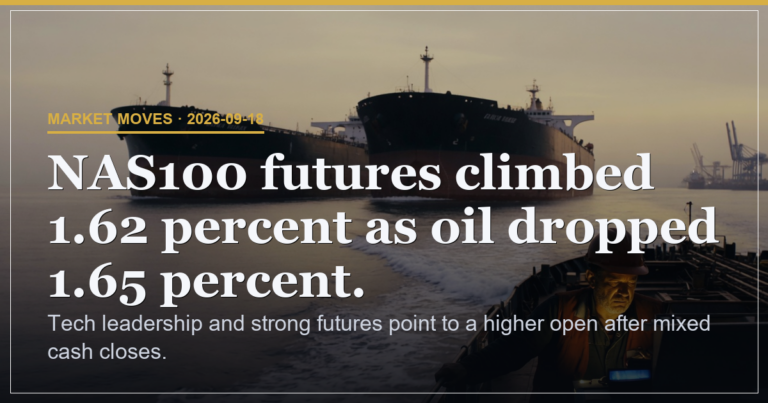
Overnight, the United States launched its largest strikes on Iran of the entire conflict — and the most important market signal is the one almost nobody expected: oil fell. At midnight GMT, US Central Command announced a “powerful response,” hitting dozens of IRGC-linked sites — command centres, missile and drone infrastructure, coastal surveillance and maritime targets — with explosions reported across southern Iran. A major military escalation, and yet Brent slipped about 1.4% to $89.45 and WTI eased to roughly $83.90. When the tape does the opposite of what the headline screams, that is where the real read lives.
What Happened
The strikes were the answer to Iran’s surprise ballistic-missile attack on US forces in Jordan — the first direct hit on American troops since the pause — which was fully intercepted. President Trump warned Iran would be “hit very hard,” and the response came within hours: a heavy wave of strikes CENTCOM said was meant to reduce threats to US forces, commercial shipping and Gulf partners. Alongside it, fresh US Treasury sanctions targeted companies financing the IRGC through maritime “insurance” schemes in the Strait of Hormuz, and a drone reportedly struck a US-owned tanker in an Egyptian port. The war has widened.
Why Oil Fell — the Signal That Matters
Conventional wisdom said strikes on Iran plus a contested Strait of Hormuz should send crude toward the $140 it hit after Russia invaded Ukraine. It has not happened — and the reason is the story. Tanker traffic through the region has kept flowing despite the fighting, and the world’s largest crude importer, China, has quietly absorbed the disruption, drawing on strategic reserves long believed to dwarf America’s. The feared supply shock is being buffered in real time. For a market, that is a profound tell: the geopolitical risk premium is real, but it is capped, because the physical barrel is still moving. The desk’s read is to respect the war premium without chasing it — the spike everyone is positioned for keeps not arriving.
The Protection Lens
For the values-conscious and protection-first investor, a widening war is a test of temperament, not a trading opportunity. Positioning a book on the next headline in a live conflict is the definition of unnecessary risk — gharar dressed as conviction — and the counterintuitive oil move is the proof: even a “certain” trade (long crude into strikes) has failed to pay. The disciplined posture is ownership of real, unleveraged stores of value over leveraged bets on escalation, and patience over prediction. Gold gave back its pre-Fed hedge this week; a genuine haven is something you hold through uncertainty, not something you chase on the day. Let the conflict clarify; do not pre-commit the book to it.
The read: the escalation is serious and the tail risks are real — a genuine closure of the Strait of Hormuz would change everything in an afternoon. But as of now the market is telling you it is being managed: oil is easing, the barrel is moving, and the feared spike is being absorbed. Watch the strait itself, not the strike count. Respect the risk, size down, and let the tape — not the headlines — set the trade. Discipline over enthusiasm, especially in a war.
This is analysis, not financial advice. Always manage your risk.