GEOPOLITICAL RISK | ENERGY MARKETS
Drones in the Strait: How the Iran-US Hormuz Escalation Broke Crude Below $70 and Reset the Risk Map for Monday
Published: 27 June 2026 | Titan Macro Desk
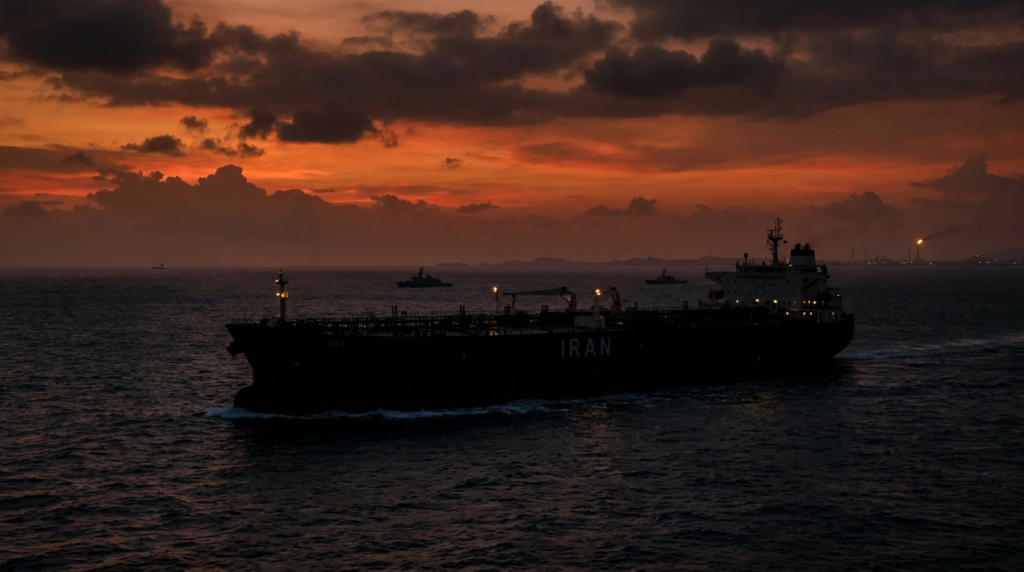
The Strait of Hormuz handles roughly 20% of global oil trade every day. On Thursday night, four IRGC one-way attack drones flew into that corridor and one of them hit a Singapore-flagged cargo ship’s upper deck. By Friday, the United States had responded with military strikes on Iranian targets via CENTCOM. Crude was already below $70 before the first shot. That combination, pre-existing price weakness and sudden conflict escalation, creates the most interesting energy trade setup in months.
Here is what actually happened, why the market reaction to the news was counterintuitive, and what to watch when markets re-open Monday.
EVENT TIMELINE: 26-27 June 2026
Why Crude Below $70 Into This Event Is the Real Story
Most traders expect oil to spike on Hormuz disruption. The fact that Brent was already below $70 before CENTCOM went public tells you something important: the market had already been pricing in demand softness and oversupply concerns ahead of any geopolitical premium. When the US strikes were announced, the natural reflex was to bid crude back up. But the setup going into the weekend is not clean in either direction.
On the bullish side for oil: military action in the world’s most critical shipping choke point, a ceasefire framework that looks fragile, and two active fronts (Hormuz and Lebanon) heading into a weekend with no government offices open to de-escalate.
On the bearish side: OPEC has been increasing output, the US economy has slowed enough to weigh on demand forecasts, and the communication channel between Washington and Tehran that was confirmed on Friday suggests both sides have a floor they do not want to break through. The active back-channel matters. It is not the behaviour of two parties trying to go to full-scale war.
MARKET IMPACT BREAKDOWN
| Asset / Sector | Directional Pressure | Key Risk |
|---|---|---|
| Crude Oil (WTI/Brent) | Bullish gap risk on open | Back-channel diplomacy caps upside |
| Gold (XAU/USD) | Safe-haven bid likely | Dollar strength could offset |
| Energy Equities | Gap up on open | Fade risk if oil cannot sustain |
| Defence Sector | Bullish flow expected | Already priced in elevated Iran risk |
| Shipping Stocks | Bearish near-term | Route diversion costs; Oman fee risk |
| NAS100 / Broad Equity | Risk-off drag | Depends on scale of CENTCOM action |
| USD (DXY) | Safe-haven bid | Competes with gold for flight capital |
Reading the Political Signals — This Is Not a Straightforward Escalation
The language from Tehran is worth examining carefully. Iran’s Deputy FM warned that “safe passage without consideration of Iran’s sovereignty is not guaranteed.” That is a sovereignty argument, not a declaration of unrestricted warfare. Meanwhile, Iran’s parliament framed Thursday’s strike as “ceasefire management.” That language matters because it suggests Iran’s political establishment is trying to establish a graduated response doctrine, not tear up the entire agreement.
Khamenei’s position is revealing: he allowed the deal to proceed but opposed signing it as a matter of principle. That is a political face-saving position, not a war mandate. The Supreme Leader preserves ideological purity while the pragmatists let the deal operate. This pattern has precedent.
The active US-Iran communication channel confirmed on Friday is the most important piece of data in the whole sequence. When two parties have military strikes occurring and are still talking through a dedicated line, they are managing escalation, not abandoning it. That is what keeps this from becoming a full closure scenario.
Gold: The Asset That Profits Either Way
Gold is in a structurally different position to crude oil here. Where oil has genuine supply uncertainty (does the Strait stay open, do routing costs spike?), Gold benefits from the geopolitical fear itself. Escalation in Hormuz, the Lebanon ceasefire wobbling via Ben-Gvir, and a weekend with no resolution pathway all feed the safe-haven argument cleanly.
The counterforce is dollar strength. In a genuine flight-to-safety move, the USD tends to attract institutional capital alongside gold. If DXY bids hard on Monday open, gold’s upside gets compressed. The cleaner gold setup would be if the CENTCOM response proves to have been larger than initially reported over the weekend, which would push both USD and gold higher simultaneously.
WHAT TO WATCH — MONDAY 30 JUNE OPEN
Scale of the CENTCOM Strikes
The market needs to price the scope. Symbolic infrastructure hit versus IRGC naval assets hit are very different oil implications. Watch for Sunday evening Pentagon briefings.
Iran’s Official Response to US Strikes
If Tehran responds via state media with “measured” language and avoids a second drone wave over the weekend, the back-channel is holding. If there is another incident, the ceasefire framework is functionally dead.
Lebanon Ceasefire Status
Ben-Gvir’s call to end the ceasefire follows four troops wounded. If Israel acts on that over the weekend, you have two simultaneous Middle East flashpoints and the risk premium across oil, gold, and defence multiplies.
Crude Oil Open vs $70
$70 is the psychological level that broke on Thursday. A hard reclaim above $70 on Monday open with sustained volume would flip the near-term crude structure. A rejection back below it would tell you the demand story still outweighs the risk premium.
Oman Transit Fee Development
If Oman moves from “weighing” to “announcing” transit fees for Hormuz, that is a structural cost increase for energy supply chains and a new medium-term input for shipping and refining sector analysis.
The Bottom Line
The Hormuz escalation is real, but it is not yet a full closure event. The most useful framework is to separate the geopolitical fear trade from the fundamental supply trade. Gold and defence equities benefit from the fear. Crude oil needs an actual supply interruption to sustain any rally from here, because the demand-side headwinds that drove it below $70 have not gone away.
The active US-Iran communication line is the most bearish signal for any extreme oil bull thesis. It says both governments want a ceiling on this, even if the IRGC and certain Iranian political factions are pushing the boundaries of the ceasefire.
Weekend headlines will reset the probabilities. Check Sunday evening for any further Iranian or Israeli action before positioning for Monday open. The setup is active but the direction only resolves with more information.
Risk Disclaimer: This content is produced by the Titan Macro Desk for informational and educational purposes only. It does not constitute financial advice, a recommendation to trade, or an inducement to buy or sell any financial instrument. All trading involves risk and you may lose more than your initial deposit. Past analysis does not guarantee future accuracy. Always conduct your own research and consider seeking independent financial advice before making any investment decisions. Titan Protect Ltd. | titanprotect.trade