Titan Playbook Series
Titan Playbook 02: Scalping
Small targets, fast exits, and the infrastructure demands that most retail accounts cannot meet.
What Scalping Actually Is
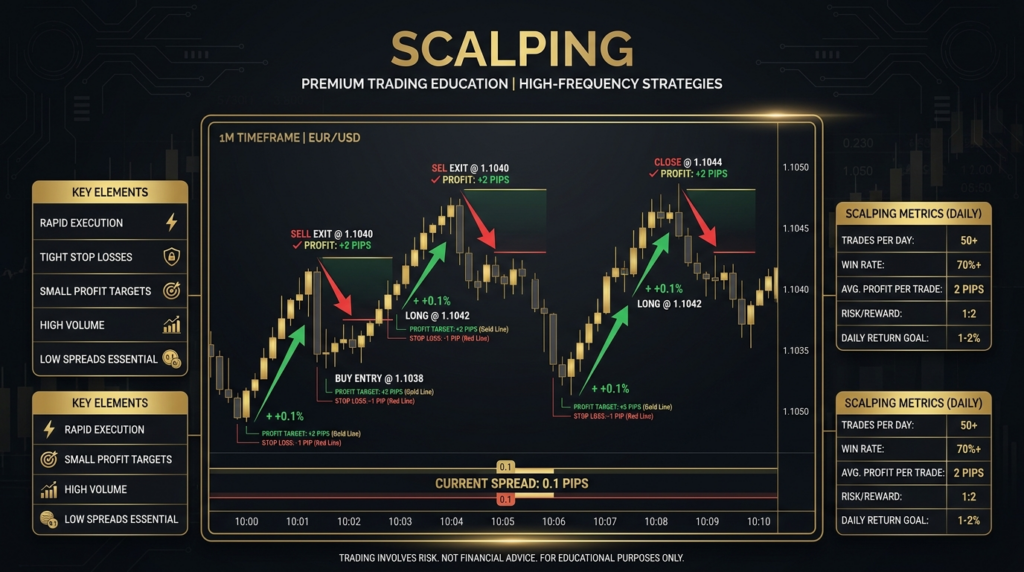
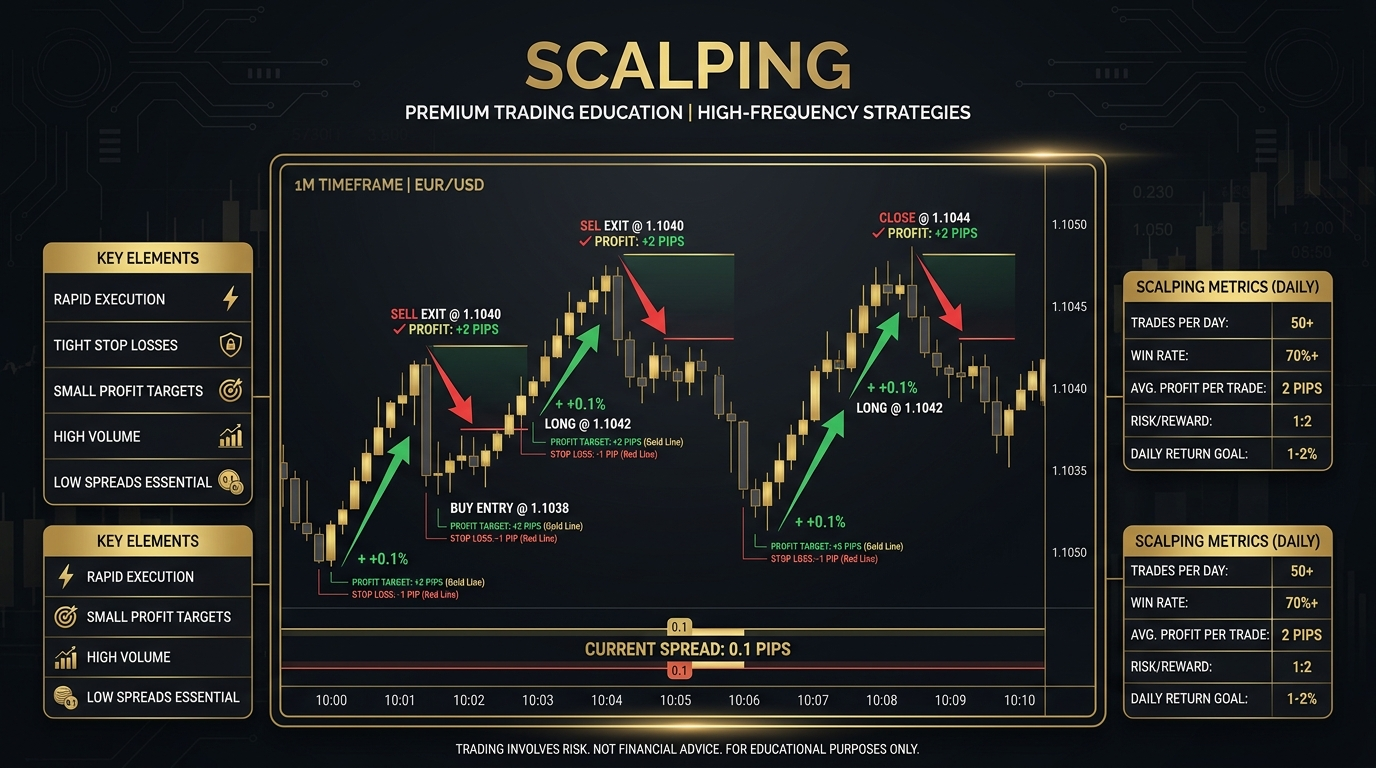
Scalping is the practice of entering and exiting positions within a very short window, typically seconds to a few minutes, capturing small price movements repeatedly across the session. A scalper targeting 3 to 5 points on the S&P 500 futures is not trying to hold through a 30-point trend. They are trying to extract a defined edge from a narrow range of price action and repeat that extraction as many times as conditions allow.
At first glance, scalping sounds like the easiest approach. Small targets, short exposure time, no overnight risk. In practice it is among the most demanding styles to execute consistently. The edge is thin. Execution costs eat directly into returns. Concentration lapses are expensive. And the psychological intensity of making dozens of real-money decisions per session, under time pressure, against a market that moves faster than most people think, degrades quality in ways traders rarely admit to themselves.
None of this means scalping does not work. It does work, for the right people with the right setup. But those conditions are more specific than most trading educators acknowledge.
Instruments and Timeframes
Scalping works best on liquid instruments with tight bid-ask spreads and reliable price discovery. The most commonly traded scalping instruments include index futures (S&P 500, Nasdaq, FTSE), major FX pairs (EUR/USD, GBP/USD, USD/JPY), and highly liquid equity CFDs during peak session hours.
The reason liquidity matters so much is simple. If your target is 4 points and your spread is 1.5 points, you are giving away 37% of your potential profit before the trade even starts. At scale, across fifty trades a day, spread drag compounds into a serious performance headwind. Institutional scalpers have direct market access and negligible execution costs. Retail scalpers do not. That gap is structural and permanent.
Timeframes for scalping typically run from the 1-minute to 5-minute chart, with some operators using tick charts or second-based intervals. The 1-minute chart is the most widely used because it provides enough price structure to identify setups without exposing traders to the excessive noise of tick-level data.
Infrastructure Requirements
Scalping is the one style where the quality of your execution environment directly determines whether the approach is viable. A swing trader operating with a 200-millisecond internet connection and a mid-range laptop loses nothing meaningful. A scalper with the same setup loses edge on every single trade through slippage, requotes, and platform latency.
Speed matters. A stable, low-latency internet connection is baseline, not a luxury. Platform stability during high-volatility moments, particularly around news releases and session opens, is not negotiable. A platform that freezes for three seconds when volatility spikes will close your trade at a significantly worse price than your intended exit, and it will do so consistently in the moments where it hurts most.
Spreads must be reviewed by session, not just by instrument. Many brokers widen spreads during off-peak hours, around economic releases, and at session transitions. If your backtested performance used daytime spread assumptions and your actual trading captures wider spread windows, your live results will underperform your expectations structurally.
When Scalping Works and When It Kills Accounts
Scalping works well in the first two hours of the London session and the first ninety minutes of the New York open. These are the periods of highest volume, tightest spreads, and the most directional intraday price action. Institutional order flow is concentrated here. Price moves with purpose. Setups are cleaner and respect levels more consistently.
Scalping becomes dangerous in three specific environments. First, during low-volume mid-session periods when price drifts without conviction and setups that look clean on the chart produce random outcomes. Second, directly around major economic releases, where spreads widen sharply and price can gap through stop levels instantly. Third, at the end of a losing run, when a trader is trying to recover a deficit through increased frequency rather than waiting for higher-quality conditions.
Revenge scalping, the pattern of placing more trades faster after losses in an attempt to recover, is one of the most reliable ways to turn a bad morning into a blown account. The impulse is understandable. The outcome is almost always predictable.
The Mental Game
Scalping demands a particular psychological profile. The ability to accept a losing trade completely, with no emotional residue, and take the very next setup with identical conviction. Most people cannot do this reliably. A loss on trade one creates hesitation on trade two, which often becomes a missed entry or a late entry that changes the risk profile. That hesitation compounds across the session.
Professional scalpers describe the mental state required as something close to deliberate indifference. Each trade is simply the next execution of a process. Not a referendum on their ability. Not something to analyse in real time. Execute, exit, repeat. That detachment takes years to develop and regular practice to maintain.
If you find yourself replaying losses during a session, adjusting stops because you believe “it will come back”, or changing your target because the trade is going well and you want more, you are not scalping. You are gambling with a scalping-shaped account.
Scalping Pre-Trade Checklist
| Factor | Favourable | Unfavourable | Action if Unfavourable |
|---|---|---|---|
| Spread | At or below typical daytime average | Spread has widened more than 50% | Stand aside until spread normalises |
| Volume | Above recent session average for this hour | Thin volume, drifting price action | Do not scalp low-volume drift periods |
| Session | London open (07:00-09:00 GMT), NY open (13:30-15:00 GMT) | Asian session dead hours, post-NY early close | Limit scalping to active session windows only |
| Volatility | Moderate intraday range with directional moves | Extremely choppy or pre-news freeze | Check economic calendar before session start |
| News Events | No scheduled high-impact releases within 30 minutes | CPI, FOMC, NFP, BoE within window | Close all positions before release, resume after |
| Mental State | Fresh, no prior session losses to recover | Fatigued, frustrated, or in recovery mode | Stop for the day, do not continue |
Action Items
- Check your broker’s spread history for your preferred instrument across different session windows. Calculate average spread cost per trade.
- Test your execution latency by placing and immediately cancelling limit orders. Note the time between action and platform confirmation.
- Set a daily trade limit. If you hit it, you stop. No exceptions. Overtrading is the primary scalping account killer.
- Mark the London open and NY open windows in your trading calendar as primary scalping windows. Everything outside those windows is lower priority.
- Keep a session log that records not just trade results but your mental state at entry. Patterns will emerge within two weeks.
Continue Learning
- Titan Playbook 01: Trading Styles Overview
- Titan Playbook 03: Day Trading
- What Is a Stop Loss?
- Risk/Reward Ratio Explained
- Building a Trading Routine