NAS100 29,722 +1.19% S&P 7,758 +0.62% GOLD $4,341 +2.33% BTC $64,886 +0.01% VIX 14.90 −1.65% live tape · as of 19:06 UTC · 9 Aug
Vol. II · No. 222Monday, 10 August 2026
TTitan Protect
Foundry · Market Vehicles

ETFs vs. Single Stocks

Filed Sunday 22 February 2026 · 10:28 UTC · Entry no. 7142 · scored against the close · never edited

ETFs vs. Single Stocks

The choice between ETFs and single stocks shapes your portfolio’s risk, return potential, and maintenance requirements. Both have important roles. The question isn’t which is better. it’s which serves your specific objectives.

This article helps you understand the trade-offs and build a portfolio that matches your goals, time, and risk tolerance.

ETF Types

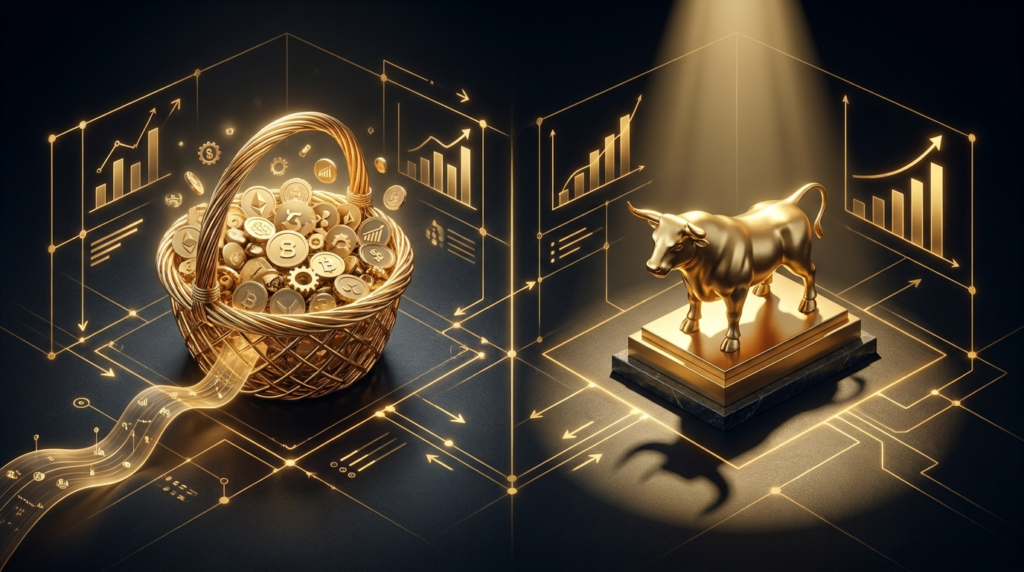
ETFs versus single stocks with diversified basket and individual equity

The ETF universe has exploded. You can get exposure to almost any market segment, strategy, or asset class. But more choices don’t always mean better outcomes.

ETF Advantages

ETFs protect you from your worst mistakes. A 20% position in a stock that goes to zero hurts. That same weight in an ETF means the holding goes down a fraction of a percent. For many investors, that protection is worth the upside sacrifice.

When to Choose ETFs

ETFs make sense when:

  • You want market exposure without stock picking
  • You prefer lower maintenance portfolios
  • You’re building core holdings
  • You want sector/industry exposure without single-stock risk
  • You lack time for individual company research
  • You’re in wealth preservation mode
  • Ideal for: Passive investors, diversified growth, retirement accounts

    ETFs are the ultimate “good enough” solution. You won’t hit home runs, but you won’t strike out either. For most investors over long time horizons, ETFs outperform active stock picking after costs and taxes.

    Risk Comparison

    The single-stock blowup is real. Enron, WorldCom, Lehman Brothers. all seemed solid until they weren’t. ETFs virtually eliminate this risk through diversification. For investors who can’t afford catastrophic losses, this matters.
    Learn With Titan

    Action Items

  • Audit your current portfolio and calculate what percentage is in ETFs vs. single stocks. does it match your risk tolerance?
  • Compare expense ratios on your ETFs to similar alternatives. switch if you can save 0.1% or more annually
  • Implement a position sizing rule for single stocks (e.g., no more than 5% of portfolio in any individual stock)
  • Choose your core-satellite split based on your time, interest, and risk tolerance. then stick to it
  • Set up automatic rebalancing for your ETF core to maintain target allocations without emotional decisions
  • How This Entry Scores

    Every level named in a session brief is scored against the next scheduled close. Nothing is edited after filing: if a level breaks, the record shows it as filed, not as corrected. The desk's full scored history sits on the track record page.

    Continue Reading View all Foundry →
    Membership

    The ledger is public. The desk behind it is not.

    Membership opens every room and every entry the day it is filed, with the same dated honesty the record is built on.

    Join the desk

    This is analysis, not financial advice. Always manage your risk.

    Get our weekly market brief free.