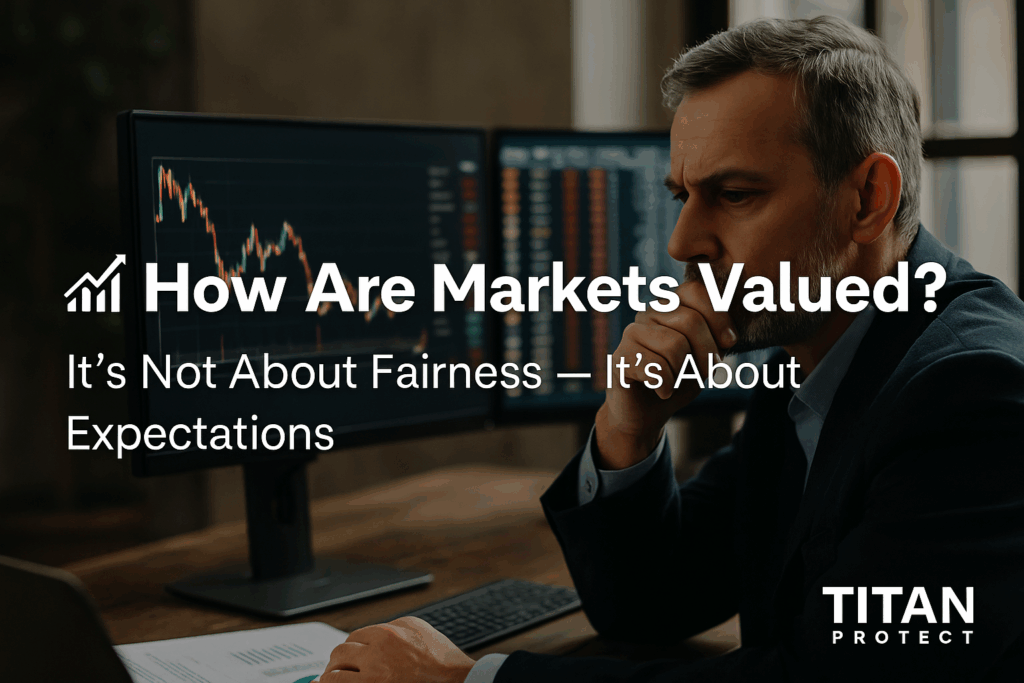
Why Price Isn’t About Fairness? It’s About Expectations, Flows, and Future Belief
If you’ve ever stared at a chart and thought:
“This doesn’t make sense. The news was good. Why is the market falling?”
You’re not alone.
It’s one of the most common frustrations in trading, and one of the most misunderstood concepts:
Markets aren’t priced based on what’s fair. They’re priced based on what’s expected.
Let’s break down how markets are truly valued, and how understanding this shift can change the way you trade forever.
1. Price = Expectations, Not Opinions
Most people think price reflects reality.
In truth, price reflects perceived future value, adjusted for risk, and modified by positioning.
Here’s the formula that actually drives markets:
Price = Consensus Expectation ± Surprise
-
If everyone expects strong earnings, and they arrive? Price may not move.
-
If everyone expects disaster, and results are “less bad”? The market may rally.
-
If good news is already priced in? It’s not bullish — it’s old news.
2. Markets Are Forward-Looking, Not Reactive
The market doesn’t wait for today’s data — it prices in tomorrow’s possibilities.
This is why:
-
Bad news can cause rallies (if it’s “less bad” than feared)
-
Good news can lead to drops (if traders were over-positioned for perfection)
-
Sideways price action doesn’t mean “nothing is happening” — it means consensus is being recalibrated
3. So What Actually Moves the Market?
Let’s look beyond “the chart” and understand the true inputs behind price movement:
| 🔍 Factor | 📊 What It Does |
|---|---|
| Macro Fundamentals | Set the tone for growth, earnings, inflation, policy |
| Liquidity | Dictates how far price can move with available orders |
| Positioning | Shows whether traders are already committed or ready to move |
| Sentiment | Reveals fear/greed bias — often the real catalyst |
| Time Horizons | Short-term flows vs long-term investors = very different pressures |
Example:
If funds are fully long tech ahead of CPI, and it prints as expected?
Price may fall — not because the data was bad, but because there was no fuel left to push higher.
4. The Danger of Trading “What Should Happen”
When traders don’t understand market valuation, they say things like:
-
“This stock is undervalued. It should go up.”
-
“That news was bullish. Why did it drop?”
-
“This market’s irrational.”
But that’s the problem:
The market isn’t irrational — it just doesn’t follow your narrative.
This leads to:
-
Holding trades too long based on belief
-
Ignoring warning signs because it “should bounce”
-
Fighting trend direction based on “logic”
You’re not wrong — you’re just not aligned with the way value is priced.
️ 5. How Titan Helps You Think Like the Market
At Titan Protect, we teach traders to read the current, not just the candle.
Our tools help you:
-
✅ See how macro expectations are shifting (not just past data)
-
📊 Track flows, volume, and sentiment instead of retail bias
-
🔁 Understand when a move is driven by surprise or relief, not just news
-
🧠 Use dashboard views, confluence engines, and reversal logic that match how markets think — not how social media reacts
We don’t predict. We prepare.
6. Final Thought: Value Is Dynamic — And So Is the Market
There’s no single fair value for any asset.
Price is constantly updating as information changes, flows reposition, and sentiment shifts.
Once you stop expecting the market to “make sense”…
You can start responding to what it’s actually telling you.
And that’s when trading becomes less emotional — and more strategic.
Get the daily framework intelligence
Trade the framework, not the noise.
The principles in this article are how we read markets every day. Members get the live application: daily Pre-Asia, Pre-London, Pre-NY and Post-Close briefs across 20+ instruments, the indicator suite, the Foundry library, and live community.
Free Explorer tier · No card required · Upgrade when you’re ready