The dollar is the connector. When DXY at 99.24 is soft, it does not affect just one market — it reprices equities, commodities, emerging market assets, and every major currency pair simultaneously. The professional FX traders do not just watch the dollar go up or down; they watch where the next ten cents of dollar movement will do the most damage or deliver the most upside across their book. That is what this post gives you.
DXY at 99.24: The Context
The US Dollar Index (DXY) closed Friday at 99.24, down 0.08% on the day. The DXY is a weighted basket: approximately 57.6% EUR/USD, 13.6% USD/JPY, 11.9% GBP/USD, 9.1% USD/CAD, 4.2% USD/SEK, 3.6% USD/CHF. What moves the EUR/USD moves the DXY most.
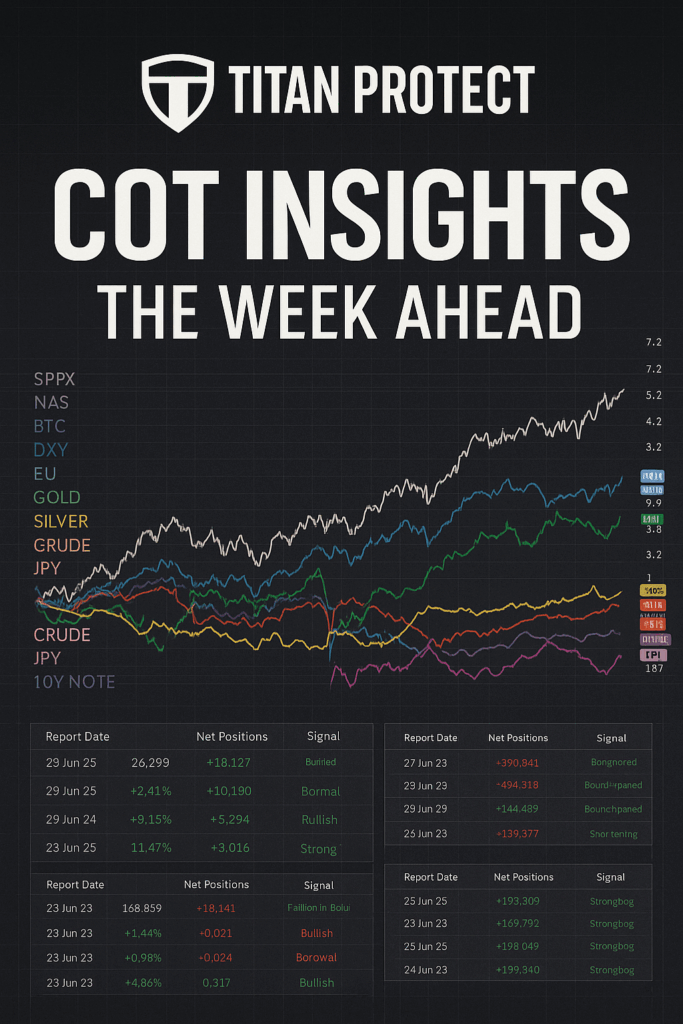
The COT data tells you the institutional positioning on the DXY index futures. Asset managers are net long DXY (asset_mgr_net: +14,595). Leveraged funds are net short DXY (leveraged_net: -11,755). This is the same pattern as bonds but in reverse for the dollar: real money thinks the dollar recovers, fast money thinks it weakens further. Thursday’s PCE resolves the split.
| DXY COT Position | Category | Net Position | View Implied |
|---|---|---|---|
| US Dollar Index Futures | Asset Managers | +14,595 | Long dollar — expect recovery |
| US Dollar Index Futures | Leveraged Funds | -11,755 | Short dollar — expect continued weakness |
| US Dollar Index Futures | Dealers | -6,872 | Net short — providing liquidity to asset manager longs |
Full Major FX Pair Data Table: Friday 23 May Close
| Pair | Close | Day Change % | COT Lean | Key Level | Bias |
|---|---|---|---|---|---|
| EUR/USD | 1.1644 | +0.20% | Asset mgr net +298,772 | 1.1700 (resistance) | Bullish — dollar weakness + ECB hold |
| GBP/USD | 1.3503 | +0.52% | Leveraged net +30,708 | 1.3600 (next target) | Bullish — strong momentum, fastest mover |
| USD/JPY | 158.87 | -0.09% | Leveraged net -81,624 (yen longs) | 160.00 (resistance), 157.00 (support) | Neutral — BOJ holding, yen barely reacting |
| AUD/USD | 0.7176 | +0.50% | Leveraged net +57,180 | 0.7200 (key resistance) | Bullish — commodity currency, risk-on + dollar soft |
| EUR/GBP | 0.8617 | -0.01% | EUR strong, GBP stronger | 0.8600 (support), 0.8700 (resistance) | Neutral — GBP outperforming EUR slightly |
| NZD/USD | 0.5870 | -0.15% | No direct COT available | 0.5900 (resistance) | Mildly bullish — lagging AUD, risk-on not fully captured |
| USD/CHF | 0.7823 | -0.53% | Dealer net +56,914 (CHF longs via dealers) | 0.7780 (support), 0.7900 (resistance) | Bearish USD/CHF — CHF less safe-haven demand = risk-on |
| USD/CAD | 1.3801 | +0.18% | Dealer net +18,498 (CAD longs) | 1.3750 (support), 1.3850 (resistance) | Mixed — energy tailwind not fully translating to CAD |
| GBP/JPY | 214.47 | +0.42% | GBP COT: leveraged net +30,708 | 216.00 (target), 212.50 (stop reference) | Bullish — momentum carry pair |
EUR/USD at 1.1644: The DXY Proxy Trade
Because EUR makes up 57.6% of the DXY basket, EUR/USD is the most direct expression of dollar weakness or strength. At 1.1644, EUR/USD has been on a consistent run higher as the dollar softened. The COT data gives you the institutional view: asset managers are net long EUR (asset_mgr_net: +298,772 contracts) — a very large position. Leveraged funds are mildly short EUR (leveraged_net: -20,890) — a much smaller opposing position.
This means the EUR/USD bullish trend has real money weight behind it. Asset managers do not flip a position of +298,772 contracts quickly. They are positioned for EUR strength over a multi-week horizon. The short-term risk is Thursday’s PCE. A hot print and a hawkish Warsh gets the dollar recovery trade going, EUR drops toward 1.1450-1.1500. A soft print and a dovish Warsh, EUR/USD targets 1.1750-1.1800. The base case (mixed data, markets wait) keeps EUR/USD in the 1.1550-1.1700 range through most of the week.
| EUR/USD Level | What It Means | Probability |
|---|---|---|
| 1.1750-1.1800 | PCE soft, Warsh dovish — dollar weakness continuation | 30% |
| 1.1550-1.1700 | Range — mixed data, markets wait for next week | 35% |
| 1.1400-1.1500 | PCE hot, Warsh hawkish — dollar recovery | 25% |
| 1.1300 or lower | Black Swan — significant Warsh hawkishness, dollar surge | 10% |
GBP/USD at 1.3503: The Fastest Mover
Sterling is the strongest performer in the major FX complex. GBP/USD gained +0.52% on Friday alone, taking Cable through the 1.35 handle. The COT data is interesting here: leveraged funds are net long GBP (leveraged_net: +30,708) while asset managers are net short (asset_mgr_net: -113,996). This is the opposite of the EUR/USD configuration.
Leveraged money (fast, speculative) is buying Sterling. Real money (asset managers) has been selling into the strength. That configuration often precedes a short-term overshoot followed by a reversal. Cable can continue to 1.36 on momentum and dollar weakness, but the asset manager selling pressure at higher levels creates a natural ceiling. The range for the week is 1.3450-1.3650 unless PCE causes a significant dollar move.
The GBP/USD long at current levels has two supporting factors and one headwind:
- Support 1: Dollar weakness (DXY 99.24 and trending lower)
- Support 2: Leveraged fund momentum buying
- Headwind: Asset manager real-money selling into strength — sets an upper limit
USD/JPY at 158.87: The Most Interesting Divergence
The yen is the most significant anomaly in the FX picture. In a genuine dollar-weakness environment, USD/JPY should be falling meaningfully. It fell 0.09% on Friday. That is essentially nothing. The dollar index dropped 0.08%, which means USD/JPY barely even matched the broad dollar move — it should be falling faster than DXY given normal risk-off yen dynamics.
The COT data explains this. Leveraged funds are short yen in size (leveraged_net: -81,624 contracts short yen, long USD/JPY). That is a large carry trade position. When you are long USD/JPY as a carry trade, you borrow cheap yen, invest in higher-yielding dollar assets, and profit from the rate differential. Leveraged funds have an enormous incentive to keep selling yen (buying USD/JPY) because the BOJ has refused to raise rates meaningfully.
The risk is a carry unwind. If the BOJ surprises with a rate hike signal, or if global risk appetite falls sharply (Thursday PCE shock), USD/JPY carry trades get unwound violently. -81,624 leveraged net short yen positions unwinding simultaneously would take USD/JPY from 158.87 to 154-155 very quickly. That is the tail risk sitting in the FX market right now.
| USD/JPY COT | Net Position | Implication |
|---|---|---|
| Leveraged Funds (fast money) | -81,624 (short yen) | Carry trade in place — crowded |
| Asset Managers | -39,727 (short yen) | Real money also short yen, not contrarian |
| Dealers | +71,003 (long yen) | Dealers providing liquidity — hedging against a yen squeeze |
AUD/USD at 0.7176: The Risk-On Currency Confirmation
The Australian dollar is a commodity currency and a risk appetite barometer. AUD/USD at 0.7176 is at a multi-month high and reflects both the risk-on COT regime from Post 00 and the commodity tailwind from Gold ($4,523) and Copper ($6.38). The COT shows leveraged funds strongly long AUD (leveraged_net: +57,180) — speculative money is positioned for further Australian dollar strength.
The 0.7200 level is the next significant resistance. A clean break above 0.7200 targets 0.7280-0.7300 for swing traders. The downside risk is a dollar recovery on hot PCE — AUD/USD could give back to 0.7050-0.7080 quickly in that scenario.
EUR/GBP at 0.8617: The Cross That Tells You About UK Specifics
EUR/GBP at 0.8617 reflects the relative performance of Sterling versus the Euro. When EUR/GBP falls, it means GBP is outperforming EUR — which is exactly what happened on Friday (GBP/USD +0.52% versus EUR/USD +0.20%). The pair is broadly range-bound in the 0.8600-0.8700 zone. A break below 0.8600 would signal Sterling is significantly outperforming — possible if UK-specific data (not impacting EUR) surprises positively. A break above 0.8700 would suggest EUR is reasserting strength, possibly from ECB-related news.
For the week ahead, EUR/GBP is likely to stay in range unless UK data surprises or ECB commentary creates a material EUR divergence.
NZD/USD at 0.5870: Lagging Its Risk-On Peers
NZD/USD at 0.5870 is positive on the week but lagging AUD/USD in relative terms. The AUD/NZD spread (cross at 1.2206) tells you Australian dollar is outperforming NZD. This is consistent with Australia having more direct commodity exposure (Iron Ore, Copper, Gold all up) versus New Zealand’s more agriculture-focused export base. NZD/USD has upside to 0.5900-0.5950 if risk-on continues, but AUD is the stronger risk-on currency trade in this environment.
USD/CHF at 0.7823: The Safe-Haven Signal
USD/CHF at 0.7823, down -0.53% on Friday, tells you safe-haven demand for the Swiss franc was falling on Friday. When risk is on and investors feel comfortable, they sell the CHF and the franc weakens. USD/CHF falling (dollar weakening) at the same time as CHF weakening reflects two forces in the same direction: dollar weakness plus reduced safe-haven demand for the franc. That combination is a clean risk-on confirmation signal from the FX market.
The COT shows dealers are net long CHF (dealer_net: +56,914) — dealers are the smart hedgers in the CHF market, often positioning against the speculative trend. Dealer CHF longs suggest they are prepared for a CHF strengthening episode (safe-haven return) even as the current trend is CHF weakness. This is the hedged position ahead of Thursday’s PCE event.
Instrument Trade Table: Entry, Stop, Target
| Pair | Direction | Entry Zone | Stop | Target 1 | Target 2 | Risk % | Thesis |
|---|---|---|---|---|---|---|---|
| EUR/USD | Long | 1.1580 – 1.1620 | 1.1480 | 1.1700 | 1.1800 | Around 40% | Asset manager COT long; dollar weakness continuation |
| GBP/USD | Long | 1.3440 – 1.3480 | 1.3360 | 1.3600 | 1.3680 | Around 45% | Momentum strong; leveraged fund buying; asset mgr ceiling at 1.37+ |
| USD/JPY | Short (tactical) | 159.00 – 159.50 | 160.20 | 157.50 | 155.00 | Around 55% | Crowded carry trade; yen squeeze risk is asymmetric |
| AUD/USD | Long | 0.7130 – 0.7155 | 0.7060 | 0.7200 | 0.7280 | Around 40% | Risk-on + commodity tailwind; leveraged fund support |
| NZD/USD | Long (lighter) | 0.5840 – 0.5860 | 0.5780 | 0.5920 | 0.5980 | Around 50% | Lagging risk currency; risk-on continuation could close AUD/NZD gap |
| GBP/JPY | Long | 213.50 – 214.20 | 212.00 | 216.00 | 218.50 | Around 50% | GBP strength + JPY weakness; high-momentum carry cross |
| USD/CHF | Short | 0.7840 – 0.7870 | 0.7930 | 0.7760 | 0.7700 | Around 45% | Dollar weakness primary; reduced safe-haven demand confirms |
Multi-Strategy Breakdown
Position Traders (multi-week)
The COT data from the institutional book gives position traders the clearest signal in the EUR/USD. Asset managers are net long 298,772 EUR contracts — that is a position built over weeks, not days. That does not reverse on a single PCE print. The multi-week thesis for EUR/USD longs remains intact unless PCE comes in materially above 2.3% and Warsh explicitly closes the door on 2026 rate cuts. Run EUR/USD long with a stop below 1.1400 and let the institutional weight carry the position.
Approach: EUR/USD long as core FX position. AUD/USD long as secondary. Both supported by dollar weakness structural story. Reduce size (not close) going into Thursday.
Swing Traders (2-5 days)
The cleanest swing trade this week is GBP/USD. Momentum is strong (Cable’s +0.52% Friday), the trend is clear above 1.3400, and the week has a positive macro setup through Wednesday before PCE Thursday. The first half of the week (Tuesday open to Wednesday close) is the window — enter on any Tuesday dip, target 1.3600, stop below 1.3360.
Approach: GBP/USD long on Tuesday dip. Do not hold through Thursday PCE. The asset manager selling pressure above 1.36 limits upside in the near term. GBP/JPY is the higher-beta version of the same trade for traders comfortable with the carry cross volatility.
Intraday Traders
Two intraday FX setups for Tuesday: EUR/USD trend continuation on any dollar weakness reading (Consumer Confidence miss on Tuesday at 10:00 ET accelerates the trend), and GBP/JPY momentum continuation in the London-New York overlap. The first 30 minutes after Tuesday’s open will determine which of these has the most near-term energy. Watch DXY at the open — if DXY breaks below 99.00, all dollar-short pairs accelerate simultaneously.
Approach: EUR/USD and GBP/JPY as primary intraday pairs. Defined range after the first 30 minutes before entering. DXY below 99.00 is the confirmation for dollar-short bias.
Scalpers
GBP/USD is the cleanest scalp pair in this environment. Cable at 1.3503 with strong trend momentum creates a buy-the-dip scalp structure on any 20-30 pip pullback. The pair is trending, not choppy. EUR/USD at 1.1644 is the secondary scalp pair — slightly less volatile but more predictable in its pullback behaviour given the large asset manager long base.
Approach: GBP/USD scalp on 20-30 pip dips within the session. Tight stops (15 pips). No scalp into the Consumer Confidence release window (10:00 ET Tuesday). EUR/USD as backup.
Scenario Analysis
| Scenario | Probability | DXY | EUR/USD | GBP/USD | USD/JPY | AUD/USD |
|---|---|---|---|---|---|---|
| PCE soft, Warsh dovish | 30% | 97-98 | 1.1750-1.1800 | 1.3650-1.3750 | 156.00-157.00 | 0.7250-0.7300 |
| Mixed data, markets wait | 35% | 98.80-100.00 | 1.1550-1.1700 | 1.3450-1.3600 | 158.00-160.00 | 0.7100-0.7200 |
| PCE hot, Warsh hawkish | 25% | 101-102 | 1.1400-1.1500 | 1.3250-1.3350 | 160.00-161.50 | 0.7000-0.7060 |
| Black Swan (Iran or shock data) | 10% | Mixed — yen surge offsets dollar bid | 1.1350-1.1450 | 1.3200-1.3350 | 154.00-156.00 (yen squeeze) | 0.6950-0.7050 |
Position Sizing
| Pair | Sizing | Rationale |
|---|---|---|
| EUR/USD long | 70% of normal | Large institutional base behind it; PCE is the one risk. Reduce Thursday, not before |
| GBP/USD long | 60% of normal | Strong momentum but asset manager selling ceiling limits upside beyond 1.37 |
| AUD/USD long | 65% of normal | Commodity tailwind + risk-on both supporting; stronger base than NZD/USD |
| USD/JPY tactical short | 35% of normal | Crowded carry trade means asymmetric downside if it unwinds; small size for big potential payoff |
| GBP/JPY long | 45% of normal | High volatility cross; momentum is strong but don’t oversize a carry pair ahead of binary event |
| NZD/USD long | 40% of normal | Lagging the risk-on theme; AUD is the better vehicle; NZD as a secondary if AUD already in |
Experience Level Guidance
Beginner: One FX pair this week. GBP/USD. The trend is clear, the direction is up (dollar weak, GBP strong), and the setup has the most straightforward structure. Enter on a Tuesday dip toward 1.3440-1.3460. Stop below 1.3360. Target 1.3600. Do not hold through Thursday’s PCE release. This week’s job is not to be in the market during the binary event — it is to capture the cleaner part of the trend in the first half of the week and step aside on Thursday.
Intermediate: The two-pair approach: EUR/USD long as the institutional position (backed by the large asset manager book) and GBP/USD long as the momentum position. These two work in the same direction but for different reasons, and they have slightly different risk profiles. EUR/USD has more institutional support, which means it is slower to fall on adverse news. GBP/USD moves faster, gives more profit in the right direction, but can also give it back quickly. The intermediate play is to have EUR/USD as the core position (larger size, more patient) and GBP/USD as the tactical overlay (smaller, tighter stop, take profit faster).
Advanced: The USD/JPY carry trade unwind risk is the advanced trade of the week. The position is crowded (-81,624 leveraged fund net short yen). The setup is a two-step approach: small tactical short USD/JPY (long yen) now, with a defined stop at 160.20. If PCE Thursday comes in hot and risk sells off, the carry trade gets hit simultaneously from the risk-off direction AND the dollar-yen dynamic. If the BOJ makes any comment about policy normalisation before Tuesday’s open, the same trigger applies. The risk/reward on a small short USD/JPY position is asymmetric: you risk 130 pips to potentially capture 300-400 pips on the carry unwind. Keep the size small because if PCE is soft and Warsh dovish, USD/JPY actually holds or moves up slightly as risk-on continues and the carry stays intact.
Cross-References
- Post 01 (Macro Pulse): PCE Thursday and Warsh tone are the two events that simultaneously reprice DXY and all major pairs in one direction.
- Post 06 (Global Grid): FX picture from the global grid perspective — confirmed risk currencies strengthening, safe-haven weakening. This post adds the COT depth behind those moves.
- Post 10 (Basis Edge): DXY level directly drives Gold’s dollar-weakness engine. FX and commodities are connected through the dollar.
- Post 13 (Raw Materials Radar): AUD/USD and commodity prices (Gold, Copper) move together. Commodity strength provides AUD tailwind and vice versa.
This analysis reflects data as of the Friday 23 May 2026 close. Markets were closed Monday 25 May (UK Bank Holiday). All positions and data are for information and education only, not personal financial advice. Capital is at risk.
Deepen Your Understanding
Related articles from the Titan Protect Foundry: