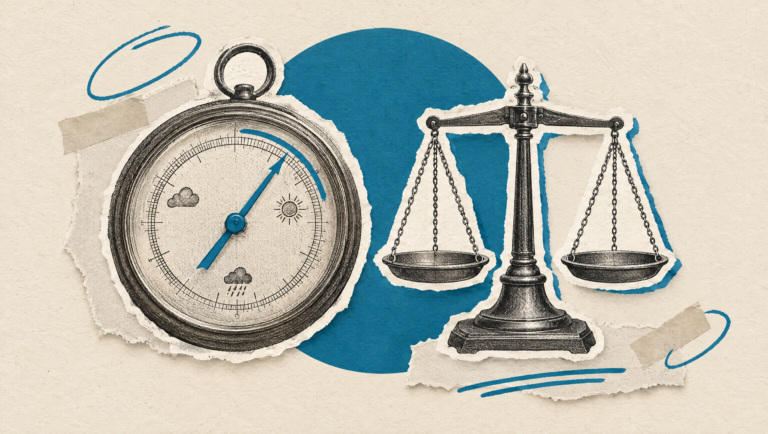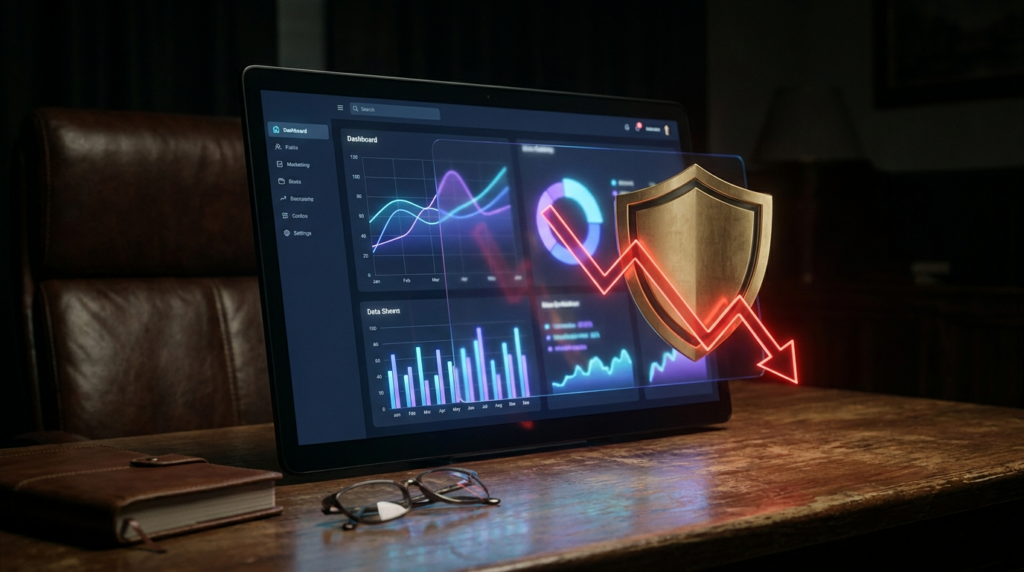
Risk management is the only part of trading you have complete control over. You cannot control where price goes. You can control how much you lose when you are wrong. Every sustainable trading career is built on this distinction.
Most traders treat risk management as a constraint. The ones who last treat it as the strategy.
The 1-2% Rule and Why It Works
The standard institutional guideline is to risk no more than 1-2% of your account on a single trade. This is not a superstition. It is mathematics. At 1% risk per trade, you can lose 20 consecutive trades and still have 82% of your starting capital. At 10% risk per trade, five consecutive losses wipes out 41% of your account.
Consecutive losses are not rare. Every strategy has losing streaks. The trader who sizes correctly survives them. The trader who does not gets margin-called or quits before the edge has time to play out.
Position Sizing: From Risk to Lot Size
The correct process is: account size times risk percentage equals maximum loss in pounds or dollars. That number divided by your stop distance in points gives you your position size per point.
Example: £10,000 account, 1% risk, 40-point stop on an index. Maximum loss is £100. £100 divided by 40 points means your size is £2.50 per point. Not based on what you want to make. Based purely on what you can afford to lose.
Most new traders reverse this. They decide how many lots they want to trade, then figure out their stop after. That approach works when you are right. It destroys accounts when you are wrong.
Stop Placement: Where the Trade is Wrong, Not Where It Hurts
A stop should go where the trade idea is invalidated. If you are buying a breakout above a key level, the stop belongs below that level — the point at which the breakout has failed. Not at the point that gives you a round-number loss.
Placing stops at round numbers or at arbitrary distances is how you get stopped out before moves that would have been profitable. The market does not know where your stop is. But if you place it at obvious levels, other participants can and do hunt those areas.
Portfolio Heat and Drawdown Management
Portfolio heat is the total open risk across all positions. If you have three trades open, each risking 1%, your portfolio heat is 3%. Many professional traders cap total portfolio heat at 4-6% at any given time. Beyond that, a correlated move against you can do serious damage to your account and your mindset.
When you are in drawdown, reduce size. Not because you are less good as a trader, but because your account is smaller and the mathematics of recovery require it. A 20% drawdown requires a 25% gain to recover. A 50% drawdown requires a 100% gain. Protect the capital.
Key Takeaways
- Risk 1-2% of your account per trade. It is not conservative — it is the only way to survive losing streaks.
- Calculate position size from your risk allowance, not from how much you want to trade.
- Place stops where the trade is wrong, not where the loss feels manageable.
- Monitor total portfolio heat. Multiple correlated positions add up fast.
- When in drawdown, reduce size. The mathematics of recovery favour smaller risk.
- You cannot control the market. You can control your loss on every single trade.
Get the daily framework intelligence
Trade the framework, not the noise.
The principles in this article are how we read markets every day. Members get the live application: daily Pre-Asia, Pre-London, Pre-NY and Post-Close briefs across 20+ instruments, the indicator suite, the Foundry library, and live community.
Free Explorer tier · No card required · Upgrade when you’re ready