NAS100 30,808 +1.00%
S&P 7,723 +0.73%
GOLD $4,168 +0.14%
BTC $86,421 +1.96%
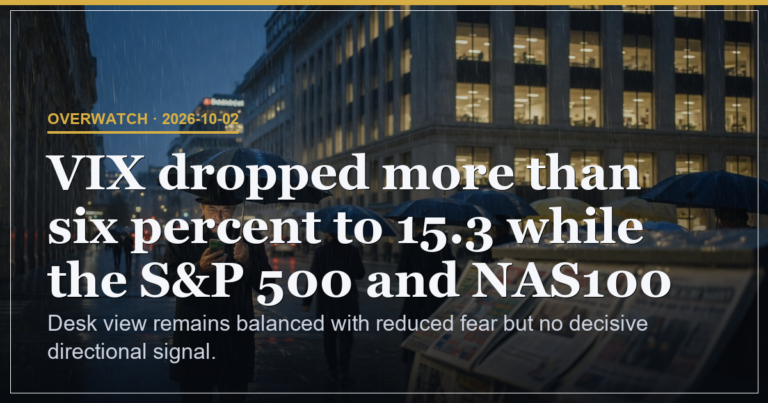
VIX 15.31 −6.59%
live tape · as of 03:09 UTC
PRE-ASIA
SUNDAY 21 JUNE 2026 | POST-OPEX | HORMUZ UNCERTAINTY
Hormuz Contested, $8.3T Cleared, Gamma Slate Reset — Pre-Asia Brief for Monday 22 June 2026
OpEx is done. $8.3 trillion expired Friday, gamma positions reset to near zero, and Monday opens into a structurally different options environment than last week. But the geopolitical picture that replaced it is not clean. Iran says the Strait of Hormuz is closed. CENTCOM says 55 ships are transiting normally. Brent crude fell 4.47% to $80.59 on Friday despite the rhetoric — that divergence between headline and price action is the most important signal Asia inherits tonight. Switzerland talks are reportedly starting, Kushner is already there, and crude futures open at 18:00 ET Sunday. That open is the first real price discovery of the week. Everything flows from it.
✎ Titan Macro Desk
Published pre-Asia handover | 21 June 2026
1. Friday Close and the Week That Was
The week delivered a full narrative arc. Monday opened on Iran ceasefire euphoria. Tuesday reversed with a 670-point NAS100 drawdown. Wednesday’s FOMC hawkish hold added a second layer of stress. Thursday snapped everything back in a tech-only recovery session. Friday was OpEx — $8.3 trillion cleared, gamma mechanics dominated, and the underlying market settled into its post-expiry state. The close leaves us here.
WEEK-CLOSE SNAPSHOT — Saturday 20 June 2026
| Instrument |
Level |
Read |
| SPY |
$746.74 |
Slight uptick from Thursday close, post-OpEx settle |
| VIX |
16.4 |
Below 17 — contango intact, complacency territory |
| Fear & Greed |
37.3 |
Fear zone — market nervous despite equity resilience |
| gex-max-pain-and-putcall-ratios/” style=”color:#D8AF44;text-decoration:underline” title=”What is Options Intelligence?”>P/C Ratio |
0.865 |
Bullish — calls dominate, but options split by instrument |
| Brent Crude |
$80.59 |
‑4.47% — market not buying the Hormuz closure narrative |
| USD/JPY |
161.76 |
Above intervention watch level — yen weak into new week |
| OI Monday |
Thin |
Post-OpEx slate reset — new positions being built |
⚠ THE CRITICAL DIVERGENCE HEADING INTO ASIA
Iran claims the Strait of Hormuz is closed. Brent fell 4.47% on Friday. Those two facts cannot both be true for long. Either the market is right that the closure is rhetoric and crude holds lower, or the market is wrong and crude catches up violently when trading resumes Sunday night. Asia’s session opens into that unresolved tension. The crude futures open at 18:00 ET Sunday is not just a data point — it is the market’s first real verdict on whether the Hormuz claim has substance.
2. What Friday’s Brief Called vs What Happened
Friday’s Pre-Asia brief (19 June) ran four scenarios. Here is the honest scorecard before we build Monday’s framework.
SCENARIO B — Rangy Session, OpEx Pinning Dominates (Called 40% Base Case)
THIS IS WHAT PLAYED
OpEx mechanics dominated as called. SPY settled at $746.74 — above the $725 max pain level but without extending aggressively. The Hormuz announcement introduced exactly the kind of uncertainty that prevents a clean bull trend, producing a rangy session that only resolved into a slight positive. The base case framework held for the third session running.
SCENARIO D — Iran Escalation, Risk-Off Flush (Called 10%)
PARTIAL — CRUDE ONLY
The Iran tail risk triggered in the energy market (Brent -4.47%) but not in equities. SPY held. That is the interesting outcome — an Iran-adjacent energy shock that did not transmit to broad equities. Two reads: either the market has correctly priced Iran as noise, or equities are lagging the energy signal and will catch up Monday. We do not have resolution yet. We carry both possibilities forward.
SCENARIO C — BOJ Intervenes or Japan CPI Shocks (Called 20%)
DID NOT TRIGGER
USD/JPY held at 161.76 into the close without BOJ intervention. No shock Japan CPI print. The yen remains weak and the intervention threshold question carries into this week. Note that 161.76 is still above our watch level from last week’s brief. The trigger did not fire, but the setup remains live. If USD/JPY extends toward 162.50 in early Tokyo trade Monday, intervention probability rises materially.
TRACK RECORD NOTE
Base case (Scenario B) delivered for the third consecutive session. The Brent crude move was in the Iran tail scenario but transmitted only to energy, not equities — a split outcome the framework identified as possible. The BOJ non-trigger extends the yen watch for a fourth session. Three consecutive base-case deliveries across a full FOMC-week cycle is a meaningful read on the current market regime: rangy, selective, mechanically driven rather than fundamentally trending.
3. The Hormuz Question — What the Market Believes vs What Iran Claims
This is the single most important framing question for Monday’s session. The facts are in direct contradiction and the market has taken a clear position — but that position could be wrong.
⚠ IRAN’S CLAIM
The Strait of Hormuz is closed. Iran has made this assertion publicly. Roughly 20% of global oil supply, and a higher proportion of LNG, transits through Hormuz. A genuine closure at full enforcement would be among the most consequential commodity supply disruptions in decades.
If the market is underestimating this claim, the catch-up move in crude could be violent. The last time the strait was genuinely threatened (2019 tanker incidents), Brent spiked 15% in days.
✅ CENTCOM’S READ
55 ships are transiting normally. The US military presence in the Gulf is substantial — Fifth Fleet headquarters in Bahrain, carrier groups in the region. CENTCOM’s operational picture is the market’s comfort blanket and the reason Brent fell rather than spiked.
If CENTCOM is right, the closure is declaratory rather than operational — Iran positioning for leverage in the Switzerland talks that Kushner is attending. That makes Brent at $80.59 correct and the geopolitical premium remains compressed.
THE RESOLUTION FRAMEWORK
MARKET RIGHT
Crude holds below $82 on Sunday open. Ships continue transiting per CENTCOM. Switzerland talks produce early positive signals. The Hormuz claim is leverage theatre, not operational reality. Brent stays range-bound, equities open clean on Monday.
MARKET WRONG
Crude gaps significantly higher on Sunday open. Reports emerge of actual ship detentions or transit disruptions. Switzerland talks stall or produce negative headlines. The geopolitical premium that was priced out re-enters. Energy leads a risk-off session and equities follow with a lag.
The Switzerland talks are the wildcard that tilts probabilities. If Kushner’s presence there produces an early breakthrough or framework, the Hormuz claim deflates immediately — Iran is using it as a negotiating lever. If talks produce silence or breakdown, the claim gains operational credibility and the market will have to re-price. Watch for Switzerland headlines between Sunday 18:00 ET and Tokyo open as the co-catalyst alongside crude futures.
4. Asian Markets — Why Each Market Has a Different Hormuz Exposure
Asia is not a homogeneous block in this scenario. Each major index has a structurally different relationship with oil, Iran, and the geopolitical development. The transmission mechanism varies significantly.
Japan | USD/JPY 161.76 | 90%+ oil import dependency
MAXIMUM HORMUZ EXPOSURE
Japan imports more than 90% of its oil and the overwhelming majority of that comes through the Strait of Hormuz. This is not a marginal sensitivity — it is an existential supply chain dependency. A genuine Hormuz disruption would spike Japan’s import costs, pressure the current account, and add yen depreciation pressure on top of the USD/JPY level that is already at 161.76.
The two forces working against the Nikkei simultaneously: crude up means import cost spike means yen pressure, AND yen further weakness at this level risks BOJ intervention which itself creates a sharp Nikkei reversal. The Nikkei is in the most difficult position of any major index globally in this specific scenario.
The offset: if Hormuz remains operationally open per CENTCOM and crude holds below $82, the US tech recovery tailwind from Thursday still transmits. Nikkei exporters benefit from weak yen if BOJ stays out. The scenario split for Japan is the widest of any market — and the first hour of Tokyo trade Monday is where the verdict lands.
RESISTANCE
39,500 — 39,800
BOJ TRIPWIRE
USD/JPY 162.50
Hang Seng
Hong Kong | China backdrop | Iran’s biggest oil customer
CONFLICTED — BUYER AND VICTIM
China is Iran’s largest oil customer by volume. The relationship has commercial depth — discounted Iranian barrels have been a meaningful input into China’s refinery economics. A Hormuz disruption affects China differently than other importers: China may have backdoor arrangements or pre-positioned supply that insulates it partially from spot disruption. Beijing also has a strong incentive to keep the talks moving, which explains why China has not publicly amplified the Hormuz closure claim.
Hang Seng’s own dynamic is more driven by domestic demand conditions and the PBOC than by Hormuz directly. Property sector headwinds, credit conditions, and the PBOC morning fixing for dollar/yuan remain the primary drivers. Watch the CNH fix at the PBOC morning window: a weaker-than-expected fix signals Beijing is comfortable with currency depreciation — that is a headwind for Hang Seng regardless of oil.
A disruption in Swiss talks that produces Chinese diplomatic engagement is actually a Hang Seng positive — it would position Beijing as the geopolitical broker, which is a soft-power narrative that Chinese equities historically respond to.
RESISTANCE
23,500 — 23,800
ASX 200
Australia | Resource-heavy | Energy names benefit, broader caution
MIXED — ENERGY WINS, INDEX CAUTIOUS
The ASX faces the clearest sector split of the three indices. Energy names — Woodside, Santos — would benefit directly from a sustained crude spike. If Hormuz uncertainty keeps Brent elevated toward $84-85, Australian energy producers are in a strong position. The ASX energy sector is the natural winner of a Hormuz risk-premium scenario.
However, the broader ASX is resource and financial-heavy. Risk-off impulse generated by Hormuz uncertainty hits financials and materials (iron ore, copper, which are China-demand proxies) at the same time energy gains. The net for the index is likely modestly negative in a genuine escalation, and modestly positive in a Hormuz-rhetoric-only scenario where US tech strength provides the dominant tone.
KEY DRIVER
Crude futures open
5. Post-OpEx Structure — What the Gamma Reset Means for Monday
Last week’s brief outlined the $8.3T expiry mechanics in detail. They have now resolved. Here is the post-expiry structural picture Asia inherits.
01
Thin Open Interest Monday — No Gamma Pin
Post-OpEx, open interest is at its lightest point of the monthly cycle. The artificial gravitational pull toward strike prices that characterised Friday’s session is gone. Monday is freed from those mechanics. That is net positive for clean directional moves — but it also means there is no cushion from dealer hedging flows if a real geopolitical catalyst hits. Moves on thin OI carry further and faster.
02
Options Split — Bullish Mega-Caps, Bearish QQQ and
IWMThe overall P/C at 0.865 reads bullish. But the split is important: options sentiment is bearish on QQQ and IWM specifically, while mega-caps individually carry bullish positioning. This suggests the market is long concentrated large-cap exposure but protecting against broader tech and small-cap weakness. The bifurcation makes Monday a mean-reversion risk in both directions — if QQQ outperforms its own options positioning, that bearish print was too heavy; if it underperforms, the protection kicks in.
03
VIX at 16.4 — Complacency or Correct?
VIX at 16.4 with Hormuz contested and Iran-US talks at a sensitive juncture is telling you the options market does not believe the geopolitical narrative has legs. VIX this low means protection is cheap. If you believe Hormuz is a real disruption risk and not theatre, the cost of buying protective puts into the week is at a historical low relative to the geopolitical backdrop. That is the trade-off Asia needs to assess heading into Monday’s open.
FEAR AND GREED DIVERGENCE
Fear and Greed at 37.3 sits in the fear zone. VIX at 16.4 sits in the complacency zone. P/C at 0.865 sits in the bullish zone. Three sentiment indicators, three different signals. The resolution: Fear and Greed captures the retail layer. VIX captures institutional hedging cost. P/C captures active options positioning. The institutional layer is comfortable (low VIX, bullish P/C) while the sentiment layer is nervous. In the near-term, institutional flows dominate price action. But the retail fear layer can flip fast if a real catalyst lands.
6. Four Things to Watch in the Asia Session — Ranked by Priority
1
Crude Futures Open — 18:00 ET Sunday (23:00 UTC)
This is the first genuine price discovery since the Hormuz claim and CENTCOM rebuttal. The direction of crude’s initial move tells you what the market believes. A gap below $80 (crude falling further) says Hormuz is being treated as noise and the diplomatic path is intact. A spike above $83-85 says the market is starting to price in supply risk. Anything between $80-82 is consolidation — no verdict yet, watch for direction through the Tokyo open.
LEVELS TO WATCH
Below $80: Market calling Hormuz rhetoric | $80-82: Neutral, wait | Above $83: Supply risk pricing in | Above $85: Escalation scenario activated
2
Switzerland Headlines — Kushner Already There
The talks reportedly starting with Kushner present changes the probability distribution for the Hormuz claim. If Iran is simultaneously claiming closure while sending representatives to negotiate, the closure is leverage — not operational. A positive early signal from Switzerland (even just confirmation of meeting) compresses crude and opens Asian equities higher. A breakdown or silence extends uncertainty through the full Asia session into London open.
HEADLINE TRIGGERS
Talks confirmed or framework agreed: crude down, risk-on | Talks collapsed or no contact: crude up, risk-off | Silence: market stays in uncertainty, crude range-bound
3
Nikkei and USD/JPY in the First Hour of Tokyo
USD/JPY at 161.76 is not at an equilibrium level. It is above the BOJ watch zone from last week’s analysis. Three scenarios that reset the session tone in that first Tokyo hour: (a) USD/JPY extends above 162.50, raising BOJ intervention probability sharply and pressuring Nikkei; (b) USD/JPY holds 161-162 range, Nikkei grinds modestly positive on US tech tailwind; (c) BOJ or Ministry of Finance issues verbal warning — yen strengthens 1-1.5 yen quickly, Nikkei opens on the back foot. Scenario (b) is the base but (a) and (c) are live.
USD/JPY WATCH LEVELS
Below 161.00: Yen strengthening, Nikkei risk | 161.00-162.50: Range, exporters stable | Above 162.50: BOJ intervention risk elevated materially
4
Gold — Safe Haven Bid vs Dollar Pressure
Gold is in a tug of war that has persisted across the week. Thursday’s risk-on rotation pushed it down 2.72%. A genuine Hormuz escalation would push it sharply higher as the safe haven of last resort. A diplomatic breakthrough would extend the risk-on rotation lower. Gold’s direction on Sunday night is a secondary confirming signal for which Hormuz scenario is playing out — it moves before many equity markets respond to geopolitical developments, especially in the thin Sunday night session.
GOLD LEVELS
Above $4,280: Safe haven bid active, risk-off building | $4,200-$4,280: Neutral consolidation | Below $4,200: Risk-on extension, diplomacy winning
7. Key Levels for Monday’s Asia Open
| Market |
Last Level |
Support |
Resistance |
Hormuz Sensitivity |
| Brent Crude |
$80.59 |
$79.00 — $80.00 |
$83.00 — $85.00 |
Primary — Sunday open is price discovery |
| Nikkei 225 |
Monday open |
38,200 — 38,500 |
39,500 — 39,800 |
Extreme — 90%+ oil import dependency |
| Hang Seng |
Monday open |
22,800 — 23,000 |
23,500 — 23,800 |
Conflicted — biggest Iran oil customer |
| ASX 200 |
Monday open |
7,850 — 7,900 |
8,050 — 8,100 |
Mixed — energy wins, broader cautious |
| USD/JPY |
161.76 |
160.50 — 161.00 |
162.50 |
BOJ tripwire — watch above 162.50 |
| Gold |
~$4,240 |
$4,200 — $4,220 |
$4,280 — $4,320 |
Safe haven confirming signal |
| SPY (US Futures ref) |
$746.74 |
$738 — $740 |
$752 — $755 |
Post-OpEx freed from max pain drag |
| VIX |
16.4 |
14 — 15 |
18 — 20 |
Low = market relaxed; spike if Hormuz escalates |
8. Scenario Analysis — Four Paths for Asia Monday
SCENARIO A — Diplomacy Wins, Crude Falls, Clean Risk-On Open
30% probability
What it looks like: Switzerland talks produce early positive signals — even a confirmation that both sides are engaging productively. Crude futures open below $80 and drift lower. Gold holds around $4,220 without safe haven bid. Nikkei opens +0.8-1.2%, USD/JPY holds 161-162 without BOJ intervention. Hang Seng and ASX follow modestly. The Israel-Hezbollah ceasefire holding adds a secondary confirmation of diplomatic momentum. VIX stays below 17.
Why it works: The Hormuz closure was leverage not enforcement. Talks starting = leverage worked = closure lifts. Post-OpEx thin OI means the risk-on move carries further than last week’s range-bound session allowed.
SCENARIO B — Uncertainty Persists, Range Session Through Asia
40% probability — BASE CASE
What it looks like: Switzerland produces no early signals. Crude opens between $80-82, oscillates without clear direction. Nikkei opens flat to +0.4%, grinds sideways through the Tokyo session. Hang Seng and ASX similarly range-bound. Gold consolidates around $4,220-$4,250. Markets are waiting for clarity — from crude, from talks, from Tokyo FX markets — and not willing to position ahead of it. The Israel-Hezbollah violations add low-level noise but no escalation.
Why this is base case: Post-OpEx thin OI on a Sunday night into a contested geopolitical situation is the textbook “wait and see” setup. The absence of a resolution in either direction before Tokyo open keeps the market in limbo. London inherits a directionless Asia hand and makes its own decision.
SCENARIO C — Hormuz Escalates, Crude Spikes, Risk-Off Asia Open
20% probability
What it looks like: Crude gaps above $83 on Sunday open. Reports emerge of actual transit disruptions, ship detentions, or Iranian naval activity. Switzerland talks collapse or Iran withdraws. Gold spikes above $4,300. Nikkei opens -1.5% or worse as import cost fears dominate. USD/JPY could paradoxically strengthen (yen as safe haven in non-US crisis) OR weaken further on inflation expectations from crude spike. The yen direction in this scenario is genuinely ambiguous — which adds to Nikkei volatility.
Key tell: The crude futures open level is the gatekeeper. If it gaps above $83, this scenario is activating. If it holds below $82, you’re still in Scenario A or B.
SCENARIO D — BOJ Intervenes, Yen Shock Hits Nikkei
10% probability
What it looks like: USD/JPY breaks above 162.50 in early Asia trade. Japanese authorities — BOJ or Ministry of Finance — issue verbal intervention warning or conduct actual FX market operations. Yen strengthens 1.5-2.5 yen rapidly. Nikkei gaps down 2-3% as exporter valuations reset. Carry trades unwind across Asia. ASX and Hang Seng see sympathy selling. Gold and bonds catch safe haven flows.
Context: This is independent of Hormuz — it can happen in any scenario if the yen extends. The BOJ has been tolerating current levels but the 162.50 region is where the historical pain threshold sits based on prior intervention episodes. Monitor any official Japanese government FX commentary in the Sunday 23:00 UTC window before Tokyo open.
30%
Scenario A (Diplomacy Wins)
40%
Scenario B (Uncertainty Range)
20%
Scenario C (Hormuz Escalates)
10%
Scenario D (BOJ Shock)
9. Bias: Conditionally Bullish — Let Crude Tell You Which Side to Be On
TITAN MACRO DESK — PRE-ASIA BIAS | 22 JUNE 2026
Conditionally Bullish — Crude Futures Open Is the Decision Gate
The underlying equity structure coming out of OpEx is constructive. SPY at $746.74 above what was max pain. VIX at 16.4. P/C bullish. Post-OpEx thin OI means the market is freed from last week’s mechanical drag. If Hormuz resolves as theatre and Switzerland produces early progress, the Monday open is one of the cleaner setups of the month — equity markets entering a new options cycle with bullish positioning and no gamma pin overhead.
But crude futures open at 18:00 ET is the gate you must pass through before you take that view on conviction. If crude gaps higher, you are not in a risk-on world regardless of what the equity structure says. The divergence between Iran’s claim and Brent’s actual level (-4.47% on Friday) will resolve in one direction before London opens Monday. Asia’s job is to receive that verdict, not to fight it.
Practical read for the Asia session: watch crude futures open before forming a directional view. Watch USD/JPY in the first 30 minutes of Tokyo. Watch for any Switzerland headline between 18:00-23:00 UTC. If all three are benign, the conditional bullish bias converts to an active one. If any of the three flags, step back, reduce size, and wait for London to add its read.
DECISION GATE
Crude 18:00 ET open
OI STRUCTURE
Thin — post-OpEx reset
STRATEGY TIERS — ASIA SESSION MONDAY 22 JUNE
MACRO
Post-OpEx the structural equity picture is constructive. FOMC is priced. Options positioning is bullish at the aggregate level. The macro tail risk is Iran-driven and diplomatic in nature — not a Fed policy surprise or earnings shock. Hold existing equity exposure if you ran it through OpEx. The geopolitical uncertainty warrants not adding to size until crude and Switzerland give you a verdict.
SWING
Nikkei at 38,200-38,500 is the swing long zone if crude holds below $82 and USD/JPY stays below 162.50 in the Tokyo open window. Tight stop at 37,800. ASX energy names (Woodside, Santos area) are long candidates if crude gaps above $82 — that is the scenario where their upstream exposure is a structural win. If crude falls to $79, the energy long thesis inverts — wait for directional confirmation before entering.
INTRADAY
Asia intraday trades should be sized at around 50-60% of normal until the crude futures verdict is in. The window between crude open (18:00 ET Sunday) and Tokyo open is the highest-information period of the week. Route intraday trades off the first clear signal — crude direction, USD/JPY reaction, any Switzerland headline. Do not position ahead of the gate. Once the gate clears in one direction, the thin post-OpEx OI will amplify that move further than usual.
RISK DISCLOSURE
This briefing is produced by the Titan Macro Desk for informational and educational purposes only. It does not constitute financial advice, a solicitation, or a recommendation to buy or sell any financial instrument. All market analysis involves uncertainty and past patterns do not guarantee future results. Geopolitical events, including but not limited to developments in the Strait of Hormuz and ongoing diplomatic negotiations, can produce rapid and unpredictable moves in energy, currency, and equity markets. Trading financial instruments carries significant risk of loss, including the loss of more than your initial capital. Post-options expiry periods feature reduced open interest and can exhibit amplified price moves relative to typical sessions. Readers should conduct their own research and seek independent professional advice before making any investment decisions. All levels, probabilities, and scenarios are analytical assessments, not guarantees of outcome.
How This Entry Scores
Every level named in a session brief is scored against the next scheduled close. Nothing is edited after filing: if a level breaks, the record shows it as filed, not as corrected. The desk's full scored history sits on the track record page.
This is analysis, not financial advice. Always manage your risk.