Setup Radar • Thursday 28 May 2026 • Pre-PCE Read
Setup Radar | Thursday 28 May 2026 | Pre-PCE read
Core PCE lands at 08:30 EDT. Everything else is context. The macro analysis established a cautiously bullish regime on a soft print. The positioning data showed $27B in institutional dark pool accumulation concentrated in large-cap tech and semiconductors. The sentiment picture confirmed the wall of worry: retail bearish at all-time highs, options flow net bullish. The volatility structure revealed engineered calm before a binary event, with VIX closing at 16.29 on the session’s low while the three-month forward sits 3.16 points higher. Now the question is simple: where does price react, and where do we engage? This post maps the levels. Gold at $4,487 holding a critical floor. SPY at $750.46 sitting on a 24-hour expiry with max pain one dollar lower. Crude at $89.71 after a $4 single-session crash. NZD/USD ripping 1.01% overnight as risk appetite surges. Six setups. Specific levels. Clear R:R on each.
Setup Radar Core Read
PCE is a binary. Pre-print, our read is: hold existing setups, reduce directional new exposure, use defined-risk structures where available. Post-print, the playbook changes based on the number. A soft print opens Gold, SPY, and NZD/USD to the upside. A hot print sends all three against those longs simultaneously. Crude has already moved. The fade-the-bounce setup on crude is available regardless of PCE direction. Every setup below carries a defined stop and a defined target. That is not optional on a data day.
What the Prior Analysis Tells This Radar
Every setup below is built on four prior reads that must be integrated, not ignored.
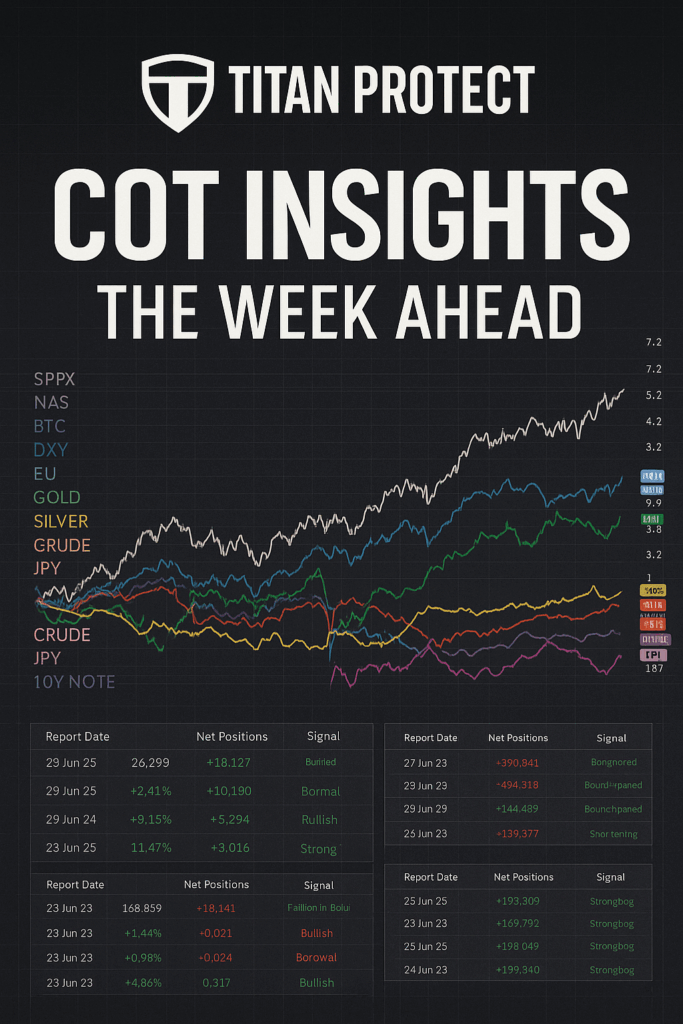
The large-account positioning analysis was the foundation. $27B+ in institutional dark pool flow landed in SPY, NVDA, AAPL, MSFT and MU. Asset managers are net long S&P 500 futures at +1,002,779 contracts. Leveraged funds are net short equities at 383,426 contracts. That divergence means the institutional long is the dominant book, and the leveraged short is a source of potential fuel to the upside on a soft PCE. The contrarian fuel is already loaded.
The macro picture added the specific catalysts. The 10-year Treasury at 4.481% is bidding into PCE. Crude already crashed 4.45% to $89.71. DXY is flat at 99.17 with 11,755 speculative net short contracts in place. The macro read was: a soft print sends 10Y toward 4.35%, DXY tests 98.50, and the equity extension continues. A hot print unwinds three positioned trades simultaneously.
The sentiment picture confirmed what the survey versus options flow divergence means. AAII bears at 43.6% against all-time highs is textbook wall of worry. Options aggregate put-to-call at 0.606 is bullish by classification. But SPY’s put open interest ratio at 1.969 means the same institutions buying the tape are maintaining deep put hedges at 714, 731, and 734.
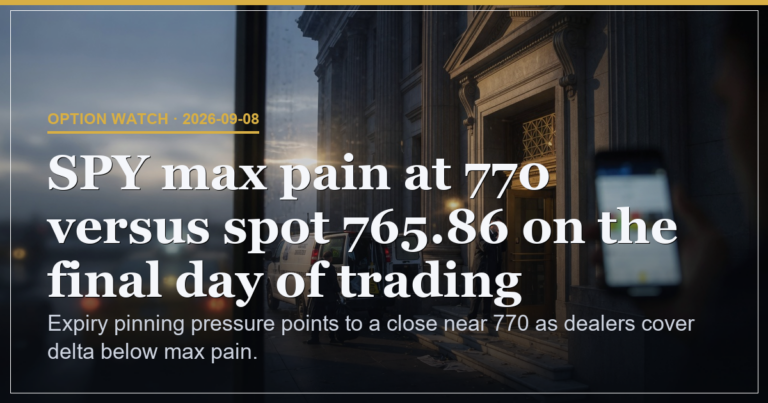
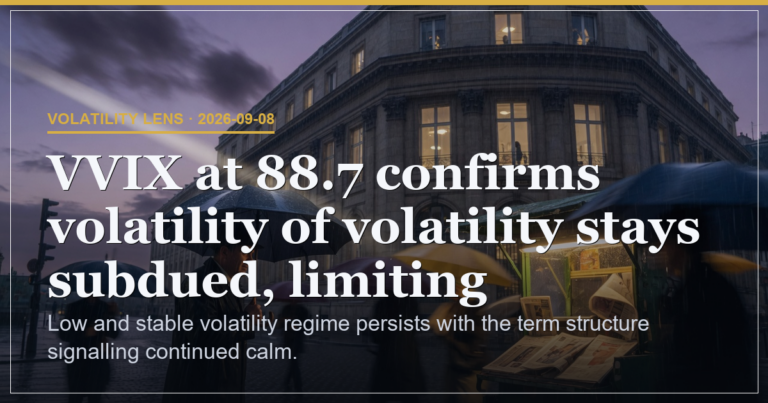
The volatility analysis drew the clearest line. VIX at 16.29 is engineered calm. Max pain on SPY is $749. That is one dollar below spot. On a day when the near-term expiry lands on the PCE print itself, max pain gravity is a real force in the morning session before the number releases. The setup radar builds from all four of these reads. None of the levels below are arbitrary.
| Prior Analysis | Key Finding | Radar Implication |
|---|---|---|
| Institutional positioning analysis | $27B dark pool; AM net long +1M contracts | Supports long bias; leveraged short = squeeze fuel |
| Macro rates and dollar analysis | 10Y bidding; DXY flat; Crude -4.45% | Soft PCE = TLT/Gold long; Hot PCE = all positioned trades reverse |
| Sentiment divergence read | AAII 43.6% bears; P/C vol 0.606 bullish | Wall of worry = contrarian fuel on soft print |
| Volatility structure analysis | VIX 16.29; max pain SPY $749; 3M VIX 19.45 | Pre-print: stays near 749-751. Post-print: direction determined by data. |
The Six Setups: Master Table
Six instruments. Each carries a defined entry zone, stop, and at least two targets. R:R calculated on the primary target. All levels derived from Wednesday’s confirmed market data and cross-referenced against the institutional positioning and options structure from the prior reads. These are what we are monitoring heading into and through the 08:30 EDT print.
| Instrument | Direction | Entry Zone | Stop | Target 1 | Target 2 | R:R (T1) | PCE Condition |
|---|---|---|---|---|---|---|---|
| Gold | LONG | $4,480 – $4,490 | $4,455 | $4,530 | $4,580 | 1.6:1 | Soft OR hot |
| SPY / S&P 500 | LONG (post-PCE) | $748 – $750 dip | $744 | $758 | $770 | 1.5:1 | Soft only |
| Crude (WTI) | FADE BOUNCE | $91.50 – $92.50 | $93.50 | $88.50 | $86.00 | 1.5:1 | Soft OR hot |
| NZD/USD | LONG | 0.5880 – 0.5895 | 0.5855 | 0.5940 | 0.5980 | 1.5:1 | Soft only |
| TLT (20Y Bonds) | LONG | $84.80 – $85.30 | $83.90 | $87.00 | $89.50 | 1.9:1 | Soft only |
| USD/JPY | SHORT (post-PCE) | 159.80 – 160.20 | 160.80 | 158.20 | 156.50 | 1.6:1 | Soft only |
All levels sourced from post-close data as of Wednesday 28 May 2026. R:R calculated on entry midpoint to Target 1.
Setup 1 — Gold: The One Position That Works in Both Scenarios
Gold closed at $4,487.60, down 0.28% on the session. It traded between $4,485.50 and $4,502.00 during the day. The session high of $4,502 means bulls tested $4,500 and could not hold it. The close at $4,487 means sellers rejected $4,500 but did not break the $4,480 floor. That range compression before a major event is not weakness. It is accumulation.
The macro analysis said it clearly: Gold is the one position that benefits from regime uncertainty regardless of PCE direction. Soft print means the dollar weakens, real yields fall further, and gold’s non-yielding status becomes a relative advantage against a dollar in structural decline. Hot print means equities sell off and gold absorbs the flight-to-quality bid even as it initially dips on the real yield spike. The $4,480 floor held through crude’s 4.45% crash. That is a structural signal, not coincidence.
The options structure confirms the gold thesis. The implied volatility skew on OTM puts versus OTM calls is consistent with the broader market’s downside hedging posture. Gold benefits when that hedging proves necessary. The gold/silver ratio sits at 59.63, with silver closing at $74.92 down 1.82%. When silver underperforms gold by this magnitude, industrial demand anxiety is present. Gold is not just holding as a safe haven; it is doing so against a backdrop of genuine growth uncertainty that the volatility analysis flagged in the term structure.
| Parameter | Level | Rationale |
|---|---|---|
| Entry Zone (long) | $4,480 – $4,490 | Cluster of session closes; $4,480 is the defended floor in the prior read |
| Stop | $4,455 | Below prior structure; a break here means the thesis is wrong and crude’s collapse has become deflationary for gold too |
| Target 1 | $4,530 | Soft PCE: dollar weakness drives the first extension; re-test of the $4,502 intraday high and beyond |
| Target 2 | $4,580 | Extended run as the rate-cut narrative firms into the June FOMC window; momentum above $4,530 tends to run |
| R:R (to T1) | ~1.6:1 | Mid-entry $4,485, stop $4,455 (-30pts risk), T1 $4,530 (+45pts reward) |
| PCE Condition | Soft OR Hot | The one setup active in both scenarios; hot print initially pressures gold but $4,455 stop absorbs the dip before flight-to-quality recovers it |
The tension we are holding on gold: The macro analysis says MAX allocation on gold and the read is unambiguous. But silver closed down 1.82% on the same session gold closed down 0.28%. When the industrial precious metal is falling sharply while the safe-haven metal holds, the growth picture is worse than the equity index is pricing. Gold at $4,487 with silver at $74.92 is a gold/silver ratio of 59.63. A ratio above 80 would signal genuine economic stress. We are not there. But the direction is moving that way. We are long gold as a regime-uncertainty hedge, not as a pure inflation bet. The distinction matters if PCE comes in hot.
Sizing guidance: This is the setup we are allocating full size to, consistent with the macro analysis that rated gold at MAX on PCE day. The stop at $4,455 keeps the loss manageable even at full allocation. On a hot PCE print, gold will initially dip toward that stop before recovering. Patience through the initial knee-jerk is part of the setup, not a reason to exit early.
Setup 2 — S&P 500: Max Pain Gravity Then the Post-PCE Break
SPY closed at $750.46. Max pain for the nearest expiry is $749.00. That is a 0.19% gap. On a day when the expiry lands on the same morning as PCE, max pain is not a coincidence. It is a gravitational force operating on dealer hedging flows before the data. Expect the pre-PCE window to see SPY traded within the $748 to $752 band as both sides of the options book battle for positioning before 08:30.
The institutional positioning analysis was clear: asset managers are net long +1,002,779 S&P 500 futures contracts. Leveraged funds are short 383,426. That divergence is $27B of accumulated dark pool exposure sitting under the market. A soft PCE forces the leveraged short to cover. The capitulation of the 43.6% retail bearish camp that the sentiment analysis described is exactly the scenario where the short squeeze runs fast and far from the $748 zone.
The SPY options data adds precision. The call at $751 saw 771,417 contracts traded, volume-to-open-interest ratio of 75.03. That is the most active single strike on the tape. The call at $750 saw 671,473 contracts with a 54.35 ratio. Calls are being bought aggressively at the current price level. That is not the footprint of a market bracing for a decline. It is the footprint of a market expecting a post-PCE extension.
This setup is CONDITIONAL on a soft PCE print only. The macro analysis assigned 45% probability to that scenario. A hot print inverts this immediately and SPY drops toward the $734 to $731 put open interest cluster that the volatility analysis identified. On a hot print, SPY becomes an AVOID rather than a buy on dips. The setup only activates post-data on confirmation of soft or in-line.
| Parameter | Level | Rationale |
|---|---|---|
| Pre-PCE range (hold) | $748 – $752 | Max pain gravity zone; dealer flow keeps price near $749 before data; no new exposure here |
| Entry Zone (soft PCE dip) | $748 – $750 | Initial knee-jerk post-data often retraces 0.3-0.5% even on soft prints; buy the retest of pre-print level |
| Stop | $744 | Below the options support cluster; a break here means PCE was not as soft as the bounce implied |
| Target 1 | $758 | First extension after clearing $751-$753 call cluster; short-term momentum target |
| Target 2 | $770 | Squeeze scenario: leveraged short covers simultaneously with bearish retail capitulation; run lasts into the next session |
| R:R (to T1) | ~1.5:1 | Mid-entry $749, stop $744 (-$5 risk), T1 $758 (+$9 reward) at SPY level |
| PCE Condition | Soft ONLY | Hot print: SPY drops to $734-$731 put OI cluster. That setup flips entirely on hot data. |
The detail that changes the SPY calculus on a hot print: The call at $751 that saw 771,417 contracts traded becomes deeply out of the money instantly. The put at $750 and $749 that saw 564,829 and 589,986 contracts traded suddenly flips from “worthless expiry hedges” to “profitable downside positions.” The entire options positioning reverses. That is why this setup is POST-DATA ONLY. Do not enter SPY before the number prints.
Sizing guidance: STANDARD allocation on the post-soft-print entry, not before. This is not a pre-PCE speculation. The breadth issue from the prior reads — 46.6% advancing names on the record close — remains the structural concern. Even on a soft print, we are watching whether breadth improves post-data before adding to any extension above Target 1.
Setup 3 — Crude: Fade Any Bounce. The Geopolitical Premium Is Gone.
Crude WTI closed at $89.71, down 4.45% on the session. The full $4.18 single-day move means the Iran strike premium that had pushed crude toward $96.60 is fully out of the market. The macro analysis confirmed this: the demand destruction story from Japan (crude imports down 59% month-on-month following the Strait of Hormuz closure) keeps a structural ceiling on any bounce.
This is a fade-the-bounce setup, not a fresh short at current levels. After a 4.45% single-session drop, crude has more than a reasonable probability of seeing a technical bounce toward $91 to $92.50. That bounce is the entry. The case against chasing it higher: there is no fundamental catalyst to re-inflate crude toward $93-$95. The Iran-deal dynamic would need a fresh geopolitical shock. A hot PCE does not help crude — it hurts demand indirectly by keeping rates elevated. A soft PCE softens the dollar slightly, which gives a mild crude bid, but not enough to overcome the structural demand headwind.
The XLE sector closed at $56.99, down 1.49% on the session, underperforming SPY by 1.47 percentage points on a day when SPY was essentially flat. Energy sector underperformance on a flat equity day is a confirming signal: the market is not treating crude’s collapse as a buying opportunity in the sector. It is treating it as a structural repricing.
| Parameter | Level | Rationale |
|---|---|---|
| Setup type | Fade the bounce (short) | After a 4.45% drop, buy-the-dip technicals create a bounce worth fading, not chasing |
| Entry Zone | $91.50 – $92.50 | Prior structure from the Hormuz premium zone; intraday bounce target before sellers re-engage |
| Stop | $93.50 | Above the prior consolidation; a move here means the geopolitical bid is partially returning and the fade is wrong |
| Target 1 | $88.50 | Acceptance of the new post-premium lower range; natural support from prior demand zone |
| Target 2 | $86.00 | Extended fundamental repricing; demand destruction from Japan and OPEC+ supply concerns combine |
| R:R (to T1) | ~1.5:1 | Mid-entry $92, stop $93.50 (-$1.50 risk), T1 $88.50 (+$3.50 reward) |
| PCE Condition | Soft OR Hot | Rare non-binary setup. Hot PCE does not help crude. Soft PCE gives minimal support. Both leave the structural ceiling in place. |
Sizing guidance: REDUCED exposure as the macro analysis directed. This is not a momentum trade in the direction of the trend — it is a counter-bounce fade. Smaller size, wider stop management on the day of a major data event. Do not short crude on the open into a potential hot PCE spike; wait for the bounce to set up in the entry zone first.
Setup 4 — NZD/USD: The Risk-On Proxy Overnight Move Confirms Appetite
NZD/USD closed at 0.5901, up 1.01% on the session. That is the strongest major currency mover overnight. The macro analysis called it directly: the kiwi is a pure risk-on proxy. When it leads the majors higher while DXY sits flat, risk appetite in Asia is intact. The move puts NZD/USD back above the 0.5885 to 0.5900 level that has been a contested zone for the past several sessions.
The NZD cross picture adds context. NZD/JPY surged 1.15% to 94.08. NZD/CAD gained 1.20% to 0.8161. NZD/CHF rose 1.23% to 0.4642. The NZD strengthening is broad, not just against the dollar. When a risk proxy advances against both safe-haven (JPY, CHF) and commodity currencies (CAD), that is an expression of genuine global risk appetite, not just a US dollar story.
The setup logic: NZD/USD at 0.5901 is stretched from the overnight move. A pullback to 0.5880 to 0.5895 is the entry opportunity. That level represents the prior resistance that NZD is now using as support after breaking through it. The soft PCE catalyst is needed to extend this trade because a hot print sends NZD/USD back toward 0.5820 as DXY surges and risk appetite collapses simultaneously.
| Parameter | Level | Rationale |
|---|---|---|
| Entry Zone (long) | 0.5880 – 0.5895 | Pre-PCE pullback opportunity; broken resistance becomes support; the overnight momentum qualifies the pullback as a buy |
| Stop | 0.5855 | Below prior structure; a break here invalidates the risk-on narrative and the hot PCE scenario is in play |
| Target 1 | 0.5940 | Extension through 0.5901 close; next resistance cluster from prior session range highs |
| Target 2 | 0.5980 | Extended risk-on run if DXY breaks through 98.50; the structural dollar short of 11,755 contracts adds fuel here |
| R:R (to T1) | ~1.5:1 | Mid-entry 0.5887, stop 0.5855 (-32 pips risk), T1 0.5940 (+53 pips reward) |
| PCE Condition | Soft ONLY | Hot PCE collapses this trade immediately. NZD/USD returns to 0.5820 in minutes. |
Sizing guidance: STANDARD on this setup, but it is a soft-PCE-only trade. The AUD/USD context is worth noting: AUD closed down 0.35% while NZD surged 1.01%. The AUD/NZD cross dropped 1.37% to 1.2106. NZD outperforming AUD by that margin on the same day says this is specific NZD strength, not generic antipodean risk appetite. The NZD setup is cleaner than AUD right now.
Setups 5 and 6 — TLT and USD/JPY: The Rate-Path Trades
Two setups tied directly to the rates path that the macro analysis established. Both are soft-PCE-only. Both carry meaningful R:R if the data confirms the disinflationary narrative.
TLT at $85.30. Long bonds have been bidding into PCE all week. The 10-year yield at 4.481% is down from 4.493%, and the TLT closed up 0.24% at $85.30. The institutional bid into bonds is the macro read’s primary signal. A soft PCE sends 10-year yields toward 4.35%, which equates to TLT trading toward $87 to $88. The entry zone is the consolidation range $84.80 to $85.30 that has formed as bonds accumulate before the print. Stop at $83.90 respects the prior session’s range lows. The R:R to Target 1 is 1.9:1, the best in the entire setup list.
USD/JPY at 159.50. The macro analysis flagged the USD/JPY dynamic as the one unresolved tension: the yen should be appreciating given Japan’s 40-year JGB auction cleared at 3.84% (versus 3.60% prior), yet USD/JPY is up 0.16% to 159.50. Capital is still flowing away from yen on carry trade logic despite a yield surge that should attract yen demand. When a currency pair is defying fundamental logic, the unwind is fast when it comes. The soft PCE scenario weakens DXY from 99.17 toward 98.50, which is the catalyst that breaks carry trade logic and sends USD/JPY lower. Entry on a bounce post-PCE above 159.80 to 160.20; stop at 160.80; targets 158.20 then 156.50.
| Instrument | Setup | Entry | Stop | T1 | T2 | R:R |
|---|---|---|---|---|---|---|
| TLT | Long (soft PCE only) | $84.80 – $85.30 | $83.90 | $87.00 | $89.50 | 1.9:1 |
| USD/JPY | Short (post-soft PCE bounce) | 159.80 – 160.20 | 160.80 | 158.20 | 156.50 | 1.6:1 |
On TLT: The 30-year yield at 5.011% is the structural tension. TLT’s move to $87 requires the 10-year to rally without the 30-year tracking. That is possible — the macro analysis noted the selective bid where institutions are adding 10-year exposure rather than buying across the curve. The TLT trade is fundamentally a 10-year rate bet, not a 30-year one.
On USD/JPY: The honest admission is this: we have been watching the carry trade logic outlast fundamental logic for four sessions now. That does not mean it will break Thursday. USD/JPY is the lower-conviction setup in this list. It requires both a soft PCE AND a DXY break to generate meaningful downside. We are watching the 159.50 level; it is not yet a confirmed entry zone without the PCE catalyst.
Sector Rotation: What Is Leading and What That Means for Setups
The sector picture adds a layer of context to the SPY setup that the macro read alone cannot provide. On Wednesday’s session, not all sectors participated equally in the record close. The rotation signals confirm where the institutional dark pool flow from the positioning analysis was landing.
| Sector ETF | Close | Day Change | Setup Implication |
|---|---|---|---|
| XLP (Consumer Staples) | $84.58 | +1.14% | Leading sector — defensive bid; PCE anxiety driving capital into staples |
| XLV (Healthcare) | $148.79 | +0.19% | Mild positive — rate-sensitive sector holding in despite yield uncertainty |
| XLI (Industrials) | $174.30 | 0.00% | Flat — China industrial profits surge of 18.2% did not lift US industrials; domestic demand concerns weigh |
| XLK (Technology) | $184.43 | -0.38% | Record close on a down-tech day — concentration risk confirmed; dark pool was in individual names not XLK |
| XLF (Financials) | $51.42 | -0.83% | Yield curve uncertainty; soft PCE relieves this; watch for financials to catch up post-data |
| XLE (Energy) | $56.99 | -1.49% | Crude collapse translated fully into sector underperformance; confirms the crude fade setup |
The rotation picture is internally consistent with the setup list. Defensive sectors leading (XLP at +1.14%) while technology and energy lag. That is pre-PCE caution expressed at the sector level. On a soft print, this reverses: growth sectors receive the first bid, defensives give back the pre-print premium. On a hot print, defensives extend their lead and growth sells off hard.
The XLF underperformance of 0.83% on a flat-index day is worth noting specifically. Financials typically benefit from a steeper yield curve — and the curve steepened Wednesday (10s-30s at +53 bps) — yet XLF went down. The explanation: markets are pricing the housing stress from the macro analysis into financial sector earnings expectations. Mortgage applications down 8.5% week-over-week. Foreclosures up 26% year-on-year. The financial sector is absorbing the downstream cost of a housing market under rate pressure. A soft PCE with rate-cut hope is the only near-term catalyst that relieves this.
The Read vs The Risk
Where the Analysis Points and Where It Could Be Wrong
The read says: five of the six setups are bullish, conditionally on a soft PCE. The positioning data from the large-account analysis is long. The sentiment picture from the retail bearish camp is contrarian bullish. The volatility structure from the vol analysis is cheap. Six signals all pointing the same direction. That unanimity is the risk, not the setup.
When every analysis layer agrees, one of two things is happening: the market has correctly identified the path and is positioned ahead of it, OR the consensus has become so crowded that the move already happened in positioning and PCE can only disappoint. The $27B dark pool from the institutional analysis was not buying the dip. It was buying at all-time highs into a binary event. If PCE is hot, those buyers are wrong at the worst possible price. The stop levels matter as much as the targets on PCE day. Respecting stops is the entire game plan if the data does not cooperate.
One honest uncertainty: the gold setup at $4,487 is rated as the only non-binary trade. That is based on the analysis that gold benefits in both soft and hot scenarios. The honest counter is this: if PCE is hot enough to spike real yields sharply, gold’s first move is down, not up. The question is whether $4,455 is a realistic stop or whether a hot print sends gold through that level before the flight-to-quality bid rescues it. We do not know the magnitude of a potential hot print. The stop at $4,455 is where the thesis is wrong, not a guarantee of rescue.
Three Scenarios: How Each Setup Behaves
Scenario A: Soft Print (45% probability)
45%
Core PCE at or below consensus. The institutional long is validated, the leveraged short covers, and retail pessimism turns to capitulation. All five directional longs become active within the same 30-minute window post-print. Gold runs to $4,530 first as the dollar weakens. SPY dips briefly to the $748-$750 entry zone on the initial volume surge then extends toward $758 as breadth improves. TLT sees the most direct benefit: yields drop toward 4.35%, TLT moves from $85.30 toward $87. NZD/USD extends the overnight run through 0.5940 as DXY tests 98.50. USD/JPY finally breaks as the carry logic fails with dollar weakness. Crude bounces to $91-$92 area on the dollar softness and provides the fade entry we are looking for.
Setup actions: All longs active. Crude entry comes 30-60 minutes post-print on the bounce. Sizing at STANDARD or MAX depending on instrument. Manage to Target 1 first; extend to Target 2 only if breadth confirms on SPY.
Scenario B: In-Line Print (35% probability)
35%
Core PCE exactly at consensus. The market wanted a miss; it got a match. Initial knee-jerk up in SPY fades within an hour. Gold holds $4,480 to $4,490 range but does not make new highs. DXY stays at 99.17. NZD/USD gives back some of the overnight gain but holds 0.5870 to 0.5880 as a base. TLT gives back the pre-PCE bid partially; 10-year yield bounces to 4.50% before settling. No new directional momentum in any direction. The setups go on hold.
Setup actions: Gold long holds if entered at $4,480 to $4,490; no extension. SPY range trade within $748-$752 resumes. Other setups: AVOID new entries. Wait for next catalyst. PCE day range trading is noise, not signal.
Scenario C: Hot Print (20% probability)
20%
Core PCE above consensus. The three positioned trades the macro analysis identified — speculative dollar short of 11,755 contracts, the institutional bond long, and the equity long — unwind simultaneously. DXY surges from 99.17 toward 100.50. 10-year yields spike back above 4.55%. VIX moves from 16.29 toward 20-22. SPY drops from $750 toward the $734 to $731 put OI cluster that the volatility analysis identified. Gold initially drops on the real yield spike but should find support at $4,420 to $4,440 before flight-to-quality returns. NZD/USD collapses to 0.5820. TLT drops from $85.30 toward $83. USD/JPY rips from 159.50 toward 161 as carry logic is re-energised.
Setup actions: All longs hit stops. Gold stop at $4,455 activated. SPY setup never entered — correct decision in hindsight. Crude fade entry potentially comes on the spike toward $93-$94 as hot inflation premium briefly re-enters energy; execute that setup quickly and tight. Everything else: stand down until VIX stabilises above 20 and a new directional read is established. Hot PCE is a rebuilding day, not a new entry day.
Setup Risk Tiers: How We Are Sizing
| Setup | Risk Tier | Binary? | Notes |
|---|---|---|---|
| Gold | MAX | No | Works in both scenarios with defined stop. Highest conviction setup in the list. |
| TLT | STANDARD | Yes | Best R:R in the list (1.9:1). Soft PCE only. Strong institutional backing from macro read. |
| SPY | STANDARD | Yes | Post-data only. Do not enter pre-PCE. Max pain gravity at $749 keeps price contained until 08:30. |
| NZD/USD | STANDARD | Yes | Risk-on proxy. Clean setup on the pullback entry. Hot print sends it to 0.5820 immediately. |
| Crude (fade bounce) | REDUCED | No | Smaller size on the fade. After a 4.45% drop, bounces can be aggressive. Entry discipline is critical. |
| USD/JPY | AVOID (pre-PCE) | Yes | Lowest conviction. Only enters post-soft PCE on a specific bounce. Watch, do not position ahead. |
Three-Timeframe Setup Verdict
| Timeframe | Bias | Primary Setup | Condition |
|---|---|---|---|
| Intraday (today) | WAIT THEN ACT | Gold pre-PCE entry at $4,480-$4,490; everything else POST-data only | Soft PCE unlocks five setups simultaneously |
| Short (1-3 days) | CAUTIOUSLY BULLISH | SPY $758 target; Gold $4,530 target; TLT $87 target | PCE soft; breadth must improve post-data for SPY extension |
| Medium (weeks) | NEUTRAL-TO-BULLISH | Gold $4,580; TLT $89.50; USD/JPY 156.50 | June FOMC Warsh era adds uncertainty; Target 2 levels require the rate-cut narrative to firm materially |
Continue Reading
This post is part of the daily analysis sequence for Thursday 28 May 2026. The setups above are built directly on four prior reads:
- The large-account positioning analysis — where $27B in institutional dark pool flow landed and what it means for the leveraged short squeeze fuel — in dark pool campaigns and COT extremes before PCE.
- The rates, dollar, and crude macro picture — the yield curve bidding, DXY in stasis, and why crude’s 4.45% crash is the Fed’s best news in months — in the yield curve, dollar, and crude analysis.
- The sentiment divergence — retail bears at all-time highs while options flow says the opposite — in the retail bearish survey versus institutional options flow read.
- The volatility structure — why VIX at 16.29 is engineered calm, not real calm, and what the term structure tells us about the weeks ahead — in the VIX complacency and options structure analysis.
Deepen Your Understanding
Related articles from the Titan Protect Foundry: