Monday 18 May 2026 | Market Instruments Series | Post 11 of 19
The macro post earlier today flagged something unusual: the US 10-year yield is at 4.63%, its highest level since February 2025, yet the dollar index is falling. In any standard economic textbook, higher yields attract capital inflows, which bid the dollar up. The fact that the opposite is happening is not an error — it is one of the most important signals of the week. This post unpacks the FX market across the major pairs, explains what the dollar weakness means in the context of bond yields, and shows how it connects to the basis post and the global grid analysis.
As you’ll find in our Global Grid coverage, the dollar-yield divergence was one of the three dominant themes confirmed by multiple independent data streams on Monday — GBPUSD strength, EURUSD stability, DXY at 98.96, and gold rising alongside yields all pointing to the same fiscal credibility concern rather than a simple rate story. Our Basis Edge analysis connects directly here: the ES futures premium sitting above theoretical fair value is partly a consequence of this same dollar weakness, since carry calculations for international futures holders shift when the dollar moves independently of its yield differential.
DXY at 98.96: The Dollar Is Losing Its Safe-Haven Bid
The Dollar Index (DXY) measures the dollar against a basket of six major currencies, with EUR/USD carrying the largest weighting at around 57%. At 98.96 — down 0.32% on Monday — the dollar is trading below the psychologically important 100 level. This is not just a round number. The 100 level on DXY has historically been where the dollar found support during risk-off episodes. Breaking and holding below it says the market is not treating the dollar as a safe haven right now.
To understand why that matters, consider what should be happening. The 10-year yield at 4.63% means US Treasuries are paying more than at almost any point in the past 15 months. Foreign investors who want to own those bonds have to buy dollars first. That process should bid the dollar up. The fact that it is not tells you that foreign demand for US Treasuries is not driving the yield rise. Instead, as the macro post described, the yield is rising because existing holders are selling. Domestic selling of Treasuries pushes yields up and may actually weaken the dollar if those sellers are rotating into non-dollar assets.
| Pair | Level | Move | Read |
|---|---|---|---|
| DXY | 98.96 | -0.32% | Below 100. Losing safe-haven status vs rising yields. |
| EUR/USD | 1.1700 | Flat/slight bid | Euro holding up. Bund yield rise not hurting EUR. |
| GBP/USD | 1.3400 | +0.33% | Strongest major. Sterling recovering on UK stability narrative. |
| USD/JPY | 158.84 | Flat | Yen not rallying despite risk-off tone. BOJ still passive. |
| AUD/USD | 0.6420 | Modest bid | Commodity currency supported. Linked to gold/copper moves. |
GBP/USD at 1.34: Sterling Is the Strongest Major Today — and That Is a Surprise
Sterling gained 0.33% against the dollar to reach 1.3400, making it the strongest performing major currency on Monday. This is notable because the UK faces its own fiscal pressures — gilt yields have been rising in sympathy with US Treasuries through much of 2026 — and a recovering pound was not the consensus position heading into the week.
The read here is straightforward: sterling is not rallying because the UK economy is particularly strong. It is rallying because the dollar is weak. In a DXY down 0.32% environment, the pound — which tends to be a higher-beta FX trade than the euro — amplifies dollar weakness. The 0.33% gain in GBP/USD against a 0.32% DXY decline is essentially perfectly inverse. What this tells active traders is that GBP/USD is not generating its own bid — it is a vehicle for expressing dollar weakness. Any reversal in DXY toward 100 would pressure this pair first.
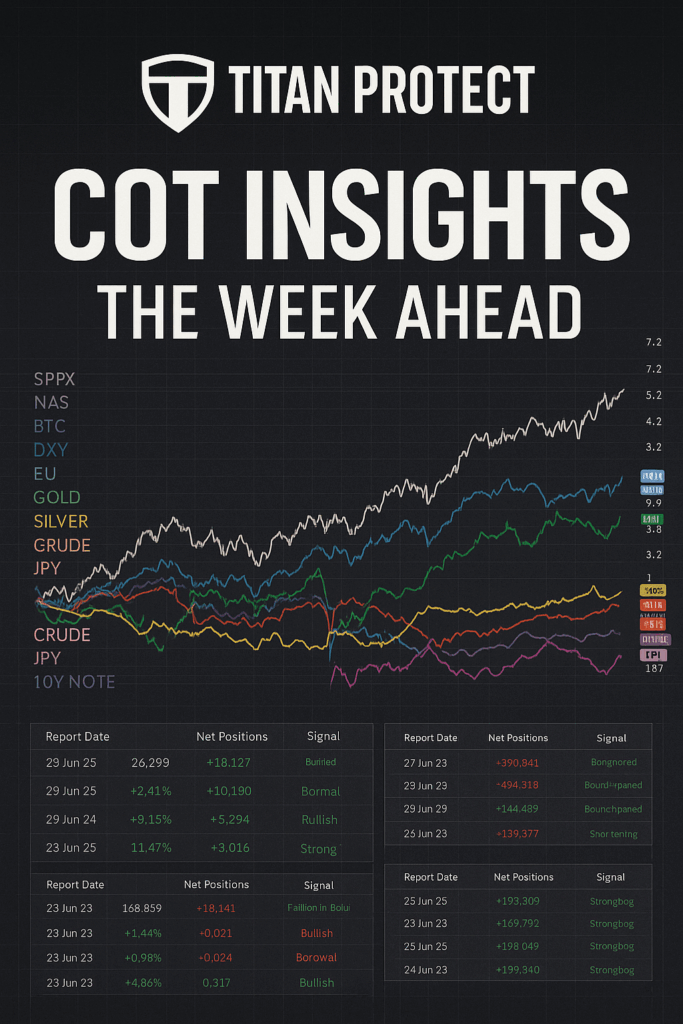
From a positioning standpoint, the COT data from the CFTC (covered in today’s opening positioning post) would show us whether commercial or non-commercial participants are net-long sterling. But even without the full COT breakdown, the price action tells the story: the move is dollar-driven, not sterling-driven. Trade it as such.
EUR/USD at 1.17: The Euro Is Holding Its Ground
EUR/USD at 1.1700 is holding ground despite the European session seeing DAX and FTSE weakness. The European bond market saw bund yields rise in sympathy with US Treasuries during Monday’s session — which should have pressured the euro as it signals fiscal concern similar to the US dynamic. Instead, EUR/USD is essentially unchanged to marginally higher on the day.
The reason is that the euro is being supported by the dollar’s weakness story. When the dollar falls against everything, the euro — as the largest component of DXY — captures the biggest absolute move. The euro did not need to show its own strength; the dollar’s weakness handed it to them. This is a passive bid, not an active one. It means if the dollar finds its footing around the 98.50-99.00 zone on DXY, EUR/USD will stall and could retrace without any European-specific catalyst.
USD/JPY at 158.84: The Yen Is Not Moving — and That Is Telling You Something
In a genuine risk-off environment — where yields are rising, equities are under pressure, and geopolitical risk is elevated through the Iran situation — you would normally expect the yen to strengthen. Safe-haven flows typically buy yen. USD/JPY should fall. Instead, it is flat at 158.84.
This is a function of the Bank of Japan’s policy posture. The BOJ has been managing its yield curve control framework for the past two years, and the market’s understanding is that the BOJ will not aggressively tighten into a risk-off episode. Without a rate differential shift — and without the BOJ signalling near-term hikes — the yen cannot attract the safe-haven capital that history would predict. The dollar may be weak against the euro and sterling, but against the yen, it is flat precisely because both currencies are under their own specific pressures.
For traders, USD/JPY flat at 158.84 with global risk-off signals is a warning sign. The pair is not acting as a risk barometer today. That means it could catch up rapidly if the BOJ surprises, or it could drift further if the dollar resumes weakening without Japanese policy as a counterweight. Watch for any BOJ commentary this week as a potential catalyst for a yen move that the price action is not yet pricing.
AUD/USD: Commodity Currency Getting a Passive Bid
AUD/USD is holding a modest bid around the 0.6420 area. The Australian dollar is a commodity-linked currency — it tends to move with copper, iron ore, and broader commodity sentiment. Gold’s steady bid at 4,570 (+0.31%) and copper’s relative stability on Monday are providing a floor for AUD. The crude oil collapse of 3.70% would normally be a headwind for AUD/USD, since energy exports are meaningful for the Australian economy. But the gold and copper support is winning the tug of war on Monday.
The more important point for AUD/USD in the current context: if the dollar reverses its weakness and DXY pushes back toward 100-101, AUD/USD will be among the first pairs to give back gains. It is a high-beta dollar trade in both directions. At 0.6420, any re-strengthening in the dollar creates a clear short opportunity in AUD, particularly with Chinese demand concerns still present in the commodity complex.
What Tuesday Changes for FX
| Scenario | DXY Move | GBP/USD | EUR/USD | USD/JPY |
|---|---|---|---|---|
| Iran meeting calms. Risk-on. | Recovery toward 99.5+ | Pulls back from 1.34 | Fades toward 1.16 | Drifts higher, 159+ |
| Iran escalates. Risk-off. | Further weakness, 98.50 | Holds or modest gains | Pushes toward 1.18 | Sharp move lower, 157-158 |
| Yield continues rising. No catalyst. | Sideways, 98.50-99.50 | Rangebound 1.33-1.34 | Rangebound 1.16-1.17 | Flat around 158-159 |
How to Trade the Dollar Weakness Story at Different Levels
Newer traders: The simplest take is this: when DXY is below 99, it is easier to find long setups in EUR/USD and GBP/USD. Watch the 98.50 level as support for DXY. If it holds, those pairs have a floor. If DXY breaks 98.50 to the downside, the move extends and those pairs push higher. Do not fight the trend when the setup is this clear.
Intermediate traders: The GBP/USD long at current levels is passive dollar weakness, not sterling strength. That means it is more fragile. Tighten stops on GBP/USD longs more aggressively than you would on a pair where the base currency is generating its own bid. The exit signal is DXY reclaiming 99.50 on a closing basis.
Advanced traders: The yield-dollar divergence creates a potential mean reversion trade. Either yields fall back (dollar stays weak, holds current FX levels) or the dollar catches up to yields (dollar rallies, reverses all current FX moves). Selling near-term EUR/USD upside via options while owning spot GBP/USD is a way to position for the divergence resolving without being directionally exposed to which way it resolves.
The FX market on Monday is running on one core theme: the dollar cannot hold its safe-haven status while Treasuries are being sold rather than bought. That dynamic resolves either through a policy response or through the macro data softening enough to halt the yield rise. Neither has happened yet. Tuesday’s Iran catalyst and the week’s data calendar are the next two gates. The following post covers the digital asset market, where Monday’s session revealed a different kind of institutional behaviour — liquidation aftermath with no recovery attempt.
Cross-references: Post 01 (Macro) for yield-dollar divergence context | Post 06 (Global Grid) for European FX session behaviour | Post 10 (Basis Edge) for carry calculation impact of dollar weakness on futures premium.
For educational purposes only. Not financial advice. Past performance is not indicative of future results. Capital at risk.
Deepen Your Understanding
Related articles from the Titan Protect Foundry: