Macro Pulse • Thursday 28 May 2026 • Pre-PCE read
Macro Pulse • Thursday 28 May 2026 • Pre-PCE read
Core PCE lands at 08:30 EDT and every major market is already casting a vote. The 10-year Treasury yield sits at 4.481%, down 2.7 basis points from yesterday’s close as bonds quietly bid. The dollar index holds at 99.17, flat, which is unusual restraint for a day when the week’s binary event is two hours away. Crude has already crashed 4.45% to $89.71 as the geopolitical premium evaporates, removing the one inflation input that was doing the most work. VIX compressed to 16.29. What all of this is saying, simultaneously, is that the market has decided PCE will be soft enough to leave the current regime intact. That is a bet worth understanding before the number hits.
Our Macro Read
The macro regime is risk-on, but it is skating on one number. The bond market is positioned for a soft PCE print. Crude’s collapse removes the most visible inflationary pressure. The dollar is flat, suggesting no panic. But the AAII survey shows 43.6% bearish and the S&P made back-to-back records on 46.6% breadth — which means the index is being carried by fewer names than the price suggests. A hot print inverts this entire picture simultaneously. A soft print confirms the summer cut narrative and gives the rally fuel. There is no middle ground on PCE day.
The Rates Picture: Bonds Are Already Voting
The 10-year Treasury yield closed at 4.481%, down from 4.493% the prior session. That 1.2 basis point move sounds trivial. In context, it is not.
Bonds are buying ahead of PCE. When the largest asset class in the world bids into a risk event, that is an institutional statement: we expect the data to confirm the disinflationary trend.
The 30-year yield at 5.011% tells a second story. There is a 53 basis point gap between the 10-year and the 30-year right now. That is the term premium — what the market demands to hold duration risk in a world where fiscal concerns never fully leave. The 30-year did not rally as hard as the 10-year yesterday. Long-end buyers are more cautious. They want to see the number before committing.
| Tenor | Yield | Day Change (bps) | Signal |
|---|---|---|---|
| 2-Year | 3.585% | +0.08 | Slightly higher — market not pricing aggressive cuts yet |
| 5-Year | 4.177% | -0.14 | Belly of the curve softening — macro optimism |
| 10-Year | 4.481% | -0.27 | Bidding into PCE — disinflationary bet in motion |
| 30-Year | 5.011% | -0.30 | Still above 5% — term premium and fiscal concern intact |
| 10s30s Spread | +53 bps | — | Curve steepening — long end pricing duration risk |
| TLT (20Y+ ETF) | $85.30 | +0.24% | Institutional buying into the event |
The curve shape matters here. The 2-year barely moved while the 10-year rallied. That is a selective bid — not panic buying across the board, but strategic duration acquisition. Institutions are adding 10-year exposure ahead of what they believe will be benign data.
And then there is Japan. The 40-year JGB auction this morning cleared at 3.840%, up from 3.600% prior. That is a 24 basis point jump in a single auction. Japan’s bond market is stressed. When the world’s largest bond holder experiences that kind of yield surge on ultra-long paper, the spillover into global duration demand is real — and it is pointing in the same direction as the US bid: rates are being repriced globally, but the US is holding up better than the alternatives.
The Dollar in Stasis: DXY at 99.17 Is a Loaded Spring
DXY at 99.17, unchanged from yesterday’s close. That sounds benign. It is not.
The dollar has been in a slow structural downtrend since January. When it stops falling into a major data event, one of two things is happening: institutions are squaring positions ahead of a binary, or there is genuine uncertainty about which way the number breaks.
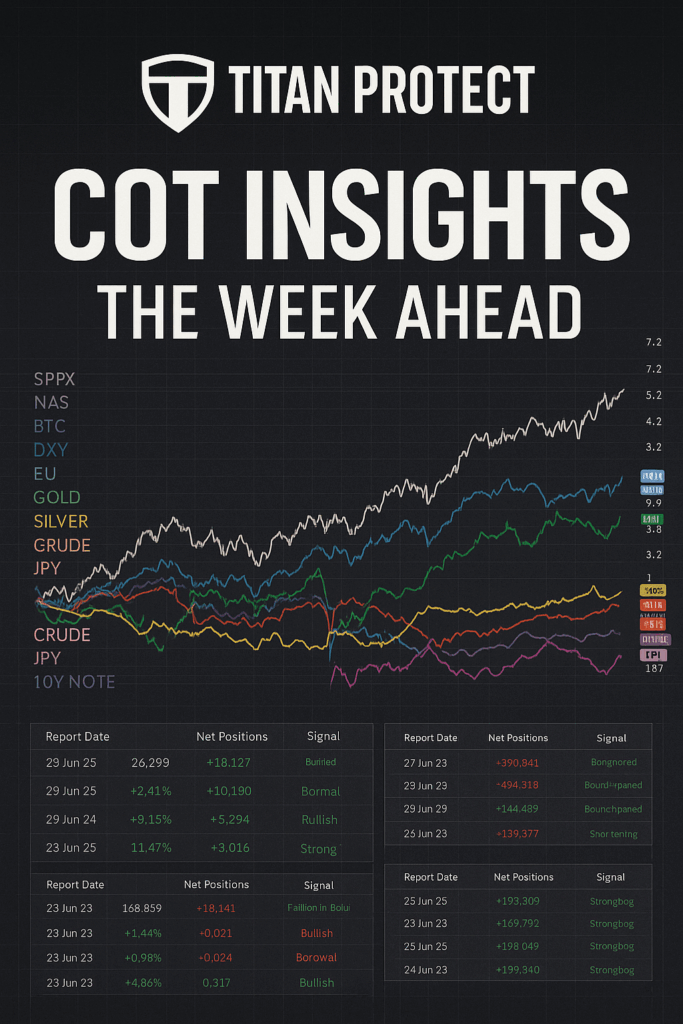
The positioning data is unambiguous on the structural trend. Speculative accounts are net short dollars by 11,755 contracts — the largest bearish positioning in months. The crowd has already called the dollar lower. If PCE comes in hot, that short position unwinds violently: a dollar surge, a bond sell-off, and an equity correction all at the same time.
| Pair | Level | Day Change | Positioning Tilt |
|---|---|---|---|
| DXY | 99.17 | Flat | Spec net short 11,755 contracts — bearish dollar bet in place |
| EUR/USD | 1.1631 | -0.05% | Asset mgrs net long EUR +298,772 contracts — heavy institutional long |
| GBP/USD | 1.3429 | -0.20% | Dealers net long GBP +87,494 — structural support |
| USD/JPY | 159.50 | +0.16% | Yen weakening despite JGB yield surge — BOJ credibility question |
| AUD/USD | 0.7145 | -0.35% | AUD slipping despite Australia CPI cooling to 4.2% YoY |
| NZD/USD | 0.5901 | +1.01% | Strongest mover overnight — risk-on proxy outperforming |
The NZD/USD surge of 1.01% overnight deserves attention. The kiwi is a pure risk-on proxy. When it leads the majors higher while the dollar sits flat, it tells you risk appetite is intact in Asia. The dollar’s flatness is not weakness — it is patience before the catalyst.
The USD/JPY dynamic is the one unresolved tension. The yen should be appreciating given that Japanese 40-year yields just hit their highest auction rate in years. The fact that USD/JPY is higher, not lower, means capital is still flowing away from yen rather than into it despite the yield move. When carry trade logic outlasts fundamental logic, something eventually breaks.
The Crude Collapse Is the Fed’s Best News in Months
Crude at $89.71, down 4.45% on the session. That is a $4.18 drop in a single day.
Yesterday’s post-close brief called the containment narrative as the driver. The Iran strike premium that had pushed WTI toward $96.60 last Friday has now fully unwound. In nine trading sessions, crude went from a geopolitical panic to a fundamental repricing.
This matters enormously for PCE. Energy is excluded from core PCE, but it flows through to headline. A crude collapse of this magnitude is deflationary signal, not just for the number printing Thursday but for the next two or three releases. The disinflation that the bond market is betting on is getting empirical confirmation in the commodity market before the official data drops.
| Commodity | Level | Day Change | Macro Read |
|---|---|---|---|
| Crude (WTI) | $89.71 | -4.45% | Geopolitical premium fully unwound. Margin tailwind for corporates. |
| Gold | $4,487.60 | -0.28% | Holding $4,480 floor. Safe haven bid intact despite crude collapse. |
| Silver | $74.92 | -1.82% | Industrial demand concern — lagging gold confirms risk-off tilt in metals |
Gold’s divergence from crude is the key insight. When energy crashes but gold holds, the market is not saying “everything is fine.” It is saying: “inflation is cooling, but uncertainty is not resolved.” Those are two different things. Crude falling is disinflationary. Gold staying at $4,487 means the macro risk premium is still very much alive.
Japan’s crude import collapse adds a second layer. Japan’s imports dropped 59% month-on-month in April following the Strait of Hormuz closure. A 900,000 barrel per day figure for the world’s fourth-largest oil importer is extraordinary. The implication is that global crude demand from Asia is structurally impaired until the waterway reopens. That demand destruction is keeping the lid on crude prices even before the Iran-deal dynamic resolves.
Kevin Warsh Is the Fed Chair Now. That Changes the Calculus.
Kevin Warsh took the oath of office this week. The FOMC unanimously elected him chairman. Jerome Powell is now chair pro tempore until the transition is formalised.
This is not a neutral event for the rate path. Warsh has historically been a hawk — he dissented against QE in 2010, warned about asset price distortions before most policymakers acknowledged them, and has been publicly sceptical of the Fed’s post-2008 policy framework. Markets know this. The FOMC Minutes from the April 28-29 meeting delivered no hawkish surprise because Powell was still setting the tone. Warsh’s first real policy imprint comes at the June meeting.
The practical implication for Thursday’s PCE: a soft print buys time before the new chair has to establish credibility. A hot print forces Warsh’s hand in his first substantive cycle. New chairs do not want to be seen as soft on inflation in their opening act. That asymmetry matters.
The tension we are holding: The bond market is positioned for a soft PCE. The new Fed chair has a historical record as a hawk. If the data and the new chair’s instincts are aligned, the path is clear. If the data surprises hot, Warsh faces an immediate credibility test that the markets will price before he gives his first press conference. That tension is not fully reflected in a VIX at 16.29.
Governor Cook’s speech yesterday on AI and the economy adds a softer current to watch. Cook’s framing — AI as a productivity-enhancing force — is the intellectual backdrop for why some Fed governors are willing to be patient on rate cuts. If AI-driven productivity growth is suppressing unit labour costs, then core services inflation cools without the Fed doing much. That is the bull case for the rate path.
Governor Logan speaks at 09:00 EDT today. Any comments on the economy or the near-term rate path before the PCE release will move markets. Our read: Logan has been relatively balanced and is unlikely to either jawbone hawkishly or pre-empt the data. But the market will be listening for any signal about the Warsh-era policy stance.
The Sentiment Divergence: Greed at the Top, Pessimists in the Survey
Fear and Greed sits at 60.7 — Greed territory, down from 65 yesterday. The direction of travel matters as much as the level: sentiment cooled slightly even as the index printed a record. That is consistent caution, not euphoria.
The AAII survey data presents the genuine contradiction. For the week ending 20 May 2026: 31.7% bullish (below the historical average of 37.5%), 43.6% bearish (well above the historical average of 31.0%). The crowd of individual investors is more pessimistic than the index price suggests they should be.
| Sentiment Gauge | Current Reading | Historical Avg | Implication |
|---|---|---|---|
| Fear & Greed Index | 60.7 | 50 | Greed — but softening from 65 yesterday |
| AAII Bullish | 31.7% | 37.5% | Below average — individual investors not chasing the record |
| AAII Bearish | 43.6% | 31.0% | Significantly above average — wall of worry still standing |
| VIX | 16.29 | ~19-20 (12mo) | Historically low — hedges are cheap before PCE |
| VIX 3-Month | 19.45 | — | 190 bps above spot VIX — market pricing more risk in the weeks ahead |
| VVIX | 87.53 | ~100 | Vol-of-vol compressed — institutional hedgers not panicking |
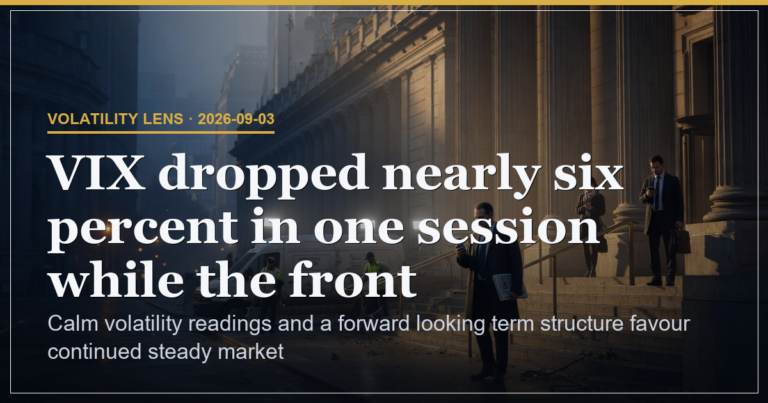
The 190 basis point gap between spot VIX at 16.29 and the 3-month VIX at 19.45 is the market’s honest admission. In the next few sessions: calm. In the weeks ahead: the curve says more turbulence is expected. That is not a contradiction — it is a timeline. The near-term calm is PCE positioning. The longer-dated VIX is pricing the June FOMC, Warsh’s first press conference, and everything the new chair has to establish.
The AAII bear reading of 43.6% against back-to-back index records is a textbook wall of worry. When more than 40% of individual investors expect a decline and the market is printing all-time highs, historically that is a support, not a warning. The pessimists are the fuel for the next leg. If PCE is soft, they capitulate. That capitulation is a significant source of potential upside.
Global Context: Australia Cools, China Surprises, Europe Auctions Higher
The macro picture is not isolated to the US. Three international data points are worth integrating this morning.
Australia’s CPI came in at 4.2% year-on-year for April, down from 4.6% prior and below the 4.4% consensus. The RBA Trimmed Mean at 3.4% YoY was steady. Cooling inflation in Australia is a global disinflation signal — the same supply chain and commodity dynamics that are helping Australia reduce price pressure are in play globally, including in the US. If PCE follows the same directional logic, the number should print softer.
China’s industrial profits surged 18.2% year-on-year through April, crushing the 12% estimate and well ahead of the 15.5% prior. That is a demand signal from the world’s second-largest economy. It does not directly move US PCE, but it confirms that global industrial activity is not rolling over — which matters for the earnings backdrop that equity markets are pricing.
| Region | Data Point | Actual | Estimate | Read |
|---|---|---|---|---|
| Australia | CPI YoY APR | 4.2% | 4.4% | Beat expectations for cooling — global disinflation signal |
| China | Industrial Profits YTD YoY APR | 18.2% | 12.0% | Major beat — industrial demand recovery is real |
| Japan | 40-Year JGB Auction | 3.840% | 3.600% | Yield surge — global duration repricing accelerating |
| UK | Gilt 2033 Auction | 4.550% | 4.507% | Higher than prior — UK fiscal premium persisting |
| Germany | 30-Year Bund Auction | 3.5% | 3.62% | Below prior — European long-end more comfortable than UK and Japan |
| France | Consumer Confidence MAY | 82 | 83 | Below consensus and prior 84 — European consumer soft |
The divergence between German and UK/Japan long-end yields is instructive. Bunds are clearing below prior yields while Gilts and JGBs are clearing above. Germany is the fiscal anchor of Europe in a way that the UK and Japan are not. When investors discriminate this sharply between duration in different sovereigns, they are not making a blanket “rates up everywhere” bet — they are making individual country-level judgements about fiscal sustainability. The US is somewhere between Germany and the UK on that spectrum today.
The Housing Data Is a Slow-Motion Warning
The macro picture is not uniformly constructive. The housing sector is where the rate environment is doing the most damage.
MBA mortgage applications collapsed 8.5% for the week ending 22 May, following a 2.3% drop the prior week. The 30-year mortgage rate at 6.65% means buying a home is categorically unaffordable for a median income household. This does not immediately threaten a PCE print, but it tells you where consumer spending power is going: towards debt service, away from discretionary.
Home prices across America’s 20 largest cities fell 0.16% month-on-month in March — the second consecutive monthly decline after six straight monthly increases. Year-on-year, price appreciation slowed to 0.83%, the weakest since July 2023. When the wealth effect from housing starts reversing, consumer confidence follows. The post-close brief yesterday noted this theme — and as that analysis showed, the underlying consumer picture is softer than the equity index level suggests.
Foreclosure filings rose 26% year-on-year in the first quarter of 2026, reaching approximately 119,000 — the highest in six years. The last time foreclosures were this elevated was Q1 2020, just before government relief programmes intervened. There is no relief programme on the horizon today.
| Housing Metric | Reading | Trend |
|---|---|---|
| MBA 30Y Mortgage Rate | 6.65% | Rising — affordability at decade-low levels |
| MBA Mortgage Applications (wk) | -8.5% | Second consecutive weekly decline — demand destruction in progress |
| Home Prices MoM (20 cities) | -0.16% | 2nd consecutive MoM decline — inflection from 6 months of gains |
| Home Prices YoY (20 cities) | +0.83% | Weakest annual gain since July 2023 |
| Foreclosure Filings YoY (Q1) | +26% | Highest since Q1 2020 — 119,000 properties |
This is the honest admission in today’s analysis: the housing data is deteriorating faster than the equity market is pricing. The index is at all-time highs. Foreclosures are at six-year highs. Both things are true simultaneously. The reconciliation is that equity markets lead the real economy, and if rate cuts arrive, housing stabilises. But if PCE prints hot and cuts recede further, the housing deterioration accelerates into the real economy in a way that eventually reaches corporate earnings.
Three-Timeframe Macro Verdict
| Timeframe | Bias | Condition | Flip Trigger |
|---|---|---|---|
| Short (Today) | CAUTIOUSLY BULLISH | Pre-PCE bid in bonds, low VIX, crude below $90. Conditional on soft data. | Hot PCE print. VIX spikes above 20. |
| Medium (Weeks) | NEUTRAL-TO-BULLISH | Warsh era begins at June FOMC. Policy uncertainty elevated. Housing softening. | Warsh hawkish surprise. Credit stress spreading from housing. |
| Long (Months) | WATCHING | Macro tailwinds (crude, disinflation) vs. structural headwinds (housing, fiscal). | Rate cut confirmation delivers bull case. Warsh hawkishness prolongs the range. |
Three PCE Scenarios: How We Are Preparing
Scenario A: Soft Print — The Cut Narrative Survives
45%
Core PCE at or below consensus. Bond market vindicated. Dollar weakens on short squeeze unwinding — but the shorts were already in place so the move is limited. Equities extend the record run with volume improving. The breadth issue from yesterday needs to resolve but the catalyst is now present.
Macro implications: 10Y yield targets 4.35%. DXY tests 98.50. Gold holds $4,500. Crude stabilises above $88. June FOMC rate-hold odds improve; September cut bets add premium. Warsh has room to be patient in his first cycle.
Scenario B: In-Line — No Resolution, Range Holds
35%
Core PCE exactly at consensus. The market wanted a miss; it got a match. Initial knee-jerk higher in equities fades within the hour. Bonds give back some of the pre-event bid. Dollar stays flat. VIX ticks back toward 17.50.
Macro implications: S&P 500 stays in the 7,480 to 7,560 range. June FOMC stays on hold. Rate cut expectations for September neither confirmed nor denied. Warsh waits for more data. Range-bound until the next catalyst.
Scenario C: Hot Print — Every Positioned Trade Unwinds at Once
20%
Core PCE above consensus. The spec dollar short of 11,755 contracts unwinds simultaneously with the bond long and the equity long. That is three major positioned trades reversing at the same time. VIX spikes above 20, potentially toward 23-25. Equities drop 1.5% to 2.5% from the open. The 30-year yield, already at 5.011%, tests 5.20%.
Macro implications: Dollar surges above 100.50. Gold initially sells but finds a floor at $4,420 as safe-haven demand absorbs equity fear. Warsh faces immediate credibility test. Summer cut bets evaporate. Housing data worsens for another quarter before the Fed can respond. This is the 20% that matters most to risk management.
How We Are Sizing Into PCE Day
| Asset / Trade | Sizing Stance | Reasoning |
|---|---|---|
| Equities (SPX / SPY) | STANDARD | Second consecutive record. Breadth sub-50%. PCE is binary. Hold exposure, do not add into the number. |
| 10-Year Treasuries / TLT | STANDARD | Bonds are bidding into PCE. That bid is the trade. Soft data validates; hot data means taking a hit — but the structural case for duration remains intact even with Warsh. |
| Gold | MAX | Holds $4,480 floor in both soft and hot scenarios. Safe haven in hot; inflation hedge in soft. Crude collapse removes the competing inflation narrative. Gold is the one position that benefits from regime uncertainty regardless of the PCE direction. |
| Crude (WTI) | REDUCED | Already down 4.45%. Geopolitical premium is out. A hot PCE does not re-inflate crude — it would require a new geopolitical catalyst. No directional edge here today. |
| DXY / Dollar longs | AVOID | Spec is already net short. The crowd is positioned. Going long dollar into a number that is 45% likely to be soft is fighting the tape and the positioning simultaneously. |
| Volatility (VIX hedges) | CONSIDER | VIX at 16.29 means hedges are historically cheap. The 3M VIX at 19.45 is 190 bps above spot — the market itself is signalling that cheap vol is temporary. Buying a small tail hedge at these levels costs a fraction of what it costs after a hot print moves VIX to 22. |
The Contradiction We Cannot Resolve Cleanly
The analysis says bonds, crude, and sentiment are aligned for a soft PCE outcome. But here is what we cannot explain away: the S&P 500 is at an all-time high on 46.6% breadth while foreclosures are at six-year highs and mortgage applications are falling week over week.
One of those statements has to eventually resolve toward the other. Either the equity market is right — the rate cut is coming, the soft landing is delivered, housing stabilises — or the housing data is right, and the economy is absorbing real pain beneath the index level that has not yet reached corporate earnings.
PCE Thursday is not going to resolve that question. It will either buy more time for the bull case or accelerate the timeline on the bear case. The honest position is that today’s macro read is cautiously positioned for the bull scenario while acknowledging the bear case has better underlying data support than the price level suggests.
That is the wall of worry. The pessimists have the better economic data. The optimists have the price action. We are watching which one bends first — and today’s 08:30 print is the week’s most important input into that debate.
Continue Reading
This post is part of the daily analysis sequence for Thursday 28 May 2026. Each perspective extends the argument:
- The pre-market brief set the overnight context and key levels entering the day — read the overnight market overview and key levels first if you have not.
- Positioning intelligence from the prior session — how institutional flows shaped Wednesday’s close — in the large-account positioning analysis.
Deepen Your Understanding
Related articles from the Titan Protect Foundry: