Monday 18 May 2026 | Market Instruments Series | Post 13 of 19
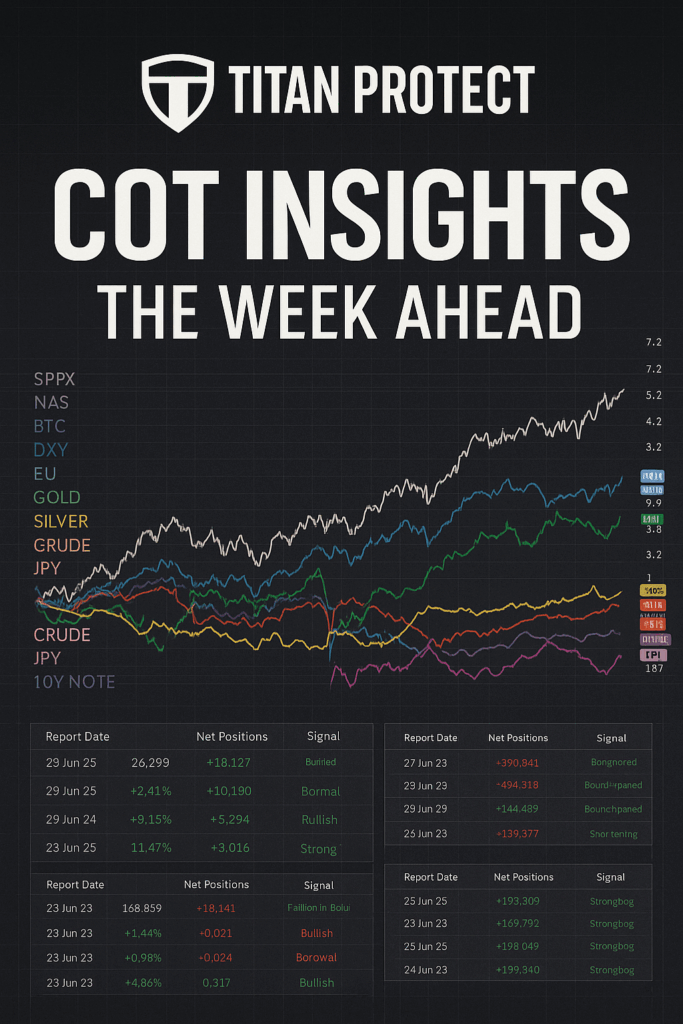
Two commodities moved in opposite directions on Monday and each one told the same story from a different angle. Crude oil fell 3.70% — the biggest single-session decline of the day across all asset classes. Gold gained 0.31% and held above $4,570. The combination is a precise read of the Iran situation: the market decided that the immediate war premium in oil was excessive and unwound it, while simultaneously keeping the safe-haven bid in gold because the situation is not resolved. The FX post covered dollar weakness. The COT report from this morning’s positioning post provides the commitment of traders context. This post joins them together through the raw materials lens.
The Global Grid coverage identified the crude-gold divergence as the single most important divergence on the entire cross-asset grid on Monday — crude pricing de-escalation while gold maintained the uncertainty premium, two instruments reading the same event and reaching opposite conclusions. As you’ll find in our FX Focus brief, the dollar’s weakness during a period of rising yields is directly supporting the gold price in USD terms: when DXY falls below 99 as it did Monday, the USD-denominated cost of holding gold becomes cheaper for international buyers, which is part of why the gold bid has been stickier than the simple yield relationship would predict.
Crude at $101.52: A 3.70% Collapse in One Session Is Not Routine
Crude oil closed Monday at $101.52, down 3.70% from Friday’s close. To put that move in context: a 3.70% single-session decline in crude is a significant event. It is not the kind of move that happens because of normal supply and demand adjustments. It happens when a risk premium that was priced into the market gets repriced out rapidly.
The specific premium here was the Iran war premium. During the Asian session on Monday, crude had been trading above $107 — reflecting market anxiety about potential supply disruption from the Middle East. The Tuesday Situation Room meeting on Iran set the stage for that anxiety. Through the European and US sessions, as the actual outcome of that meeting remained unresolved but the immediate escalation fear faded, the premium unwound. Traders who bought crude as a geopolitical hedge into the weekend sold it back on Monday when the worst-case scenario did not materialise in the Asian session.
The structure of the move matters. Crude fell from above $107 at the Asian high to $101.52 at the close — a drop of more than $5 in a single day. That is not a position unwind. That is a forced exit by leveraged longs who had bought the geopolitical premium and needed to sell when it faded. The mechanics are similar to Sunday’s crypto liquidation event: forced selling at prices that do not reflect fundamental value, but rather the removal of speculative premium.
| Commodity | Price | Move | Read |
|---|---|---|---|
| Crude Oil (WTI) | $101.52 | -3.70% | Iran war premium unwinding. Biggest mover of the day. |
| Gold (XAU/USD) | $4,570 | +0.31% | Safe-haven bid intact. Approaching $4,600 resistance. |
| Silver (XAG/USD) | ~$29.50 | Flat/slight bid | Following gold at a distance. Industrial demand muting upside. |
| Copper | Stable | Marginal | China demand watch. No major move in either direction. |
| Natural Gas | Elevated | Iran-linked | Supply uncertainty premium. LNG export route exposure. |
What a $5 Crude Drop on a Monday Tells You About Tuesday
There is a specific dynamic worth unpacking here. Crude fell hard on Monday, but the Iran Situation Room meeting is on Tuesday. That means the market sold the geopolitical premium before knowing the outcome of the meeting. That is a meaningful signal: traders are choosing to unwind risk now rather than hold through Tuesday’s news.
This is what professionals call “selling the news before the event.” When a market has priced a worst-case scenario and then starts reducing that premium ahead of the actual catalyst, it suggests the market believes the worst case is unlikely. But it also means that if Tuesday’s meeting produces anything negative — escalation, sanctions that affect supply, or even ambiguous language — crude will reprice upward rapidly, because all the protective longs have already been removed.
The practical implication: crude at $101.52 going into Tuesday is sitting in a position where the risk is asymmetric. Downside is limited to around $99-100 (fundamental support without any geopolitical premium). Upside, if Tuesday’s meeting is negative, could revisit $105-107 in the session immediately following. The market has removed the premium without removing the risk. That is a setup worth monitoring.
Gold at $4,570: The Safe-Haven Bid Is Not Going Away
While crude fell 3.70%, gold gained 0.31% to hold above $4,570. The divergence between crude and gold on the same day is a precise separation of two different types of risk premium. Crude was carrying a specific supply-disruption premium tied to Iran. That premium was event-specific and got unwound when the immediate escalation did not materialise. Gold is carrying a broader safe-haven bid tied to yield concerns, fiscal uncertainty, dollar weakness, and the general macro unease described in today’s macro and FX posts.
The gold bid is not resolving on Tuesday. Even if the Iran meeting is entirely benign, the 10-year yield at 4.63%, the dollar index below 100, and $171 billion in student loan defaults are not Iran-specific risks. They existed before the geopolitical tension and will exist after it. Gold’s safe-haven role in the current environment is anchored to macro, not geopolitics. That is why it held up while crude sold off.
The positioning post this morning referenced the CFTC COT data across 11 instruments. In recent weeks, the COT data for gold has shown commercial hedgers — the large producers and dealers who tend to be net-short gold at the futures level — maintaining their short positions rather than adding aggressively. That is unusual at these price levels. It suggests that even the commercial side of the market is not convinced that $4,570 is the top. When producers are not selling aggressively into price, it is typically because they believe the price trajectory has further to run.
$4,600 Is the Next Level. Here Is What Happens Around It.
Gold at $4,570 is approximately 0.66% away from the $4,600 level. That round number is the next significant psychological and technical reference. Round numbers in gold attract both option expiry interest and institutional limit orders. The behaviour around $4,600 will depend on whether the approach to that level is driven by a continuing macro bid or by a short squeeze in the futures market.
A macro-driven approach to $4,600 — one where yields are still elevated and the dollar is still weak — would tend to see gold through the level relatively cleanly, with the next stop around $4,650-4,700. A short-squeeze approach — one where sellers who positioned for gold to pull back from current levels are being squeezed out — tends to see a sharp spike through $4,600 followed by a reversal once the short covering is exhausted. The path and volume of the approach will tell you which type of move you are dealing with.
| Level | Type | Significance |
|---|---|---|
| $4,570 | Current price | Monday’s close. Safe-haven bid intact. |
| $4,600 | Resistance | Round number. Options expiry cluster. Key decision level. |
| $4,650-4,700 | Extension target | If $4,600 clears with macro confirmation. |
| $4,500-4,520 | Support | Prior breakout area. Retest area if Iran resolves fully. |
Silver and Copper: Industrial vs Monetary Signal
Silver at approximately $29.50 is following gold but with less conviction. The gold-to-silver ratio — which measures how many ounces of silver it takes to buy one ounce of gold — remains elevated, which historically signals that the bid for metals is primarily monetary (safe-haven) rather than industrial (growth demand). When growth optimism rises, silver tends to outperform gold because silver has both monetary and industrial demand. The current ratio says the market is buying gold for safety, not for growth confidence.
Copper is the purest industrial demand barometer. Its stability on Monday — neither a major decline nor a meaningful rally — reflects the ambiguity in the macro picture. Chinese demand remains the single largest driver of copper prices. With US-China trade negotiations ongoing and the broader macro backdrop uncertain, copper buyers are not adding aggressively at current levels. Copper flat on a day when crude fell 3.70% and gold rose 0.31% is essentially a neutral read — the industrial economy is neither accelerating nor contracting in the market’s current assessment.
Natural Gas: The Iran Premium That Did Not Unwind
While crude saw its Iran premium aggressively unwound, natural gas held its elevated level through Monday. This distinction matters. Crude’s Iran premium relates to potential Strait of Hormuz supply disruption — a well-understood and frequently traded risk. Natural gas has a different Iran exposure: LNG export routes and pipeline infrastructure that serves European markets through alternative pathways. The market’s decision to unwind crude but hold natural gas premium suggests that traders believe the LNG/pipeline supply risk is more structurally embedded than the immediate crude supply risk.
For context, European natural gas storage levels are not at comfortable seasonal averages. Any disruption to LNG import routes — even indirect disruption through geopolitical uncertainty — keeps a floor under European natural gas prices. That floor is the reason the gas premium held while crude fell.
Commodity Scenarios for the Rest of the Week
| Scenario | Crude Path | Gold Path | Silver/Copper |
|---|---|---|---|
| Iran benign. Risk-on. | Drifts $99-101 | Holds $4,540-4,570. Macro bid stays. | Both find bid on growth optimism |
| Iran escalates. Risk-off. | Spikes back to $105-107 | Tests $4,600 and beyond | Silver follows gold. Copper flat to lower. |
| Yields continue rising. No catalyst. | Rangebound $100-103 | Grinds toward $4,600 on macro bid | Both rangebound. Copper watches China. |
How to Apply This by Experience Level
Newer traders: Gold is the cleaner trade this week. The safe-haven bid has a clear macro anchor — yields, dollar weakness, fiscal concern — that does not resolve with a single Tuesday meeting. A long position in gold with a stop below $4,500 gives you a 70-point downside risk and a potential run toward $4,600-4,650. That is a reasonable risk-reward with a clear invalidation level. Crude is the more volatile and event-dependent trade — avoid it until after Tuesday’s meeting outcome is known.
Intermediate traders: Watch the crude asymmetry described above. If Tuesday’s Iran meeting produces positive headlines, crude will drift lower and the short is straightforward with a stop above $103. If Tuesday is negative, do not short crude — the reversal back to $105-107 would happen quickly and the stop would be difficult to manage. The pre-Tuesday setup is either stand-aside or a small long with a stop below $100 for those who believe the meeting will disappoint.
Advanced traders: The gold-crude divergence creates a spread trade opportunity. Long gold, short crude is a position that profits if the macro safe-haven bid continues and the Iran premium in crude does not return. The risk is a full Iran escalation, which would spike crude faster than gold, creating temporary spread compression before reverting. Sizing this trade small with a clear exit at $105 crude limits the risk while the macro thesis plays out.
Monday’s commodity session delivered a clear message: the Iran war premium in crude is being sold before the event. Gold’s macro bid is structural and independent. Those two readings, combined with the dollar weakness from the FX post and the COT positioning context from this morning, give you a complete picture of where commodity money is sitting heading into Tuesday. The next group of posts covers sectors and individual equity reads, building on the institutional flow analysis from Post 07.
Cross-references: Post 00 (Positioning/COT) for CFTC commitment of traders context on commodity futures | Post 11 (FX Focus) for dollar weakness supporting gold price in USD terms.
For educational purposes only. Not financial advice. Past performance is not indicative of future results. Capital at risk.
Deepen Your Understanding
Related articles from the Titan Protect Foundry: