Monday 18 May 2026 | Macro Foundations Series | Post 1 of 4
Every week, large institutional participants leave a trail. Not in what they say, but in where they put real money. This post looks at that trail for the week ending 18 May 2026: Dark Pool Flow?”>dark pool flow, options whale positioning, and the COT report. The picture that emerges is more cautious than the headline equity level suggests.
What Dark Pools Were Doing on Friday
Dark pool activity on Friday 15 May concentrated heavily on SPY. The top flow by volume was dominated by large block prints in the equity space, with over 100 notable order prints captured. Dark pools exist for one purpose: institutions do not want to show their hand in lit markets. When you see elevated dark pool volume in an index ETF, it tells you a large participant was either building or distributing a position without moving the public tape.
The timing matters here. Friday’s dark pool session coincided with the S&P 500 closing at 7,408, just 0.07% below flat on the day. That near-flat close happened despite some meaningful intraday moves. The implication is that the close was managed, not organic. Someone was absorbing selling pressure to prevent a break lower.
| Instrument | Flow Type | Read |
|---|---|---|
| SPY | Large block prints, elevated volume | Neutral to defensive — absorption at the close |
| SPX Options | 51,335 contracts, Monday flow | Institutions positioning ahead of NY open |
| OI Changes | High open interest shift activity | Active repositioning into weekend |
Where the Options Whales Are Positioned
The options whale flow going into Monday paints a split picture. The bullish options flow concentrated in five names: Apple, Nvidia, Meta, Microsoft, and Amazon. These are the five largest weightings in the S&P 500. When large participants buy calls on the biggest names in the index, they are making a targeted bet rather than a broad directional call. The broader index gex-max-pain-and-putcall-ratios/” style=”color:#D8AF44;text-decoration:underline” title=”What is Options Intelligence?”>put/call ratio of 0.682 confirms the overall options market is tilted bullish.
But here is the contradiction worth paying attention to: the overall sentiment from options is reading “bullish,” yet when you look at individual index products, the picture flips. QQQ has a put/call ratio of 1.40. IWM sits at 1.49. That means for every call purchased on the Nasdaq and Russell ETFs, nearly one and a half puts are being bought. Large participants are buying upside in mega-cap names while hedging the broader index. That is not conviction buying. That is hedged accumulation.
| Product | P/C Ratio | GEX | Interpretation |
|---|---|---|---|
| SPY (overall) | 0.58 | Negative | Dealers will amplify moves, not dampen them |
| QQQ | 1.40 | Negative | Active protection buying on Nasdaq |
| IWM (Russell) | 1.49 | Negative | Most bearish positioning of all index products |
| MSFT | 0.24 | Negative | Strong call bias — institutional accumulation signal |
| TSLA | 0.77 | Negative | Neutral skew — watching for directional conviction |
What the COT Report Shows About Currencies
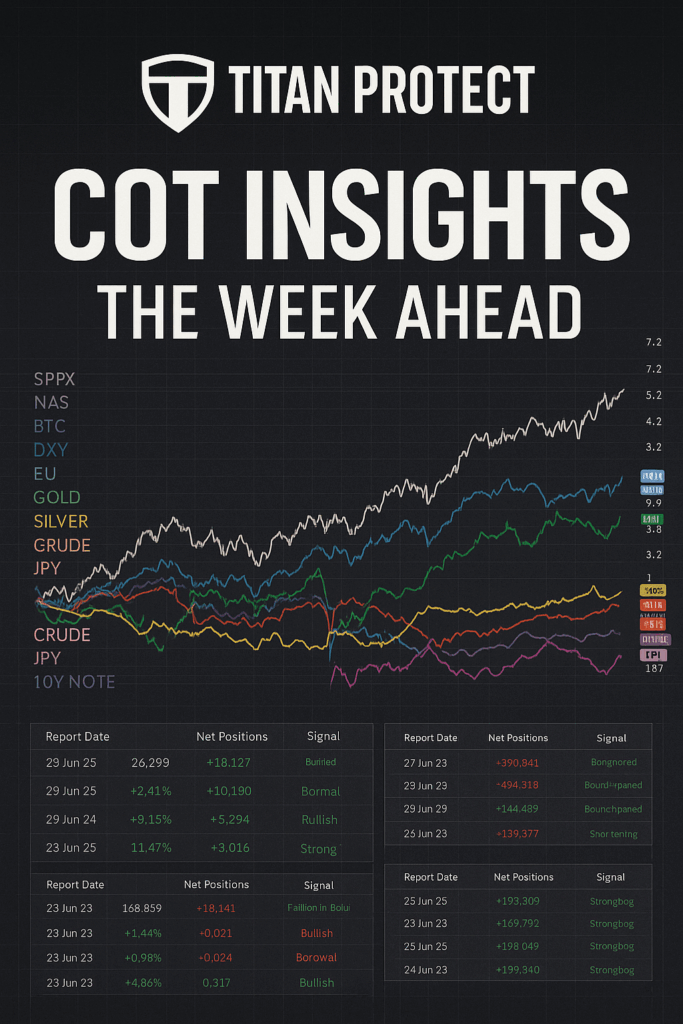
The most recent CFTC Commitments of Traders data (week ending 12 May 2026) shows notable positioning in currency futures. The Canadian dollar saw non-commercial participants holding 91,493 long contracts against 66,981 short contracts — a net long bias that has persisted for several weeks. Meanwhile, the British pound positioning shows a similar pattern, with commercial hedgers on one side and speculative money on the other.
Japanese yen positioning is the one to watch given Monday’s price action. The yen is one of the few safe-haven currencies showing strength, with USD/JPY at 158.90 during the Asian session. The COT data for JPY shows elevated non-commercial participation, consistent with institutions building yen longs as a geopolitical hedge. When the US is potentially moving toward military action against Iran, the yen historically outperforms every other currency in the G10.
| Currency | Non-Commercial Bias | Change vs Prior Week | Implication |
|---|---|---|---|
| Canadian Dollar | Net Long | Holding | Commodity currency demand remains |
| Japanese Yen | Building longs | Increasing | Safe-haven demand accelerating |
| British Pound | Mixed | Flat | No strong directional conviction |
The Contradiction That Defines This Market
Here is the tension in plain English: the overall options market sentiment reads “bullish” (0.682 put/call ratio), the S&P 500 is at 7,403, and Fear & Greed sits at 61.8 in greed territory. But the same institutions showing net bullish options flow are simultaneously buying protection on the broader indices. They are not fully committed. They are carrying an umbrella while enjoying the sunshine.
This kind of positioning tends to resolve one of two ways. Either the umbrella gets thrown away as confidence builds — meaning indices push higher and the protection expires worthless — or the rain arrives, the hedges pay off, and the institutions that owned protection are the only ones left standing. The catalyst that resolves it is not a mystery: Tuesday’s Iran Situation Room meeting is the event that either clears the air or confirms the fear.
How to Think About Sizing This Week
Stay at 25-30% of your normal position size until Tuesday resolves. The gamma environment means moves will be sharper than usual. Smaller size means a sharp move does not remove you from the game before the setup plays out.
50-60% standard size. Favour the instruments with clearest institutional signals: MSFT (strong call bias), gold (long institutional flow), and yen pairs as a geopolitical hedge. Avoid the broad Nasdaq until gamma resolves.
Full size on defined-risk setups only. The negative gamma environment is actually an opportunity — sharp moves create entry points that would not exist in a normal tape. Have your levels prepared before the open, not during.
Scenario Analysis: What Happens to Positioning
The macro picture — yields, inflation signals, and central bank positioning — builds on what you have just read here. Continue with Post 02: Macro Pulse for the economic context that sits behind this institutional positioning.
This content is for informational and educational purposes only. It does not constitute financial advice. Past positioning data does not guarantee future market direction. Always apply your own risk management.
Deepen Your Understanding
Related articles from the Titan Protect Foundry: