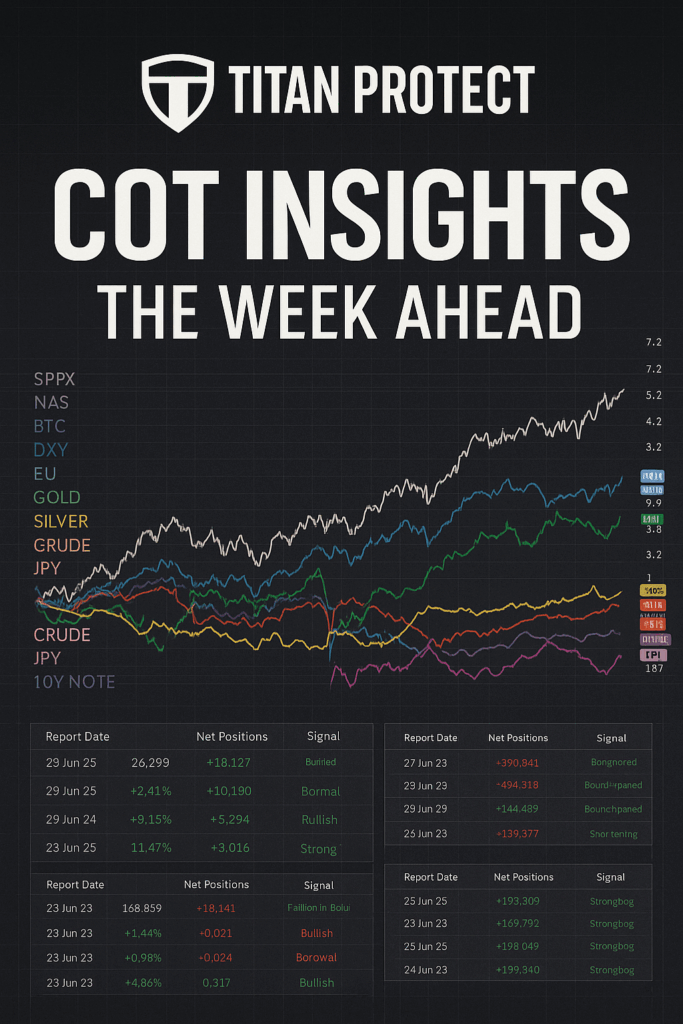
Raw Materials Radar: Gold $4,589 Structural Bid, Crude Demand Collapse, Silver and What the Commodities Complex Is Saying
Date: Saturday 30 May 2026 | Weekend Edition, Data: Friday 29 May 2026 close
Series: Raw Materials Radar — the complete commodities picture and what it tells you about the macro backdrop
Published: ~20:00 BST / 15:00 EDT / 04:00 JST (Sun)
The Commodities Complex at Friday Close
| Commodity | Close | Friday Move | Week Trend | Story Type | Setup |
|---|---|---|---|---|---|
| Gold | $4,589 | +2.0% | +$101 in 2 days | Monetary / regime hedge | Long on pullback $4,480–$4,510 |
| Silver | $75.97 | Tracking gold | Lagging gold’s move | Monetary + industrial (split) | Wait — industrial demand unclear |
| Crude WTI | $87.60 | -1.46% | 3 consecutive down days | Demand destruction | Fade bounces $89–$91 |
| Copper | Est. $4.85/lb range | Flat / holding | Consolidating | Industrial demand / China proxy | Watch — ISM and China data the catalyst |
| Natural Gas (Henry Hub) | Est. $3.20–$3.40 range | Quiet | Seasonal lull | Weather / storage seasonal | No setup. Monitor only. |
Gold at $4,589: Why This Is a Structural Bid, Not Momentum
The $101 two-day move in gold following the soft PCE print is the most significant commodity story of the week. But understanding why gold moved this sharply — and what drives the bid structurally — is more important than the price level itself.
Three structural pillars are supporting gold at these levels. The first is central bank buying. Since 2022, central banks have been consistently net buyers of gold at a pace not seen in decades. The primary driver is reserve diversification away from the US dollar — particularly for countries that had dollar-denominated reserves frozen following the 2022 sanctions episode. That buyer does not care about PCE or NFP. They have a mandate to buy regardless of price. It is a structural floor.
The second pillar is the fiscal deficit concern. The US is running a $2 trillion annual deficit with no credible path to reduction. Foreign holders of US Treasuries are watching the debt servicing cost approach $1 trillion annually. When the world’s reserve currency issuer has debt sustainability concerns, investors historically allocate to the alternative — gold. This is the regime uncertainty hedge described in the institutional flow analysis.
The third pillar is the rate-cut cycle. Real yields — the Treasury yield minus expected inflation — are the most direct driver of gold prices. When real yields fall, gold becomes more attractive as the opportunity cost of holding a non-yielding asset decreases. PCE soft data on Wednesday pushed real yield expectations lower. The $101 move was the market immediately repricing gold for the new real yield environment.
All three pillars are intact. The setup for Monday is a pullback entry, not a chase. The $4,480 to $4,510 zone, supported by the options max pain analysis from the daily read and the COT positioning from the daily read, is where the structural buyers are most likely to add on dips. Above $4,600, the trade is extended and requires new fundamental justification to push further without consolidation.
The Gold/Silver Divergence: What It Means
Silver at $75.97 is participating in the precious metals rally but lagging gold significantly. The gold/silver ratio at 60.4x is elevated by historical standards — ratios this high are more consistent with risk-averse environments than genuine industrial growth periods. When gold surges but silver underperforms, the market is saying: this is a monetary metals bid, not an industrial demand expansion.
Silver has two drivers. Approximately 40% of its demand is monetary — it benefits from the same gold tailwinds: dollar weakness, rate cuts, regime uncertainty. The remaining 60% is industrial: solar panels, electronics, electric vehicles. That industrial component is where the uncertainty lives. Crude’s three-session decline signals slowing industrial activity. ISM Manufacturing on Monday confirms or denies that signal. Until ISM resolves the industrial demand question, silver is a lower-conviction long than gold.
If ISM disappoints on Monday — confirming the slowing industrial picture — gold outperforms silver further and the ratio widens toward 65x. If ISM beats, silver catches up quickly as the industrial demand concern is removed, and the ratio compresses back toward 58x. Silver is the ISM-sensitive precious metal this week.
Crude Oil: When the Geopolitical Premium Leaves, What Remains
Crude WTI at $87.60 is now trading at levels that reflect the demand picture without any geopolitical premium. The basis edge analysis in the daily read confirmed the curve is approaching contango — the market is pricing supply adequacy, not scarcity. Three consecutive down sessions following the removal of the Hormuz closure premium have reset the market to a demand-driven equilibrium.
At $87.60, what is crude actually pricing? OPEC+ production discipline at current output levels. US shale production at current activity levels. Global demand growth at roughly 1.0 to 1.2 million barrels per day year on year. That is the consensus demand picture. If NFP next Friday confirms a US economic slowdown, that demand estimate gets revised lower and crude tests $84 to $85. If NFP is strong and the consumer remains resilient, crude finds support around the $87 level and the bounce-fade setup in the setup radar plays out before resuming lower.
The risk for crude bears: OPEC+ emergency meeting or production cut announcement over the weekend. OPEC has not typically held emergency meetings when crude is at $87 rather than $70, so this risk is low probability. But it is worth having a stop in place at $92 for any short position rather than assuming the downtrend continues without interruption.
Copper: The China and ISM Indicator
Copper at approximately $4.85 per pound has been holding in a range while the broader commodities complex has been moving. That range-holding pattern is informative. Copper is the market’s most direct global growth indicator — it has so many industrial applications that copper prices track economic activity with remarkable precision. Flat copper while gold surges and crude falls means: the growth slowdown signal is present in crude but not yet catastrophic. Copper is not pricing a recession. It is pricing a slowdown.
The catalyst for copper to break either direction is Chinese economic data and US ISM Manufacturing. China’s industrial profits data recently showed an 18.2% month-on-month surge — which is why copper has not collapsed with crude. But China’s construction sector remains stressed and real estate demand for copper wiring and plumbing is not recovering. The net result: copper is pinned between positive manufacturing data and negative construction data. Monday’s ISM is the US input. If ISM surprises positively, copper is the beneficiary — it adds to the case that the US manufacturing slowdown is not as deep as feared.
Commodities Setup Summary for NFP Week
| Commodity | Setup | Entry Zone | Stop | Target 1 | Target 2 | Sizing | Risk |
|---|---|---|---|---|---|---|---|
| Gold | Long on pullback | $4,480–$4,510 | $4,420 | $4,620 | $4,680 (soft NFP) | STANDARD | ~42% |
| Silver | Wait for ISM first | $73–$74 (ISM soft) | $70.50 | $78 | $82 (G/S ratio compress) | REDUCED (post-ISM only) | ~48% |
| Crude WTI | Short (bounce fade) | $89–$91 | $92 | $85.50 | $83 (soft NFP demand) | REDUCED | ~45% |
| Copper | Watch only | — | — | — | — | AVOID (no edge) | ~50% |
| Natural Gas | Monitor | — | — | — | — | AVOID | — |
The Commodities Picture as a Macro Barometer
Reading the commodities complex as a group rather than individual instruments gives you the macro barometer reading. What does it say this week?
Gold up $101: the monetary system is under structural pressure. Dollar debasement is the dominant theme, rate-cut expectations are building, and central bank buying continues regardless of price. This is a multi-month theme, not a one-week trade.
Crude down three sessions: demand growth is slower than the recent price implied. The geopolitical premium is gone. The demand picture is one of moderate growth, not expansion. This is consistent with a soft-landing scenario where the economy slows enough for the Fed to cut, but does not collapse into recession.
Silver lagging gold: industrial demand is uncertain. Solar and EV demand is positive but construction and general manufacturing are slowing. Net result: silver participates in the monetary bid but not at full speed.
Copper flat: the global growth picture is not deteriorating catastrophically. China’s manufacturing surprised positively, which is enough to keep copper from collapsing. But US demand is uncertain until ISM and NFP provide clarity. Flat copper is the market’s honest “we do not know yet” response.
The combined read from the commodities complex: moderate slowdown, not recession. Rate-cut expectations justified. Dollar weakness supported. The NFP number next Friday is the single event that either confirms this picture or rewrites it entirely. That is the barometer reading heading into the most important data week of the near-term calendar.
Experience Level Guidance
One trade, one instrument this week: gold. Everything else in commodities either has no clear edge (copper, natgas) or requires active management through multiple data points (crude bounce-fade, silver post-ISM). Gold has the clearest setup, the most institutional support, and the simplest story: dollar weak, rate cuts coming, pullback to $4,480 is the entry. Everything else is optional.
Add the crude bounce-fade as your second commodity trade. Gold long and crude short is a diversified commodities position because they are driven by different factors — gold by monetary conditions, crude by demand. The GDX/XLE spread from the daily read gives you the equity-market expression of the same thesis. Run gold and one of those two pairs for the week, not all three.
Silver is the highest-optionality trade in the commodities complex this week. If ISM disappoints Monday and confirms the manufacturing slowdown, silver initially dips on industrial demand concerns but gold holds. That creates a gold/silver ratio expansion opportunity — buy gold, sell silver — that then reverses sharply when the ratio extends toward 62 to 63. The spread mean-reversion trade is the advanced play here, and the ISM data on Monday tells you whether to put it on or leave it alone for the week.
Weekend Series Complete
You have now read the full 14-post weekend analysis — Pods 0 through 13. The thesis is consistent across all posts: dollar structural weakness confirmed, gold structural bid intact, crude demand destruction confirmed, NZD short squeeze in progress, Bitcoin divergence unresolved, and NFP on Friday is the binary event that either validates or reverses all of it. Size management into NFP week is more important than direction selection. The setups are mapped. The stops are defined. The scenarios are clear. The week ahead is yours to execute.
This analysis is produced for informational and educational purposes. It does not constitute financial advice or a recommendation to buy or sell any financial instrument. All trading involves risk. Past performance does not guarantee future results. You should always conduct your own research and consider your financial circumstances before making any investment decision. Risk percentages are estimates based on market conditions at time of writing and may change rapidly. Position sizing guidance is general in nature and must be adapted to your own risk tolerance and account size. Commodities trading involves significant risk including the potential for substantial loss.
Deepen Your Understanding
Related articles from the Titan Protect Foundry: