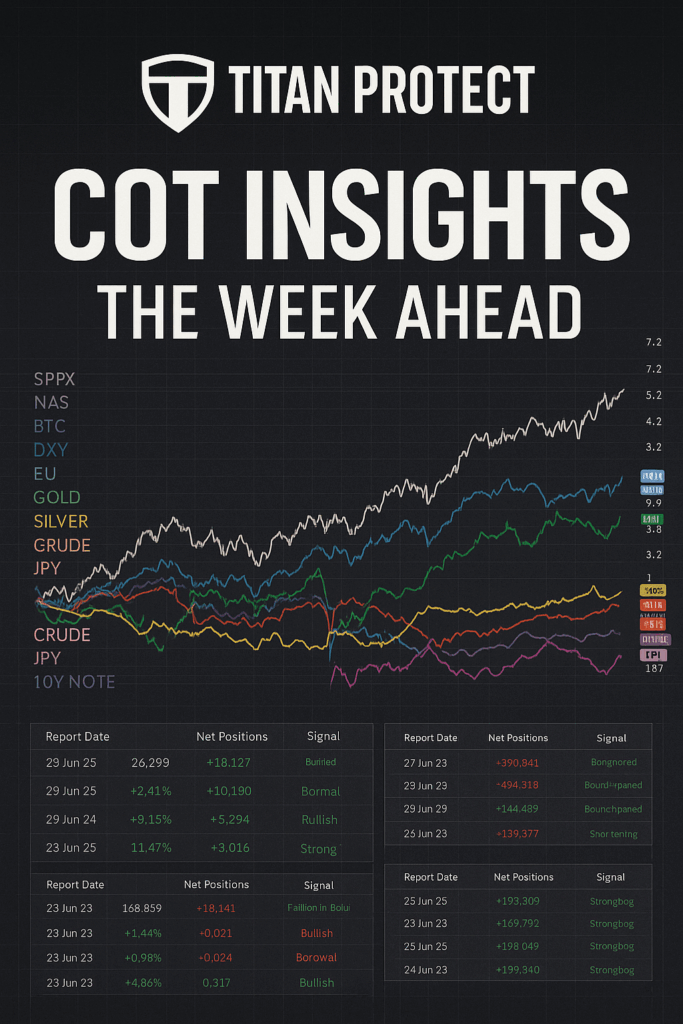
The setup coming into the week of 27 May is one of the cleaner risk-on-into-binary-catalyst environments of the past several months. The structural picture across most instruments favours buyers. Sentiment has turned constructive without becoming euphoric. The institutional flow data from Friday confirmed deliberate positioning, not random noise. And the volatility structure, for all its surface calm, is coiled — which means moves when they happen will be larger than they look like they should be.
Thursday is the day that changes the picture or confirms it. PCE lands alongside Warsh’s first full week at the Fed. Between now and then, the market has three sessions to either drift toward max pain levels or accelerate away from them. Here is the playbook for each instrument.
—
Master Levels Table: All Instruments, Friday 23 May Close
| Instrument | Last Price | Structural Bias | Key Support | Key Resistance | Options Max Pain | Risk % |
|---|---|---|---|---|---|---|
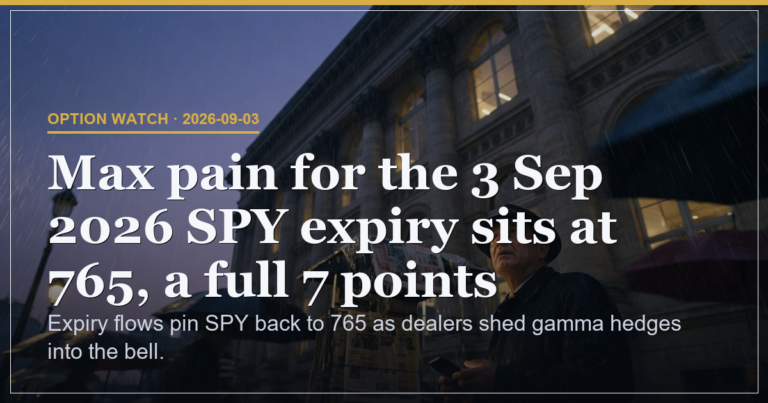
| S&P 500 (SPX) | 7,473.47 | Bullish | 7,380 / 7,290 | 7,520 / 7,600 | 7,390 (SPY basis) | Around 55% |
| NAS100 (NDX) | 29,482 | Bullish with caution | 28,800 / 28,200 | 29,800 / 30,200 | ~28,480 (QQQ basis) | Around 60% |
| Russell 2000 (RUT) | 2,869 | Cautious bullish | 2,800 / 2,740 | 2,920 / 2,980 | ~2,780 (IWM basis) | Around 65% |
| Gold (XAU/USD) | ~3,320 | Bullish | 3,260 / 3,200 | 3,380 / 3,430 | N/A | Around 45% |
| Crude Oil (WTI) | ~61.20 | Bullish short-term | 59.50 / 57.80 | 63.00 / 65.50 | N/A | Around 65% |
| NVDA | ~$216 | Strongly bullish | 205 / 195 | 225 / 235 | $220 | Around 50% |
| TSLA | ~$347 | Bullish | 330 / 310 | 365 / 385 | $415 (above market) | Around 55% |
| AAPL | ~$213 | Bullish | 205 / 198 | 220 / 228 | $300 (distant) | Around 50% |
| GBP/USD | ~1.3480 | Consolidating | 1.3380 / 1.3300 | 1.3550 / 1.3620 | N/A | Around 55% |
| EUR/USD | ~1.1340 | Consolidating | 1.1260 / 1.1180 | 1.1420 / 1.1500 | N/A | Around 50% |
—
The 10 Setups: Ranked by Conviction
Setup 1: NVDA — Systematic Accumulation Continues
The structural picture on NVDA is the cleanest bullish read on the board this week. Friday’s institutional flow showed 777 dark pool orders totalling $4.31 billion, with an average order size of $5.5 million. That is not a single position being built — that is the pattern of multiple institutional accounts accumulating in a systematic, programmatic way. The options structure confirms it: the put/call ratio sits well below 1 (calls dominate), and the forward price expectation skews up.
The structural support across multiple timeframes aligns around the $205 area. The momentum assessment across shorter and longer intervals is positive. The structural picture favours buyers as long as that support holds.
| Parameter | Detail |
|---|---|
| Setup type | Trend continuation long |
| Entry zone | $207–$212 (any intraday pullback toward prior week structure) |
| Stop | Below $202 (closes below structural support) |
| Target 1 | $225 |
| Target 2 | $235 (extended, run after T1 secured) |
| Risk per trade | Around 50% — elevated sector risk pre-PCE, amplified by negative gamma environment |
| Best for | Intermediate traders comfortable holding through Thursday volatility |
Setup 2: Gold — Geopolitical Bid Meets Rate-Cut Hope
Gold is carrying two separate tailwinds simultaneously: the Iran tension premium (which bid energy and safe havens on Friday) and the rate-cut optionality story that activates if Thursday’s PCE prints soft. The analysis across multiple timeframes on Gold has momentum aligned to the upside. The structural picture shows buyers in control above the $3,260 zone.
The cross-asset read is supportive: real yields have softened slightly, the dollar has not strengthened materially, and the geopolitical tail in the Middle East remains unresolved. Gold tends to outperform in that specific combination of conditions.
| Parameter | Detail |
|---|---|
| Setup type | Momentum continuation long, with binary catalyst kicker |
| Entry zone | $3,290–$3,310 (intraday dip toward structure) |
| Stop | Below $3,255 (structural breakdown) |
| Target 1 | $3,380 |
| Target 2 | $3,430 (post-PCE extension if soft print) |
| Risk per trade | Around 45% — lower because Gold has a dual catalyst backing it |
| Best for | All experience levels — cleaner reward-to-risk, defined structure |
Setup 3: S&P 500 — All-Time High but Negative GEX
The S&P is at all-time highs. The sentiment reading is constructive. The institutional positioning from COT data shows a risk-on stance. But the options market is hedged at the index level — SPY put/call at 1.258 and $7.04 billion of dark pool activity in SPY alone on Friday, average order size $213 million per print. That is serious money managing a two-directional risk.
The trade coming into Tuesday is not a short. The structural picture still favours buyers. The play is to be long against the structural support zone, with a clearly defined stop, and to respect the reality that negative gamma means the move down — if it comes — will be fast and sharp.
| Parameter | Detail |
|---|---|
| Setup type | Trend continuation long, tight risk |
| Entry zone | 7,420–7,440 (any early-week pullback) |
| Stop | Below 7,380 (structural break) |
| Target 1 | 7,520 |
| Target 2 | 7,600 (post-PCE if soft) |
| Risk per trade | Around 55% — all-time high entry has inherent timing risk, max pain gap creates downside pull |
| Best for | Experienced traders using intraday entries to minimise exposure before Thursday |
Setup 4: Energy — Sector Rotation Into Crude Tail
Energy was the second-strongest sector on Friday at +3.43%, backed by $1.14 billion of concentrated dark pool activity in XLE. The Iran geopolitical tension is a binary that is still live — no resolution, ongoing escalation risk. Crude WTI at $61.20 has structural room to $63 and then $65.50 on an escalation event.
This is an asymmetric setup because the fundamental narrative (Iran, OPEC discipline, summer demand) supports the energy complex even before the geopolitical premium. The structural reading across the energy sector shows buyers building above the prior resistance that has now become support.
| Parameter | Detail |
|---|---|
| Setup type | Momentum long on geopolitical catalyst |
| Entry zone | XLE at $98–$100 / WTI Crude at $60.50–$61.50 |
| Stop | XLE below $96 / Crude below $59.00 |
| Target 1 | XLE $106 / Crude $65.50 |
| Risk per trade | Around 65% — geopolitical tails are binary, stops must be respected |
| Best for | Traders comfortable with event-driven positions |
Setup 5: QQQ — Max Pain Gap Is the Risk
QQQ closed Friday at approximately $717 against a max pain level of $712. The put/call ratio is 1.584 — the highest hedge ratio on the board. In a negative gamma environment, QQQ is the most vulnerable index to a sharp move toward max pain if Thursday’s PCE disappoints. This is not a short recommendation. It is a warning to anyone holding long QQQ positions to have their stop defined.
For traders who trade both directions: a QQQ put spread that catches a move from $717 toward $712 on a hot PCE print is a specific, limited-risk expression of the downside scenario. Size it accordingly.
| Parameter | Detail |
|---|---|
| Setup type | Conditional short / hedge (PCE-dependent) |
| Entry zone | Any rally toward $720–$722 pre-Thursday |
| Stop | Above $725 (move above creates new base, invalidates thesis) |
| Target | $712 max pain / $708 extended |
| Risk per trade | Around 60% — conditional on PCE being hot; if PCE is soft, this position loses quickly |
| Best for | Experienced traders only. Binary catalyst makes this higher variance |
Setups 6–10: Secondary Opportunities
| Rank | Instrument | Direction | Entry Zone | Stop | Target | Risk % |
|---|---|---|---|---|---|---|
| 6 | TSLA | Long | $335–$342 | Below $328 | $365 / $385 | Around 55% |
| 7 | Real Estate (XLRE) | Long — rate-cut trade | Any pullback toward prior week open | Below sector breakdown level | +3–5% extension | Around 60% |
| 8 | AAPL | Long | $207–$211 | Below $203 | $220 / $228 | Around 50% |
| 9 | GBP/USD | Long on dips | 1.3400–1.3430 | Below 1.3360 | 1.3550 / 1.3620 | Around 55% |
| 10 | Marvell (MRVL) | Long pre-earnings | Any pre-Wed weakness | Below prior week low | Post-earnings extension | Around 70% — earnings binary |
—
Four Scenarios for the Week
| Scenario | Trigger | S&P Move | Gold Move | Probability |
|---|---|---|---|---|
| Bull: Soft PCE, Warsh neutral | PCE below 2.4%, Warsh signals patience | +1.5% to 7,585 | +1.2% to $3,360 | 35% |
| Base: In-line PCE, Warsh measured | PCE 2.4–2.6%, no surprises | Flat to +0.5% | Flat to +0.3% | 40% |
| Bear: Hot PCE, Warsh hawkish | PCE above 2.7%, Warsh signals rate risk | -1.5% to -2.5% | Initial dip, then recover | 18% |
| Tail: Geopolitical shock (Iran) | Escalation, oil spike through $70 | -3% or more | +2%+ safe-haven bid | 7% |
—
Sizing Guidelines by Experience Level
| Experience Level | Max Risk Per Setup | Max Positions | Thursday Protocol |
|---|---|---|---|
| New (under 1 year) | 0.5% of capital | 1 at a time | No new positions after Wednesday close. Manage open positions only. |
| Developing (1–3 years) | 1% of capital | 2 max concurrent | Reduce position size by half into Thursday open. Let the print happen, then re-enter. |
| Intermediate (3–7 years) | 1.5% of capital | 3 max concurrent | Can hold through PCE with a defined stop in place. Do not add into the event. |
| Advanced (7+ years) | 2% per setup, 6% total | Up to 4 | Can trade the PCE reaction directly. Still requires pre-defined levels for both scenarios. |
—
The Thursday PCE Framework: How to Trade It
The single most important variable this week is whether Thursday’s PCE comes in above or below 2.5% on the core reading. Everything else — Consumer Confidence Tuesday, GDP revision Wednesday, earnings reports — is secondary noise around that central event.
Here is how to think about it in practical terms:
Before Thursday: The structural picture favours staying in positions established on pullbacks early in the week. The momentum assessment is positive across most names. Do not fight the trend. Manage your stops. Do not add size into the event.
On Thursday: Wait for the print. Wait for the initial reaction. The negative gamma environment means the first move will very likely be an overreaction in either direction. The real trade is in the 30–90 minutes after the print, when the price discovery stabilises and the direction becomes clear. Chasing the first candle is how you get hurt in a negative gamma event.
After Thursday: If PCE is soft and markets rally, the setups from Tuesday simply extend. If PCE is hot and markets sell, the max pain gravitational pull on QQQ becomes the map. Gold will likely recover regardless, because a hot PCE reading introduces stagflation risk, which is also supportive for the metal.
—
Cross-References
This post draws directly from the following analyses in today’s sequence:
- Sentiment backdrop: Post 02 — Fear and Greed 58.6, consumer at 74-year low, the institutional/retail split
- Volatility structure: Post 03 — VIX 16.59 vs VVIX 91.16, negative GEX across all 10 names, max pain levels
- Institutional flow: Post 07 — $28 billion dark pool activity, NVDA systematic accumulation, SPY index repositioning
- Options structure: Post 08 — Name-by-name max pain, put/call ratios, expected moves for the week
- Sector rotation: Post 09 — Real Estate +3.72%, Energy +3.43%, Technology lagging, defensive accumulation in Utilities
This content is for informational and educational purposes only. Nothing here constitutes financial advice or a recommendation to buy or sell any security or financial instrument. Past performance of any analysis or framework is not indicative of future results. All trading involves risk. You can lose more than your initial investment, particularly when using leveraged instruments. Please ensure you understand the risks fully before placing any trade. Markets reopen Tuesday 27 May 2026. All data reflects the Friday 23 May 2026 close.
Deepen Your Understanding
Related articles from the Titan Protect Foundry: