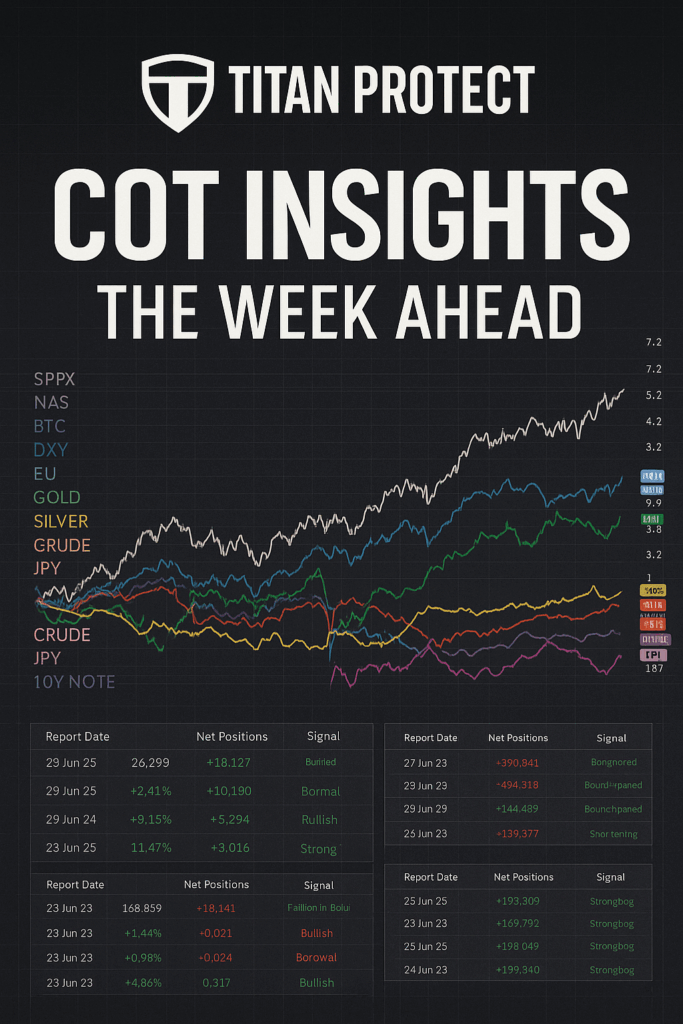
The COT and institutional flow analysis published in the positioning piece this morning laid out the structural backdrop: record ETF inflows masking active hedging, geopolitical tail risk from Iran, and a bond-equity relationship that has reached extremes not seen since 1999. This post picks up where that leaves off and looks specifically at the macro catalysts that will determine whether those hedges pay off over the next five trading days.
The headline conclusion from positioning was that big money is not exiting, it is hedging. That makes the macro data this week particularly consequential, because the data will either justify that hedging activity or force an unwind. Both outcomes move markets sharply in a thin holiday week.
Kevin Warsh was sworn in as Federal Reserve Chairman by Supreme Court Justice Clarence Thomas on Friday. This is the most important structural change to the US monetary policy backdrop in years. Markets spent months speculating on what Warsh would mean for rates, for the Fed’s independence, and for communication style. Now the speculation ends and the reality begins.
Warsh is known as a hawk. He dissented in favour of tighter policy during his earlier tenure at the Fed. But he is also a pragmatist, and he arrives at a moment when consumer sentiment has just hit its lowest level since 1952, when inflation expectations are climbing, and when the economy is showing genuine signs of strain under the weight of tariff policy and tightened financial conditions.
The market is not pricing a Warsh Fed yet. It is still priced for a continuation of the status quo. That mis-pricing is the risk. If Warsh signals any change in tone, language, or policy bias before or alongside the PCE print on Thursday, the market reprices fast. Yields move first, then the dollar, then equities.
The ten-year Treasury yield closed at 4.558%, down from 4.586% the prior session. The thirty-year yield fell to 5.064%, off almost one percent. That easing in yields was the primary driver of Friday’s equity strength, but it sits in tension with a bond market that has been persistently weak all year. One good day does not change the trend.
The two-month correlation between US equities and the ten-year yield has dropped to -0.70, the lowest since 1999. That means for the past two months, when yields go up, stocks go down, and when yields ease, stocks rally. This is the traditional defensive correlation. But it is sitting at an extreme, which means the relationship is either about to normalise or the equity market is about to be tested by a yield move it cannot absorb.
DXY closed at 99.32, up a marginal 0.13% on the day but still well below its early-year highs. Dollar weakness has been a tailwind for international equities, particularly in Europe and Japan, as we saw in Friday’s sessions. The DAX added 1.15% and the Nikkei surged 2.68%, both benefiting from the currency effect.
USD/JPY at 159.16 is worth flagging specifically. Japanese authorities have previously intervened to defend the yen when it weakened past the 160 level. That level is not far away. If the dollar strengthens into PCE week, intervention risk rises, and a MOF-driven yen reversal would hit the Nikkei hard and fast given how much of Friday’s move was currency-driven.
AUD/USD at 0.7130 and NZD/USD at 0.5851 are both showing dollar strength returning on the crosses, even as the DXY headline looks contained. Commodity currency weakness often leads macro turns in risk appetite by a session or two.
South Korean exports surged 52.6% year on year in the first twenty days of May, the strongest reading on record. This follows a 49.4% gain over the same period in April. South Korea exports semiconductors, steel, and high-end manufacturing. When South Korean export data runs this hot, it tends to lead global industrial production figures by six to eight weeks.
This is not noise. It is a signal that the AI infrastructure build-out is driving real physical demand for components. The Micron CEO comment that the memory chip shortage will extend beyond 2026 is consistent with this reading. Tight supply plus surging demand is the setup for a tech sector that looks expensive on multiples but potentially reasonable on forward earnings if the cycle extends.
| Instrument | Level | Change | Macro Read | Direction |
|---|---|---|---|---|
| 10-Year Treasury Yield (^TNX) | 4.558% | -0.61% | Eased Friday. PCE Thursday is the next directional driver. If yields spike through 4.65%, equity correlation snaps. | Watch 4.60% |
| 30-Year Treasury Yield (^TYX) | 5.064% | -0.94% | Long end easing is the primary reason equities rallied Friday. Structural fiscal concerns keep the floor elevated. | Support at 5.00% |
| 3-Month T-Bill (^IRX) | 3.585% | +0.08% | Short end anchored to Fed policy. Warsh signals this week could move the short end sharply if hawkish tone emerges. | Warsh-dependent |
| US Dollar Index (DXY) | 99.32 | +0.13% | Marginal dollar recovery. Still well below early-year levels. PCE print determines next leg. Geopolitical escalation = safe-haven bid. | Neutral |
| EUR/USD | 1.1605 | -0.18% | Euro pulling back modestly. ECB rate path divergence from the Fed could widen this spread if Warsh signals hawkish turn. | Neutral |
| GBP/USD | 1.3433 | -0.01% | Effectively flat. UK Bank Holiday Monday caps near-term action. Watch for sterling move into Tuesday’s US data. | Neutral |
| USD/JPY | 159.16 | +0.17% | Approaching 160 level where MOF intervention has historically been triggered. Watch this level carefully this week. | Intervention Risk |
| Crude Oil (CL=F) | $96.60 | +0.26% | Iran strike preparation keeps a floor under this. Wide intraday range Friday reflects genuine uncertainty. PCE + Iran = double inflation risk. | Upside Bias |
| Gold (GC=F) | $4,521 | -0.41% | Russia selling supply pressure. Iran tail risk is the weekend wildcard. New Fed Chair = uncertainty = safe-haven support medium-term. | Neutral / Iran upside |
| DAX (^GDAXI) | 24,889 | +1.15% | Dollar weakness tailwind. South Korea export strength is a read-across for European industrial demand. Watch EUR/USD for continuation. | Bullish |
| Nikkei 225 (^N225) | 63,339 | +2.68% | Yen weakness driving exports. 2.68% single-session move is large. MOF watching. Reversal risk if 160 triggers intervention. | Bullish with MOF risk |
| Euro Stoxx 50 (^STOXX50E) | 6,019 | +0.99% | Broader European strength. Dollar softness helping. ECB policy clarity is better than the Fed’s right now, giving European assets an edge. | Mildly Bullish |
PCE comes in at or below 2.5% month on month, Warsh signals continuity with the previous Fed’s approach. Yields fall, dollar weakens, equities extend. Gold and crude pull back as risk-on takes hold.
PCE meets expectations. Warsh says nothing new. Markets trade sideways in thin holiday-week volume. No clear catalyst, no clear resolution. The most likely single outcome for a week with no Monday session.
PCE comes in above 2.7%. Warsh takes the opportunity to signal a hawkish tilt. Yields spike, dollar strengthens, equities reprice lower. The stock-bond correlation flips back toward positive territory and positions unwind.
Military engagement in Iran over the weekend triggers an oil spike above $105. Macro backdrop is immediately rewritten. Inflation expectations surge, Warsh faces an impossible first week, and markets gap to safety.
This is an unusually high-risk macro week. The combination of a new Federal Reserve Chairman making his first public comments, a PCE print that lands with elevated consumer inflation expectations as backdrop, a closed Monday that compresses the reaction window into four trading days, and genuine geopolitical tail risk from Iran creates a setup where the distribution of outcomes is wider than normal. The PCE alone would be around 40% risk in a typical week. Add Warsh and the Iran variable and the combined risk profile rises materially. Position sizing should reflect that compression in the time available to react.
The positioning analysis earlier today showed institutions are hedging rather than exiting. That is consistent with this macro picture: too much uncertainty to exit, too much risk to go unhedged. The net result is a market that is likely to stay contained until Thursday’s PCE resolves the immediate question.
The sentiment picture that follows this post goes deeper on the disconnect between how consumers feel, how investors are positioned, and what the VIX is pricing. That gap is one of the more unusual features of this market right now, and it matters for how Tuesday’s Consumer Confidence print lands.
This content is for informational and educational purposes only and does not constitute financial advice, investment advice, or a recommendation to buy or sell any financial instrument. Past analysis does not guarantee future accuracy. All market data referenced reflects conditions at the time of writing. Trading financial markets involves significant risk. Never risk more than you can afford to lose. Seek independent financial advice before making any investment decisions.
Deepen Your Understanding
Related articles from the Titan Protect Foundry: