🛡️ SL/TP Intelligence Series — Article 5 of 10 | Video: 17 min
📋 What You’ll Learn:
- 🎯 When to take profits (and when to let it run)
- 💡 Scaling out: taking partial profits explained
- ⚠️ The greed trap that turns winners into losers
- 📊 Multiple target strategies
- 🔢 Rules for exiting like a professional
🎥 Video coming soon — Subscribe to @Titan_Protect for the full breakdown with live charts.
️ The Hardest Part of a Winning Trade
You planned the trade perfectly. Entry was solid. Stop is in place. And now — miracle of miracles — the trade is working. You’re profitable.
Now comes the hard part: when do you take the money?
Too early, and you leave profits on the table. Too late, and the market takes them back. There’s no perfect answer, but there are better and worse ways to handle it.
Three Ways to Take Profits
1. All at Once (Single Target)
You set one target before entering. When price hits it, you sell everything. Simple, clean, mechanical.
Best for: Beginners, strict rule-followers, part-time traders
Example: Buy at $100, target $110. Price hits $110, you sell 100% of your position. Done.
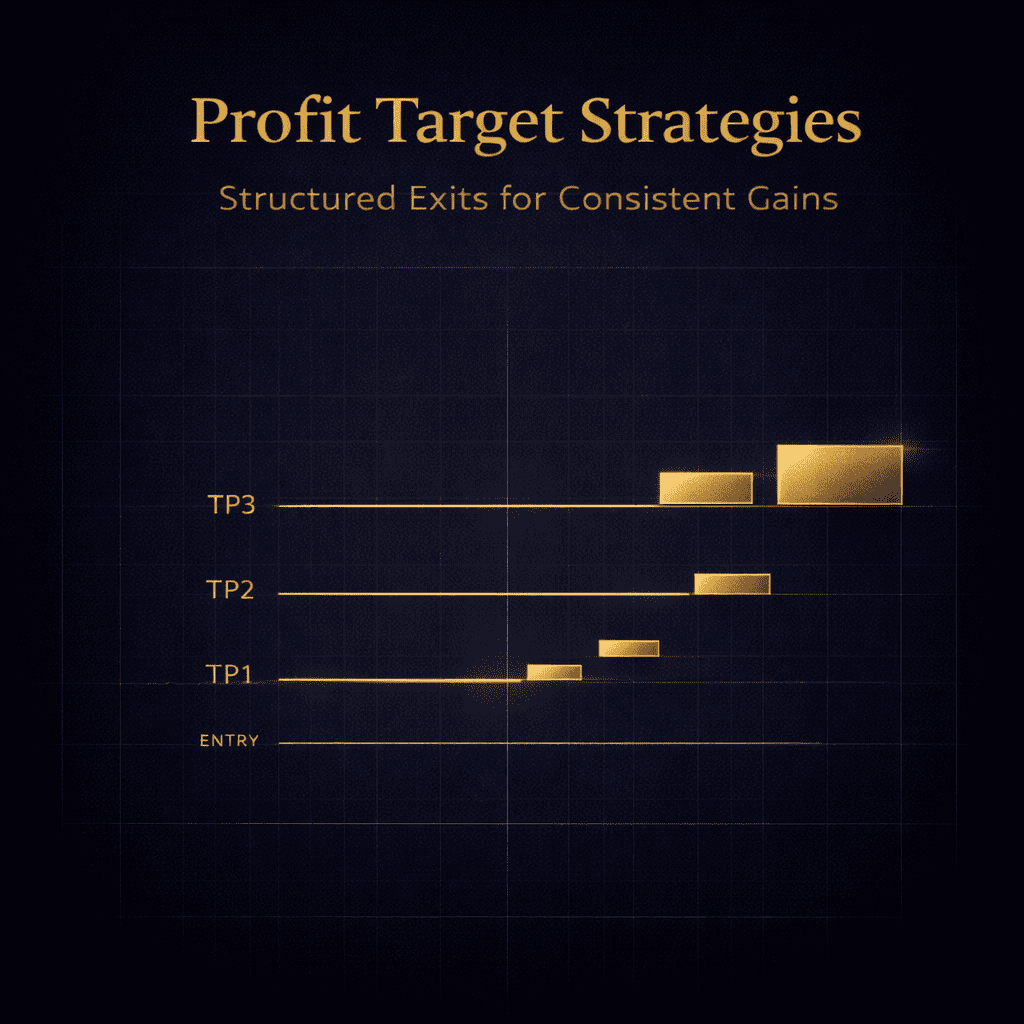
2. Scaling Out (Multiple Targets)
Scaling out means selling portions of your position at different price levels. You take some profits early, let the rest run.
Example: You own 100 shares
> – Sell 25 shares at $105 (first target)
> – Sell 25 shares at $110 (second target)
> – Sell 25 shares at $115 (third target)
> – Let 25 shares run with a trailing stop
Best for: Trend traders, those who hate leaving money on the table, active managers
3. Trailing Stop (Let It Run)
You don’t set a price target. Instead, you use a trailing stop that moves up as price rises. You stay in until the trend ends.
Best for: Trend followers, long-term traders, catching big moves
Example: Buy at $100, trailing stop $5 below highest price reached. Stock goes to $120, your stop is at $115. Stock drops to $116, you’re still in. Stock drops to $114, you exit at $115 with $15 profit.
The Scaling Out Strategy Explained
Scaling out is popular because it feels good. You bank some profits, reduce risk, and still have skin in the game for bigger moves. But it has trade-offs.
Benefits of Scaling Out
- Psychological win — you lock in profits, feel good, trade better
- Reduced risk — after first scale, you’re playing with house money
- Catch extensions — if price keeps running, you still profit
- Flexibility — can adjust based on market conditions
Drawbacks of Scaling Out
- Smaller overall profits — if you sold everything at target, you’d make more
- Complexity — more decisions, more chances to mess up
- FOMO on full position — watching remaining shares can be distracting
️ The Greed Trap
Here’s how traders turn winners into losers:
> – Trade hits target. “Just a little more!” you think.
> – You move your target higher. Price keeps going!
> – You move it higher again. “This is going to the moon!”
> – Price reverses. You’re now watching unrealized profits shrink.
> – “It’ll come back,” you say.
> – It doesn’t. Price hits your stop. Winner becomes breakeven or loss.
Greed turned a winning trade into a losing one.
The fix? Have a plan before you enter. Stick to it. The market doesn’t care about your greed.
Where to Set Your Targets
Targets should be based on where price actually goes, not where you hope it goes.
Support and Resistance Levels
Support = price level where buyers tend to step in (floor)
Resistance = price level where sellers tend to step in (ceiling)
Place targets just before resistance. Why “just before”? Because resistance is where price often stalls or reverses. Give yourself margin for error.
Previous Highs and Lows
Markets remember. Previous significant highs and lows often act as magnets for price. Use them as targets.
Measured Moves
If price broke out of a range, project that range height from the breakout point. That’s your measured move target.
> Example: Stock traded between $90-$100 for weeks (a $10 range). It breaks above $100. Target = $100 + $10 = $110.
The Professional Exit Plan
Before entering every trade, pros know:
- Where they’ll exit if wrong (stop loss)
- Where they’ll take initial profits (first target)
- Where they’ll take remaining profits (final target or trailing stop)
- What percentage they’ll sell at each target
No guessing. No hoping. Just execution.
Example Exit Plan
Trade Setup:
> – Entry: $100
> – Stop: $95 (5% risk)
> – Position size: 100 shares
> – Risk amount: $500
Exit Plan:
> – Target 1: $105 (1:1 risk-to-reward)
> – Sell 40 shares (40% of position)
> – Profit: $200
> – Move stop to breakeven ($100) on remaining 60 shares
>
> – Target 2: $110 (2:1 risk-to-reward)
> – Sell 30 shares (30% of position)
> – Profit: $300
> – Trailing stop on remaining 30 shares
>
> – Final exit: Trailing stop or $120 target
> – Sell final 30 shares
Result: You locked in profits along the way, reduced risk, and still caught the big move if it happened.
Your Action Plan
- Pick your exit style — single target, scaling, or trailing stop
- Set targets before entering — no exceptions
- Base targets on structure — support, resistance, measured moves
- Execute your plan — don’t move targets out of greed
- Review and adjust — track which exit style works for your strategy
What’s Next in This Series
This is article 5 of 10. Coming up:
- Psychology of Letting Winners Run → The mental game of holding
- Advanced Exit Strategies → More techniques for maximizing profits
- The Pre-Trade Checklist → Putting it all together
A Thought to Take With You:
Profits aren’t real until you take them. A winning trade that reverses into a loss teaches you nothing except that you were greedy. Have a plan. Execute it. Live to trade another day.
This week: On your next 3 trades, write down your exit plan before you enter. Include specific prices and percentages. Don’t deviate. See how it feels to trade with a complete plan.
— Titan
Get the daily framework intelligence
Trade the framework, not the noise.
The principles in this article are how we read markets every day. Members get the live application: daily Pre-Asia, Pre-London, Pre-NY and Post-Close briefs across 20+ instruments, the indicator suite, the Foundry library, and live community.
Free Explorer tier · No card required · Upgrade when you’re ready