Range Trading: Profiting from Sideways Markets
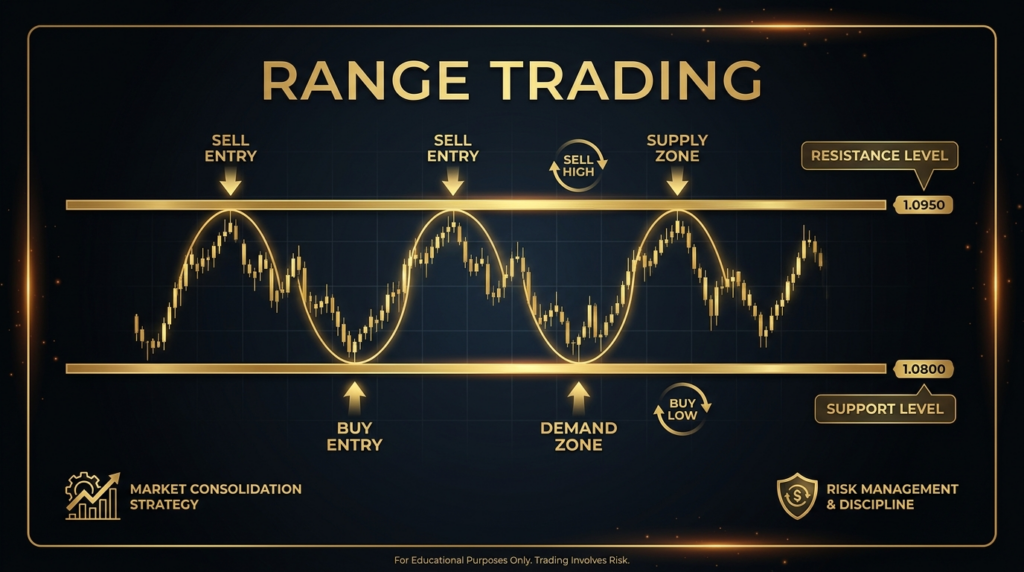
While trend traders chase directional moves and breakout traders wait for explosions, range traders find opportunity in the quiet middle. When markets lack clear direction, they often oscillate between established support and resistance levels. Range trading captures these predictable oscillations, turning boredom into profit. This article provides a complete framework for trading horizontal markets effectively.
Understanding Range-Bound Markets
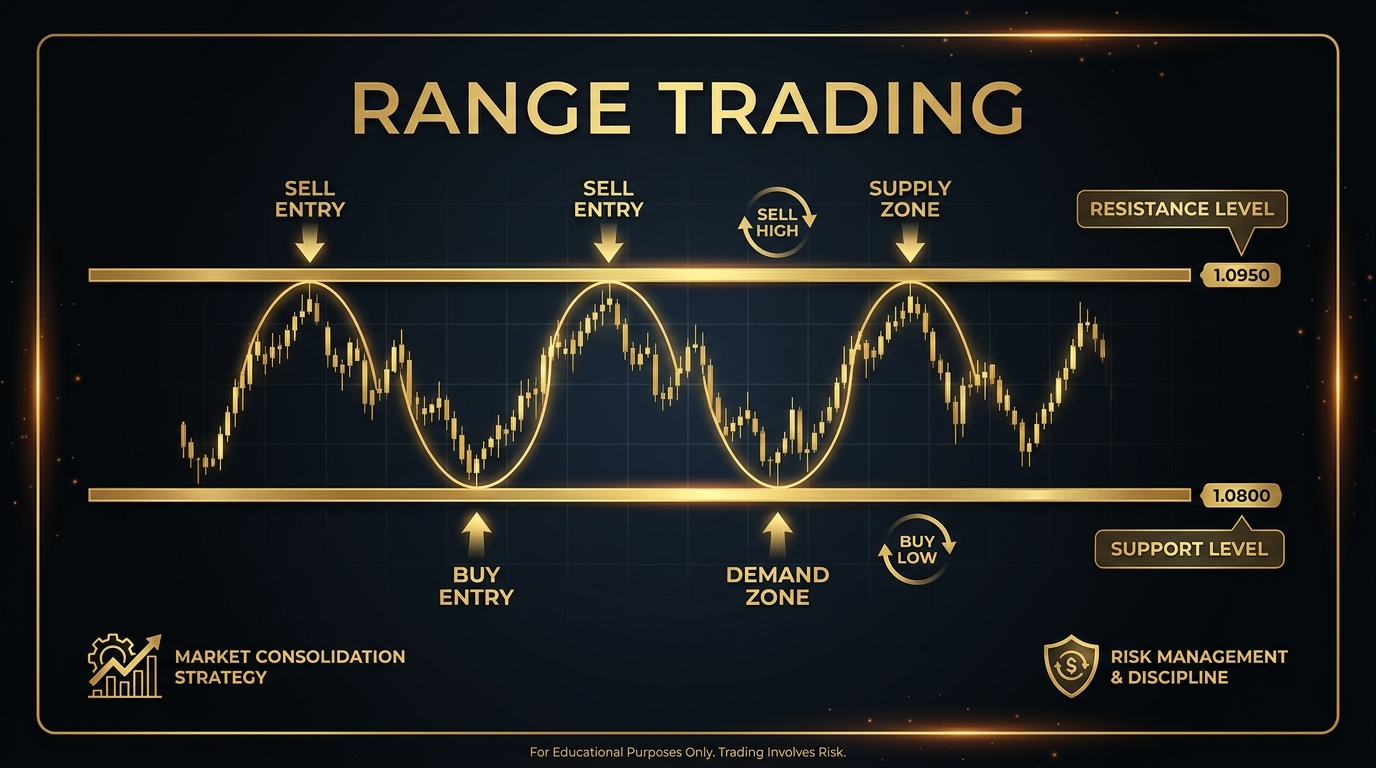
A range exists when price repeatedly bounces between two parallel levels: support below and resistance above. Neither buyers nor sellers gain sustained control, creating a consolidation phase. These periods can last days, weeks, or even months, offering numerous trading opportunities for those who recognize them.
Ranges form for various reasons:
Types of Ranges
Rectangular Ranges:
Clean horizontal boundaries with clear support and resistance. Most tradable due to well-defined levels.
Irregular Ranges:
Rough boundaries with some overshoots. Require wider stops and more flexible interpretation.
Tight Ranges (Channels):
Narrow bands with minimal volatility. Lower profit potential but higher precision.
Wide Ranges:
Large oscillation areas (10%+ of price). Higher profit potential but require patience and conviction.
Identifying Tradeable Ranges
Not every consolidation constitutes a range trade. Quality ranges share specific characteristics:
Boundary Definition
Clear Support Level:
Clear Resistance Level:
Parallel Boundaries:
Volume Characteristics
Healthy ranges show specific volume patterns:
Declining volume throughout the range often precedes explosive breakouts. useful information for range traders preparing for eventual trend resumption.
Time Considerations
The best ranges have:
Fresh ranges (just formed) have higher failure risk. Well-established ranges (multiple successful oscillations) offer higher probability trades.
Range Trading Strategies
The Classic Range Play
Buy support, sell resistance. the fundamental range trading approach.
Long Entry (at Support):
Short Entry (at Resistance):
Example:
Stock oscillating between $40 support and $50 resistance. Price drops to $41 with hammer candle and volume increase. Enter long at $41.50. Stop at $39. Target $49. Risk $2.50, reward $7.50 (3:1 RR).
The Mid-Range Avoidance
The middle of a range is the danger zone. furthest from both support and resistance with no edge.
Rule: Only enter within 20% of a boundary. If price is mid-range, wait for it to reach support or resistance.
Why it works: Range reversals cluster near boundaries. Mid-range entries have equal distance to both targets and stops, creating random outcomes.
The Range Expansion Play
Sometimes ranges gradually expand rather than breaking out cleanly.
Setup:
Caution: Multiple expansion events suggest range instability. Eventually, one breakout will be genuine. Reduce position size and tighten stops.
The Failed Breakout Fade
When ranges break but immediately fail, they often snap back powerfully.
Setup:
Logic: Trapped breakout buyers exit, adding selling pressure. Failed breakouts often reach the opposite boundary quickly.
Range Trading Indicators
While price action suffices, certain indicators help:
Oscillators in Ranges
Oscillators excel in range-bound markets:
RSI (Relative Strength Index):
Stochastic:
CCI (Commodity Channel Index):
Bollinger Bands
Ranges often coincide with Bollinger Band contraction (squeeze):
Moving Averages
Ranges typically form around a central moving average:
Risk Management for Range Trading
Stop Loss Placement
Ranges require stops beyond the boundary to avoid normal oscillation:
Conservative: 1× ATR beyond the boundary
Standard: Just beyond the boundary (buffer for wicks)
Aggressive: Mid-range
Position Sizing
Ranges offer defined risk-reward if boundaries hold:
Calculation:
With such favorable risk-reward, even 40% win rates generate profits.
When to Exit
Don’t hold for the full range width every time:
Scale-Out Approach:
Trailing Stop:
Recognizing Range Breakdown
All ranges eventually break. Recognize the warning signs:
Breakout Signals
Genuine breakout characteristics:
Failed breakout characteristics:
When to Stop Trading the Range
Cease range trading when:
Advanced Range Techniques
The Range Within a Range
Large ranges often contain smaller, tradable ranges:
Setup:
This provides more frequent opportunities while maintaining larger context.
Multiple Timeframe Ranges
Ranges exist on all timeframes:
Trade smaller timeframe ranges within larger timeframe context. A range trade in the direction of the higher timeframe trend has better odds.
Range to Trend Transition
When ranges break, they often trend powerfully:
Preparation:
Warning: Most traders continue range trading after genuine breakouts, fighting the new trend. Stay flexible.
Psychological Challenges of Range Trading
Repetition Boredom
Range trading involves similar trades repeatedly. After 3-4 successful oscillations, traders often:
Solution: Trade the range until it breaks. Boredom is not a valid reason to abandon a working strategy.
Boundary Doubt
As price approaches a boundary, doubt creeps in:
Solution: Trust the established boundaries until proven broken. Confirmation often means worse entry prices. The edge comes from acting at the boundary, not after confirmation.
Premature Exit
Ranges take time. Price rarely moves directly from support to resistance. Traders often exit during mid-range chop, missing the eventual target.
Solution: Set alerts at boundaries, not mid-range. Step away from screens. Let the trade work.
Is Range Trading Right for You?
Range trading suits traders who:
Range trading challenges traders who:
Conclusion
Range trading offers a methodical approach to profiting from market indecision. While others wait for trends to emerge, range traders extract value from the oscillations themselves. The strategy requires patience, precision, and acceptance that all ranges eventually break.
Master the ability to identify quality ranges. Enter only at boundaries with clear risk points. Exit when ranges break. And remember that in trading, consistency often trumps excitement. Range trading provides exactly that. consistent, repeatable opportunities for those willing to trade the boundaries while others chase breakouts.