
title: “How to Build a Simple Trading Routine That Works”
series: “Titan Playbook”
tags: [“trading-routine”, “daily-plan”, “beginner-trading-habits”, “trade-prep”, “discipline”, “trading-consistency”, “trading-workflow”, “market-prep”]
author: “Chart Master”
date: 2026-02-12
status: draft
How to Build a Simple Trading Routine That Works
Stop Guessing. Start Trading With Structure.
Most new traders approach the market like this:
Open chart. Look around. Wait for something that “looks good.” Take a trade.
But what’s missing here isn’t knowledge — it’s structure.
A simple trading routine helps you:
- Stay focused
- Avoid impulsive trades
- Build consistency
- Track what’s working and what isn’t
Let’s walk through how to create one that fits your time, personality, and goals — without needing 10 hours a day or 20 screens.
Why Routine Matters More Than Strategy
Even the best trading strategy will fail if applied inconsistently or emotionally.
Without a routine:
- You’ll trade on impulse
- You’ll overreact to short-term noise
- You won’t learn from past outcomes
A good routine builds mental clarity and emotional distance — two of the most underrated trading edges.
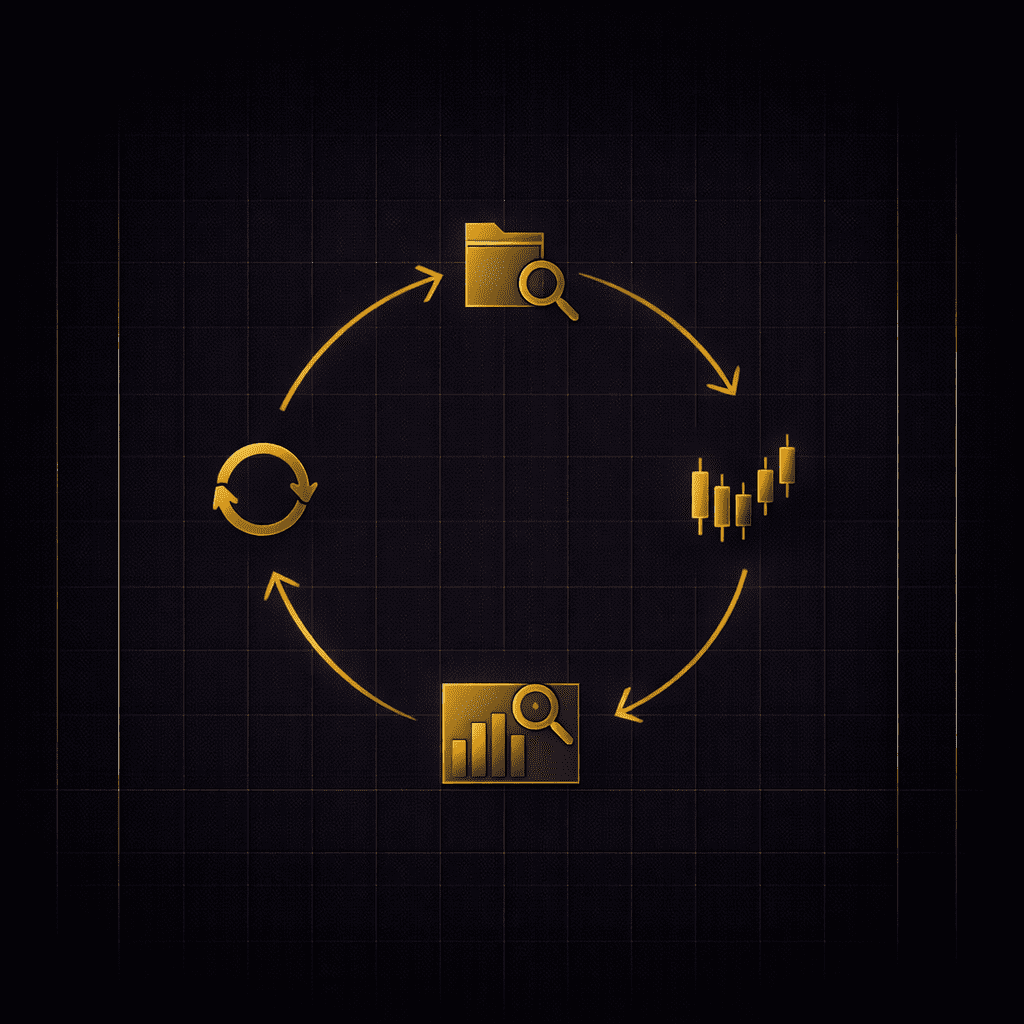
The 3-Part Trading Routine
Let’s break it down into three clear phases.
1. Pre-Market Prep
Time needed: 10–30 minutes
Goal: Build directional awareness and bias
Check:
- What’s the higher timeframe trend?
- Where are major levels or reaction zones?
- Is there news today (or OPEX, Fed speakers, data)?
- What is price trying to do — and is it succeeding?
Set your watchlist and mark levels before price gets there. You want to react at key areas, not chase after them.
2. Active Trading Window
Time: 1–3 hours, depending on your style
Goal: Wait for high-quality trades, not constant action
During session:
- Only trade when structure + flow + confluence align
- Let setups come to you — don’t force entries
Learn With Titan
Titan Protect tools are built to support every phase of your trading routine.
Inside our system, you’ll find:
- Morning bias dashboards for directional context
- Pre-trade logic gates to avoid random entries
- Session-based classification (London, NY, Asia)
- Visual checklists built into your chart
Want to see how structure and routine work together? We’ll show you.
[Reach out or start inside the Members’ Area]
