The US Dollar Index closed the week at 99.32, adding a modest 0.13% on Friday. That sounds unremarkable. But context is everything. The DXY has been unable to hold above the 100 level for weeks, and every attempted recovery fades. Friday’s green candle is a bounce within a broader downtrend, not a reversal.
The macro piece published this morning laid out the reason clearly: a new Federal Reserve chairman in Kevin Warsh, ten-year Treasury yields at 4.558%, and a market that has not yet fully priced what a Warsh-led Fed means for the dollar. If Warsh signals anything more hawkish than the market expects ahead of Thursday’s PCE data, the dollar bounces harder. If PCE comes in hot and Warsh stays quiet, the dollar is caught between yield support and a structural credibility question.
The DXY at 99.32 is sitting in no man’s land. Below 99 last week triggered buying. Above 100 last month triggered selling. That range compression into a long weekend with a critical inflation print five days away is precisely where false breakouts happen. The global grid analysis published in Post 06 flagged this zone as one of the three most important levels on the weekend scorecard.
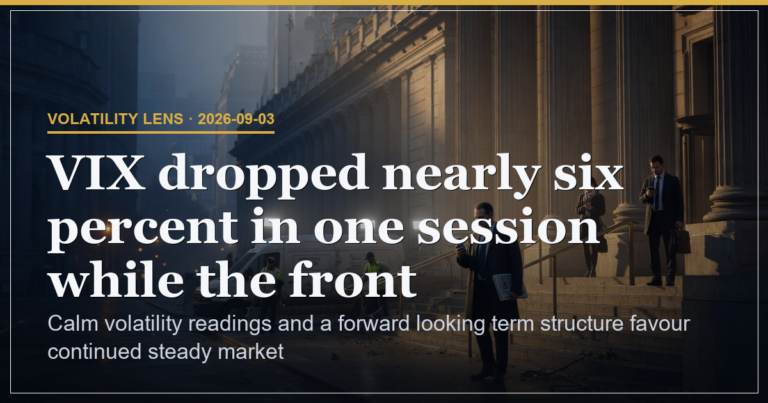
The basis analysis published in Post 10 this morning noted that futures across asset classes are pricing carry costs rather than conviction. The FX carry trade is the most direct expression of that. When short-term rate differentials are wide and volatility is low, traders borrow in lower-yielding currencies and invest in higher-yielding ones. VIX at 16.70 into a long weekend is technically low enough to support carry. But it is not as low as it was two weeks ago when the five-session average was significantly higher.
The key carry pairs to watch into Tuesday are USD/JPY (not shown in today’s data but critical given Japan’s rate normalisation path), and the commodity currencies AUD and NZD. Both have been carry favourites. Both are under modest pressure heading into the weekend. If the dollar firms on a Warsh-related repricing or hot PCE expectations building through the week, carry unwinds can be fast.
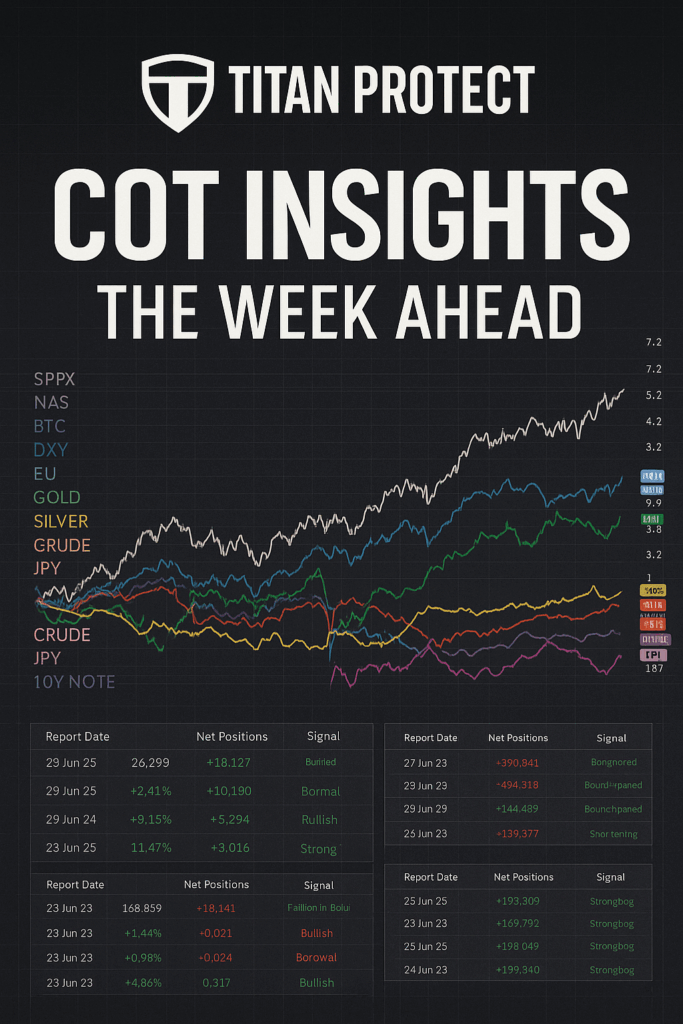
The positioning data from the institutional flow piece published in Post 07 noted active hedging rather than outright selling. In FX terms, that looks like bought dollar puts, reduced net short positioning in USD, and lengthening of GBP relative to peers. None of that changes the structural trend, but it does mean the dollar has shock absorbers in place that could limit a spike above 100.50.
| Cross Rate | Level | Change | Reading |
|---|---|---|---|
| GBP/AUD | 1.8844 | +0.29% | Sterling outperforming commodity bloc; risk-off relative trade |
| GBP/NZD | 2.2955 | +0.47% | Kiwi’s weakest session this week; GBP/NZD hitting multi-week highs |
| GBP/CAD | 1.8559 | +0.32% | CAD weakness compounds with crude; GBP gaining across commodity bloc |
| AUD/NZD | 1.2179 | +0.16% | AUD marginally stronger than NZD within commodity group |
| AUD/CHF | 0.5577 | -0.80% | Largest mover in the cross matrix; risk-off tone in safe-haven CHF |
| NZD/CHF | 0.4580 | -0.91% | CHF strongest major cross; confirms defensive tone into weekend |
The Swiss franc data stands out. CHF strengthened sharply against commodity currencies on Friday, with AUD/CHF down 0.80% and NZD/CHF down 0.91%. When CHF moves like this into a long weekend, it almost always reflects a quiet hedging of tail risk rather than a directional macro call. The geopolitical and yield concerns flagged in the macro post are the likely driver.
The basis piece published as Post 10 today made the point that gold and silver both pulled back modestly as the dollar edged higher on Friday. That inverse relationship between the dollar and commodity prices is well-established, but the degree of sensitivity matters.
At DXY 99.32, the dollar is still historically weak. Gold at $4,521 and oil at $96.60 are both historically elevated. These are not levels where a small dollar bounce creates a commodity crisis. But the directionality matters: a sustained dollar recovery above 100 would apply meaningful pressure to the raw materials complex, which in turn affects the commodity-linked currencies, which then feeds back into global risk appetite. The commodities piece in Post 13 covers the metals and energy detail specifically. The dollar connection is the transmission mechanism linking all of it.
Triggered by hawkish Warsh commentary or hot PCE expectations building. EUR/USD tests 1.15, GBP/USD tests 1.33, AUD/USD back toward 0.70. Gold and crude under pressure. Risk ~35%.
Weak PCE expectations or dovish signals allow dollar to drift. EUR/USD pushes through 1.17, GBP/USD tests 1.36, AUD/USD toward 0.72. Gold finds a base above $4,500. Risk ~40%.
This post builds on the macro and yield context in Post 01, the global asset grid in Post 06, and the basis dynamics in Post 10. The commodities piece in Post 13 connects the dollar’s impact on metals and energy pricing directly.
This content is for informational and educational purposes only. Nothing here constitutes financial advice or a solicitation to buy or sell any instrument. Past performance is not indicative of future results. Trading involves risk of loss. Always conduct your own research and consult a qualified financial adviser before making investment decisions.
Deepen Your Understanding
Related articles from the Titan Protect Foundry: