
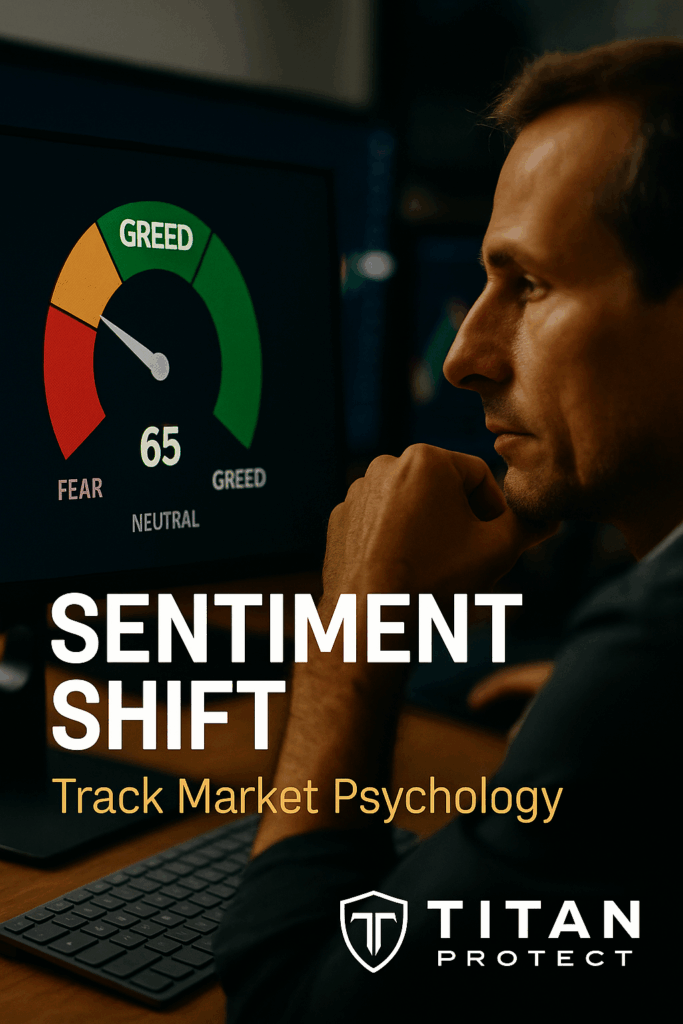
56.5 to 63.3 in Two Days. Greed Is Sprinting. Breadth Is Walking.
Two days ago, Fear and Greed sat at 56.5. Yesterday it was 61.4. Today: 63.3. That is a 6.8-point surge in 48 hours, the fastest acceleration into greed territory this quarter. The market’s emotional state has shifted from cautious neutrality to outright greed in the time it takes most traders to review their weekend watchlists.
That speed matters. Not because greed is inherently dangerous, but because what is underneath has not kept pace.
The Participation Problem
Breadth is 49.3% advancing. Essentially half up, half down. That is not what a healthy greed-driven rally looks like. When sentiment runs hard and breadth follows, you have a broad-based move with staying power. When sentiment runs hard and breadth shrugs, you have a narrow move that is one catalyst away from unwinding.
Here is the sharper number: 49.5% of stocks sit below their 200-day average. Half the market is in a long-term downtrend. The greed reading is being generated by a small group of large-cap names dragging the indices higher while the average stock deteriorates.
58.8% are above their 50-day average, which tells you the short-term picture is healthier than the long-term one. That gap (58.8% vs 49.5%) is the market’s way of saying “we are bouncing, but we have not reversed.”
What Is Driving the Greed
VIX futures at 20.45 (-0.49%) are falling, and the internal read is lower still at 18.0, down 1.3 points. Falling volatility is the single biggest contributor to sentiment improvement. When fear pricing drops, the greed index rises mechanically.
SPY at $701.66 is holding near recent highs. ES futures at 7,086.25 are above cash, confirming an overnight bid. Russell futures at 2,739.40 (+0.33%) are leading, which adds a small-cap risk appetite signal.
The suite sentiment reads 61.9, risk-on band. But only equities and VIX are constructive. Dollar, bonds, commodities, and crypto are all neutral. Five of seven inputs are sitting on the fence. Two are pushing the whole number into greed territory.
Historical Context
When greed accelerates this quickly on narrow breadth, there are two common outcomes. First: breadth catches up, the move broadens, and the rally becomes self-sustaining. This requires a catalyst, usually macro data or earnings surprises. Second: breadth fails to follow, the narrow leaders stall, and sentiment resets sharply. The reversal is faster than the rally because greed unwinds harder than it builds.
Next week’s calendar provides the potential catalyst: Retail Sales (already beat at 0.6% vs 0.4%), PMI Flash Thursday, and Michigan Sentiment (already crushed expectations at 53.3 vs 47.6). If these prints broaden confidence, breadth could follow. If they disappoint, sentiment at 63.3 has a long way to fall.
The Overbought Layer
The macro-timeframe RSI sits at 81.4 on the NAS100 3-minute structure. That is deeply overbought. The macro engine is locked bullish, which provides a directional floor, but even within a bullish structure, overbought readings at this level typically precede a pullback before the next leg.
All four trend timeframes read bearish (-1 across long, short, mid, and immediate). The regime score is 22.2. These are not levels that support new longs. They are levels that support patience.
The Takeaway
Greed at 63.3 is not a sell signal. But greed at 63.3 with 49.5% of stocks below their 200-day and only two of seven sentiment inputs constructive is a signal to stop buying without confirmation. The speed of this shift demands that breadth respond. If it does, the next leg higher will be real. If it does not, this is the kind of sentiment overshoot that resolves with a sharp Friday afternoon or Monday morning correction.
This is analysis, not financial advice. Always manage your risk.
