
How central bank decisions ripple through every asset class
📊 The Rate That Moves Markets
Interest rates are the economy’s thermostat. When central banks adjust rates, every asset class feels the shift—from forex to equities to commodities.
Understanding this transmission mechanism separates reactive traders from strategic ones.
🏛️ The Central Bank Toolkit
Policy Rates
- Federal Funds Rate (US)
- ECB Main Refinancing Rate (EU)
- Bank Rate (UK)
- Cash Rate (Australia)
Forward Guidance
Central bankers communicate future intentions through speeches, minutes, and dot plots. Markets often move more on guidance than actual decisions.
Quantitative Tools
QE/QT programs, yield curve control, and emergency lending facilities extend beyond traditional rate settings.
💱 Forex Impact
Rate Differentials Drive Currency Flows
When Country A raises rates while Country B holds steady, capital flows toward higher yields. This creates predictable patterns:
| Scenario | Typical FX Response |
|---|---|
| Hawkish hike | Currency strengthens immediately |
| Dovish hold | Currency weakens vs. hiking peers |
| Surprise cut | Sharp depreciation, volatility spike |
| Forward guidance shift | Gradual repricing over days |
Key Insight: Markets price expectations, not just outcomes. A 25bp hike can weaken a currency if 50bp was expected.
📈 Equity Market Response
Immediate Reaction (0-24 hours)
- Rate hikes → Pressure on growth stocks
- Rate cuts → Support for risk assets
- Unexpected moves → Volatility expansion
Sector Rotation Patterns
| Rate Environment | Outperformers | Underperformers |
|---|---|---|
| Rising rates | Financials, Energy | Tech, Real Estate |
| Falling rates | Growth, Discretionary | Utilities, Staples |
| Flat/Uncertain | Quality, Defensive | Cyclicals |
Valuation Impact
Higher discount rates reduce present value of future cash flows—affecting growth stocks disproportionately.
🏦 Bond Market Dynamics
The relationship seems obvious: rates up, bond prices down. But nuances matter:
- Short-end responds directly to policy rates
- Long-end reflects growth and inflation expectations
- Yield curve shape signals recession risk (inversion) or expansion (steepening)
Curve Steepeners vs. Flatteners:
- Steepening: Long rates rise faster than short rates
- Flattening: Short rates catch up to long rates
🛢️ Commodity Considerations
Rate Hikes → Dollar Strength → Commodity Pressure
Most commodities are dollar-denominated. When US rates rise:
- Dollar strengthens
- Commodities become more expensive in local currencies
- Demand softens, prices adjust
Exceptions and Nuances
- Gold often struggles with real rate increases
- Oil can rise with rates if growth optimism dominates
- Agricultural commodities follow supply dynamics more than rates
⚡ Trading Rate Decisions
Pre-Announcement Positioning
- Reduce exposure 24-48 hours before major decisions
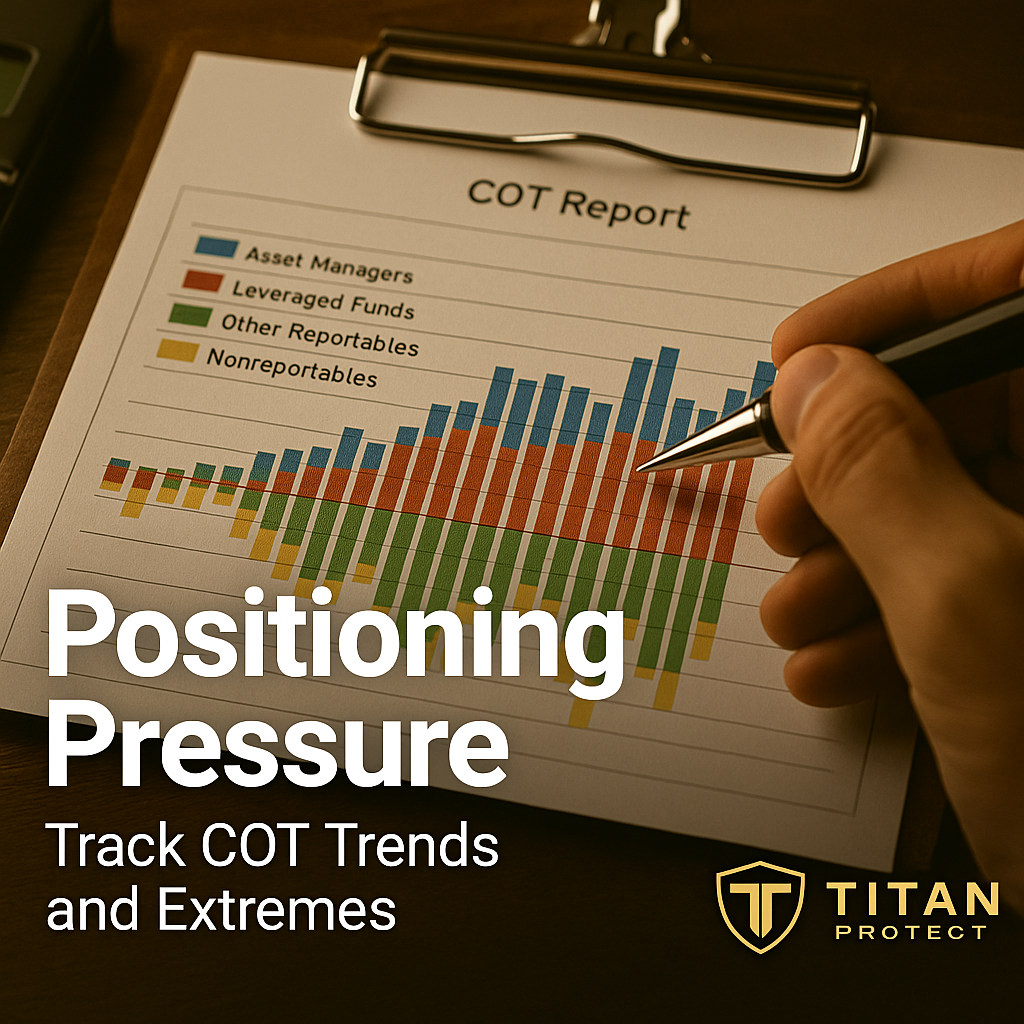
- Monitor positioning via CFTC data
- Watch for option market skew (protection buying)
The Decision Window
First 5 minutes: Knee-jerk reaction
Next 30 minutes: Parsing statement language
Following 24 hours: Full market digestion
Post-Decision Strategy
Let initial volatility settle. Trade the trend that emerges after the first hour.
🎯 Learn With Titan: Rate Decision Framework
| Element | What to Watch | Trading Implication |
|---|---|---|
| Headline Rate | Actual vs. Expected | Immediate price gap |
| Statement Tone | Hawkish/Dovish bias | Directional bias for next 24h |
| Dot Plot | Member projections | Medium-term rate path |
| Press Conference | Q&A responses | Policy flexibility clues |
| Market Positioning | CFTC, option flows | Risk of squeeze if crowded |
Golden Rule: Never trade the first 5 minutes of a rate decision unless you’re explicitly scalping volatility.
🧠 Key Takeaways
- Interest rates are the gravitational force of financial markets
- Rate differentials drive currency flows and capital allocation
- Market positioning often matters more than the decision itself
- Let volatility settle before establishing directional positions
Master rate dynamics, and you master market context.
