
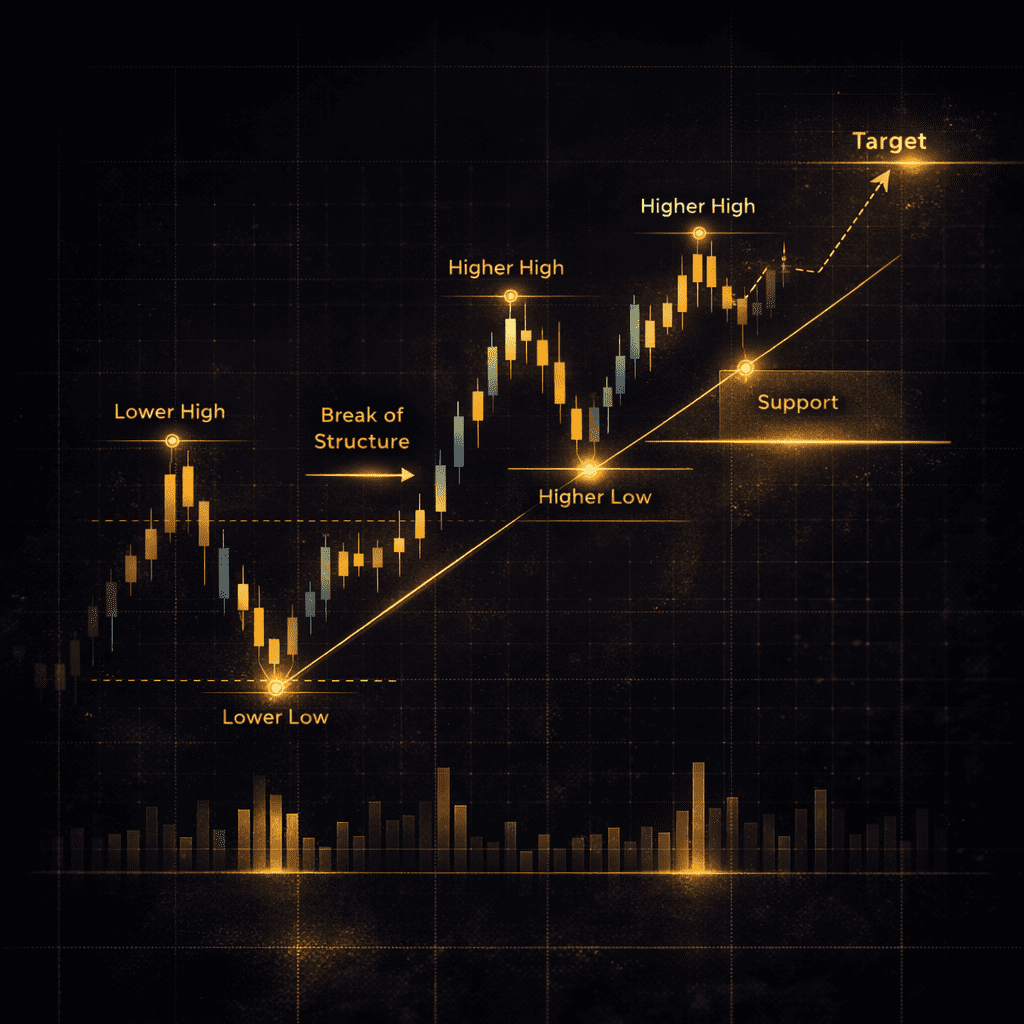
Market Drivers: Understanding Price Movement
Flow Intelligence — Article 17
Why Liquidity, Time, and Volume Must Be Read Together
Flow Intelligence — 17/6
Most traders begin by watching one thing: price.
But price is just the surface — the visible tip of a much deeper system.
The real fuel behind market movement is a three-part engine:
Liquidity, Time, and Volume.
On their own, each is helpful.
But together, they reveal where the real moves are likely to happen — and where false moves may trap you.
1. What Is Liquidity — and Why It’s Misunderstood
When traders hear “liquidity,” they often think:
> “High volume. Easy fills. Lots of activity.”
But that’s not quite right.
True liquidity refers to:
These zones act like magnets and fuel tanks:
Titan Insight:
The Matrix Guardian shows dynamic liquidity zones using volatility-adjusted layers — helping you visualise where price is being pulled and where it may stall.
2. Why Time of Day Matters More Than You Think
The same trade setup behaves differently:
Why? Because different market participants are active at different times.
| Session | Characteristics |
|———|—————-|
| Asia | Lower volume, range-bound, sets tone |
| London Open | Explosive, volatile, key direction |
| NY Open | High volume, trend continuation or reversal |
| Midday | Range-bound, choppy, low liquidity |
| Close | Position squaring, sharp reversals |
Institutions tend to execute in bursts during key sessions.
Algos change logic based on volatility regimes.
Retail chases trends late in the day.
What to Watch:
3. Volume: The Missing Confirmation
Many traders treat volume as an afterthought.
Some don’t even look at it.
But when volume confirms a move, the probability of success dramatically increases.
Volume tells us:
The key is not just high or low volume — but when and where it happens.
| Scenario | What It Means |
|———-|—————|
| Breakout + high volume | Strong conviction |
| Breakout + low volume | Likely fakeout |
| Rejection + volume spike | Exhaustion |
| Range + building volume | Accumulation |
A Practical Example
Imagine this setup:
To the untrained eye: Failed breakout.
But if you’d read the time, volume, and liquidity:
Reading Price With Clarity
When you combine Liquidity, Time, and Volume, you stop reacting emotionally and start reading the market like a map.
✅ You wait for intentional moves
✅ You avoid trap setups in low-volume zones
✅ You place stops and targets based on logic, not hope
Key Takeaways
1. Price is the result, not the cause — look deeper
2. Liquidity zones are magnetic — price goes where orders are
3. Time matters — the same setup behaves differently at different hours
4. Volume confirms or questions — never trade it in isolation
5. Context is king — all three factors together beat any single indicator
This article is part of the Flow Intelligence series from The Foundry.
