
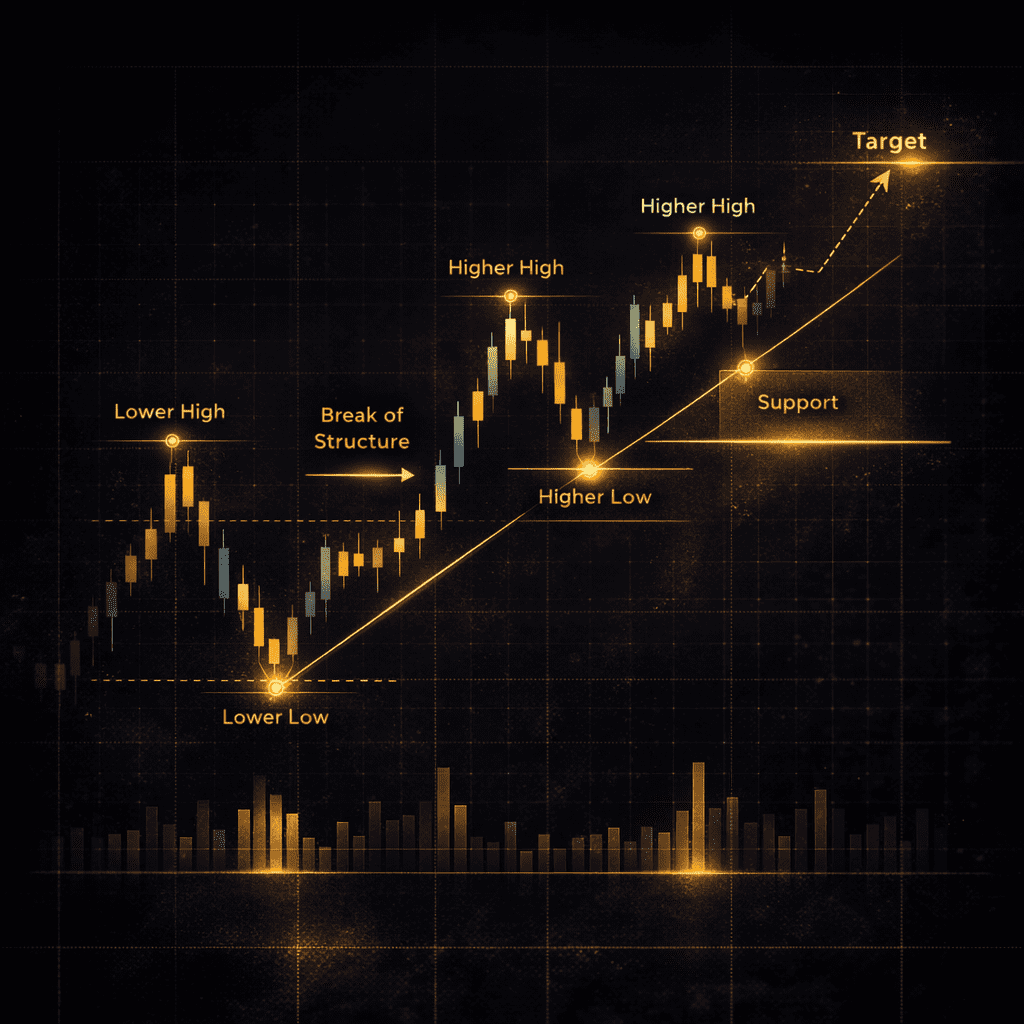
📊 Building Your Execution Playbook
📊 Building Your Execution Playbook
Execution Mastery Series — Article 6 of 6
—
🎯 From Random to Systematic
Most traders fail not because they can’t read charts, but because they can’t execute consistently. Every trade becomes a new decision. Should I use a market order? Where’s my stop? How much should I size? By the time you decide, the opportunity is gone.
An execution playbook eliminates decision fatigue.
It transforms trading from improvisation into performance art. You know exactly what to do because you’ve already decided—when you were calm, objective, and thinking clearly.
—
📋 The Anatomy of an Execution Playbook
Your playbook is a living document that answers every execution question before it arises. It covers:
Core Components
- Entry Protocols — How you get in
- Exit Protocols — How you get out
- Position Sizing Rules — How much you trade
- Risk Management — How you protect capital
- Market Condition Adjustments — How you adapt
—
🚪 Entry Protocols
Define by Setup Type
| Setup Category | Entry Method | Order Type | Timing |
|---|---|---|---|
| Breakout | 1-min candle close above level | Limit at breakout + $0.10 | 9:45-11:00 AM |
| Pullback | Touch of 20 EMA on 5-min | Limit at EMA touch | 10:00 AM-3:00 PM |
| Reversal | Confirmation candle close | Market on close | Anytime |
| Gap Fill | First 5-min high/low break | Stop entry | First 30 min |
Pre-Trade Checklist
Before ANY entry, confirm:
- [ ] Setup matches playbook definition
- [ ] Risk/reward ratio ≥ 1:2
- [ ] Position size within limits
- [ ] Market conditions favorable
- [ ] No conflicting signals
—
🚪 Exit Protocols
The Three Exit Types
1. Stop Loss (Risk Management)
- Initial stop: Technical level + buffer
- Trailing stop: ATR-based or percentage
- Time stop: Exit if no move in X periods
2. Profit Target (Reward Collection)
- Technical targets: Support/resistance levels
- Measured moves: Pattern-based projections
- Risk multiples: 2R, 3R, 5R levels
3. Scale-Out (Hybrid Approach)
- First third: 1.5R target
- Second third: 2.5R target
- Final third: Trail until stopped
—
📏 Position Sizing Rules
The Risk Formula
Position Size = (Account Risk % × Account Value) ÷ (Entry Price – Stop Loss)
Size Adjustments by Confidence
| Confidence Level | Account Risk % | Setup Requirements |
|---|---|---|
| High (A+) | 2.0% | Multiple timeframes align, clean setup |
| Medium (B) | 1.0% | Good setup, minor concerns |
| Low (C) | 0.5% | Setup present but not ideal |
| Speculative | 0.25% | High risk/reward, low probability |
—
⚠️ Risk Management Rules
Daily Limits
- Max loss per day: 3% of account
- Max trades per day: 5 (prevents overtrading)
- Max open positions: 3 (maintains focus)
Weekly Limits
- Max loss per week: 6% of account
- Minimum win rate: 40%
- Minimum R-multiple: 1.5 average
Emergency Rules
- Stop trading after 3 consecutive losses
- Reduce size after 5% drawdown
- Full stop after 10% drawdown
—
🌦️ Market Condition Adjustments
Bull Market Rules
- Focus: Long positions, breakout plays
- Size: Standard to increased
- Holds: Longer, let winners run
- Stops: Wider, give more room
Bear Market Rules
- Focus: Short positions, reversal plays
- Size: Reduced, quick in/out
- Holds: Shorter, take profits fast
- Stops: Tighter, respect reversals
Choppy Market Rules
- Focus: Range-bound trades only
- Size: Reduced (0.5% max)
- Holds: Very short, quick profits
- Stops: Ultra-tight, get out quick
—
🧠 Learn With Titan: Playbook Templates
Basic Playbook Structure
- Market Analysis — Current conditions
- Setup Identification — What you’re looking for
- Entry Protocol — How you get in
- Exit Protocol — How you get out
- Risk Rules — Position sizing and stops
- Review Process — How you improve
—
⚠️ Common Playbook Mistakes
1. Too Complex
If you need a flowchart to follow it, it’s too complicated.
2. Too Rigid
Markets change—your playbook should evolve.
3. Not Tested
Backtest your rules before risking capital.
4. Not Followed
A playbook you ignore is worthless.
—
🎯 The Professional Framework
Build your playbook in phases:
- Document current process — What you actually do
- Identify inconsistencies — Where you deviate
- Create rules — Specific, testable guidelines
- Test and refine — Paper trade first
- Implement gradually — One rule at a time
- Review monthly — Update based on results
—
💡 The Titan Edge
Amateurs trade randomly. Professionals follow systems. Your playbook is your competitive advantage—it turns market chaos into executable opportunity.
—
🛠️ Practice Exercise
Write your first playbook page. Pick one setup you trade frequently. Document exactly how you should enter, exit, and size it. Test it on 10 paper trades before going live.
—
Back to Execution Mastery series
