
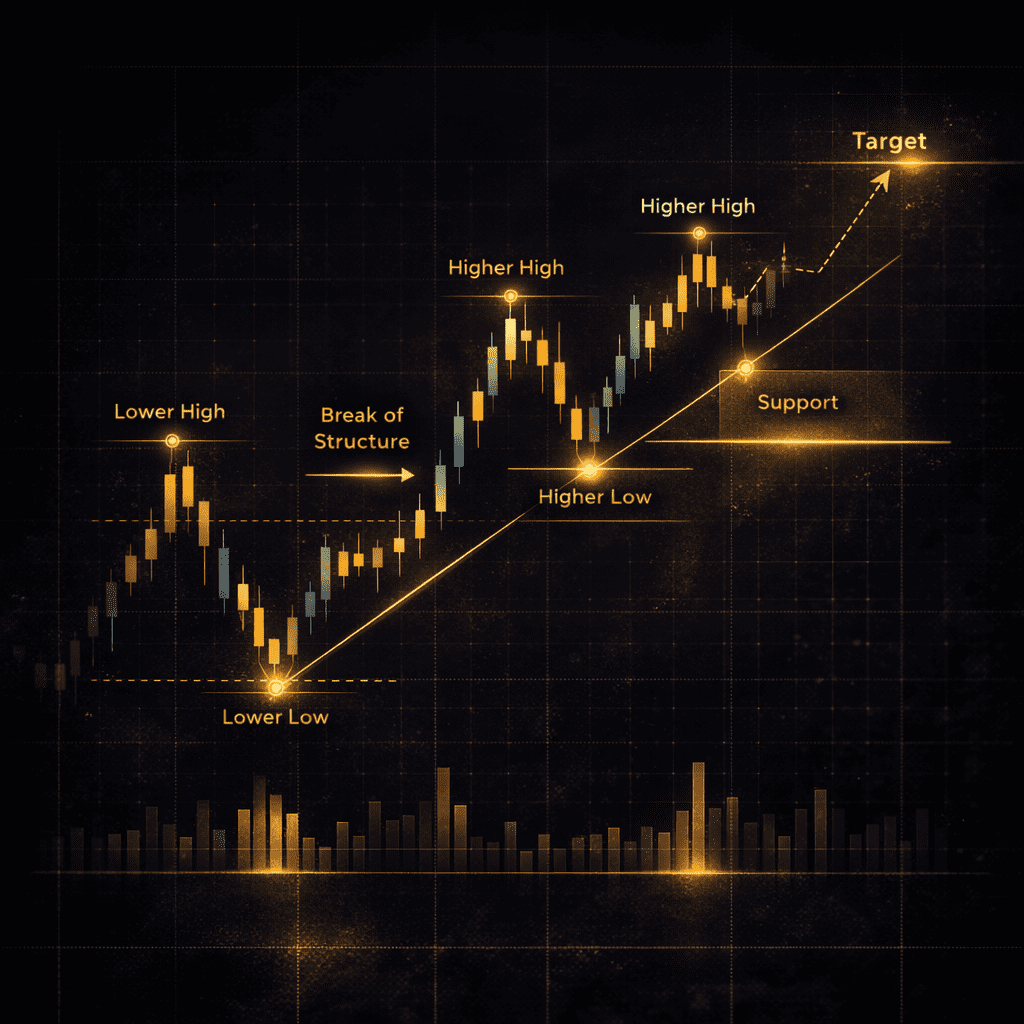
📊 Automated vs. Manual Execution
📊 Automated vs. Manual Execution
Execution Mastery Series — Article 5 of 6
—
🤖 The Machine vs. The Human
Should your finger press the button, or should code? This question divides the trading world. The truth: both approaches have their place, and the best traders often blend them.
Automation isn’t about replacing judgment—it’s about removing friction.
—
🎛️ Understanding the Spectrum
Fully Manual Execution
You: Analyze, decide, click.
Advantages:
- Complete control over every decision
- Adaptability to unusual market conditions
- Learning through active engagement
- No technical dependencies
Disadvantages:
- Emotional interference
- Speed limitations
- Inconsistency under pressure
- Fatigue over long sessions
Fully Automated Execution
The System: Analyze, decide, execute.
Advantages:
- No emotions
- Millisecond execution
- 24/7 operation
- Perfect consistency
- Backtestable rules
Disadvantages:
- “Black swan” vulnerability
- Technical failures
- Over-optimization risk
- No intuition for unusual situations
—
🎯 The Hybrid Approach: Assisted Execution
What to Automate
| Task | Automate? | Why |
|---|---|---|
| Stop Losses | ✅ Yes | Remove emotion, ensure execution |
| Profit Targets | ✅ Yes | Systematic profit-taking |
| Position Sizing | ✅ Yes | Consistent risk management |
| Entry Signals | ⚠️ Sometimes | Depends on strategy complexity |
| Market Analysis | ❌ No | Requires human judgment |
| Risk Assessment | ⚠️ Partial | Automate calculations, human oversight |
—
🧠 Learn With Titan: Automation Decision Matrix
Your Trading Style Assessment
| Factor | Manual Better | Automated Better |
|---|---|---|
| Decision Speed Required | > 1 second | < 1 second |
| Strategy Complexity | Discretionary, pattern-based | Rule-based, mathematical |
| Emotional Control | High discipline | Struggle with emotions |
| Technical Skills | Prefer simple tools | Comfortable with technology |
| Available Time | Can monitor markets | Limited screen time |
—
🛠️ Building Your Execution System
Level 1: Basic Automation
- Conditional orders — Stop-loss, take-profit
- Alerts — Price levels, technical signals
- Position sizing — Risk-based calculations
Level 2: Semi-Automation
- One-cancels-other (OCO) orders
- Trailing stops
- Scaled orders
- Time-based execution
Level 3: Advanced Automation
- Strategy scripts
- API integration
- Machine learning signals
- Portfolio management
—
⚠️ Automation Traps
1. Over-Automation
Automating everything removes your ability to adapt to changing conditions.
2. Poor Testing
Inadequate backtesting leads to live trading disasters.
3. Technical Failures
Internet outages, platform crashes, API errors—have backup plans.
4. Market Regime Changes
What worked in trending markets fails in choppy conditions.
—
🎯 The Professional Framework
Start with manual execution, then gradually automate:
- Manual phase: Develop and refine your strategy
- Semi-manual: Add basic automation (stops, alerts)
- Hybrid: Automate entries/exits, manual oversight
- Full automation: Only after extensive testing
—
💡 The Titan Edge
The best traders use automation to remove friction, not thinking. They automate the mechanical parts—position sizing, stop losses, routine exits—while keeping human judgment for the critical decisions that require intuition and adaptation.
—
🛠️ Practice Exercise
Review your last 20 trades. Which decisions could you have automated? Which required human judgment? Build a hybrid system that combines the best of both worlds.
—
Back to Execution Mastery series
