
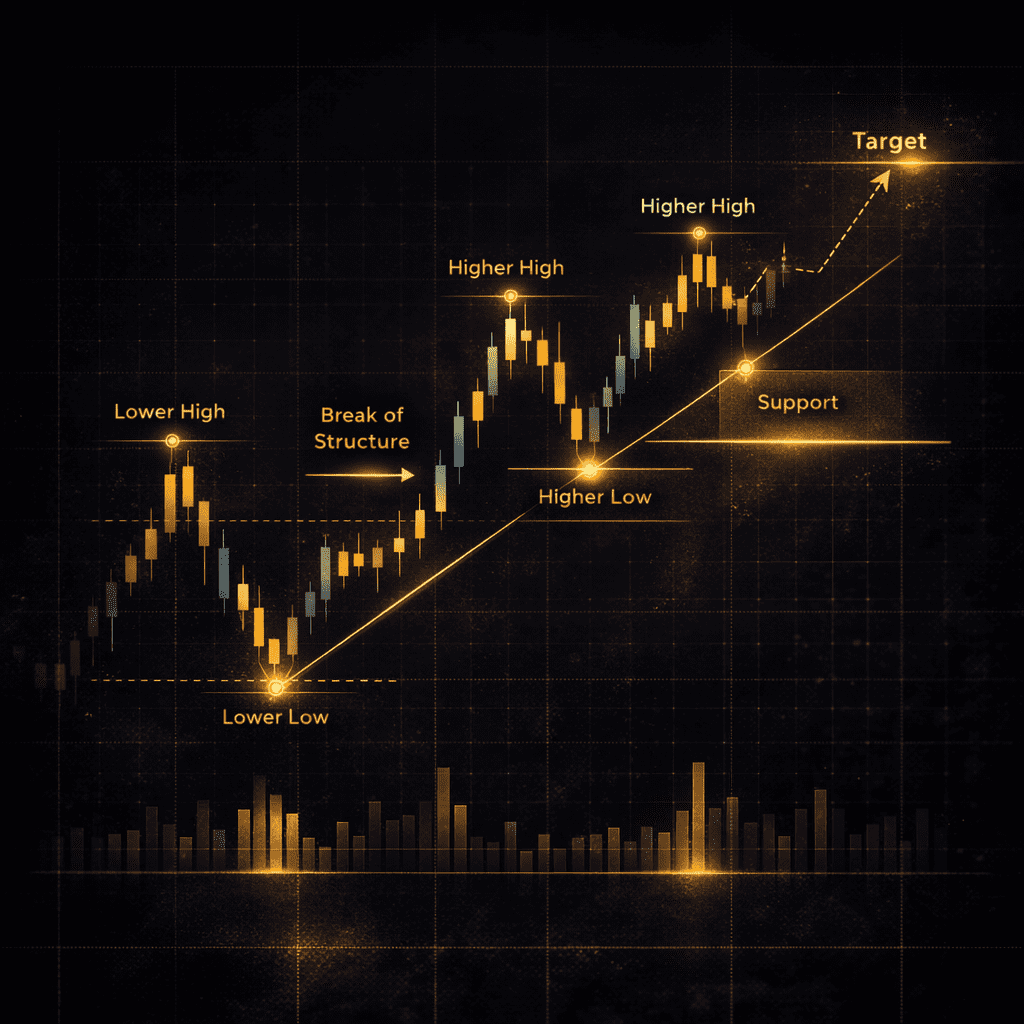
📊 High-Frequency vs. Low-Frequency Trading
📊 High-Frequency vs. Low-Frequency Trading
Execution Mastery Series — Article 4 of 6
—
🎯 Speed vs. Conviction
How often should you trade? This isn’t a preference—it’s a strategic decision that shapes your entire operation. Your frequency determines your tools, your costs, your psychology, and ultimately, your profitability.
High-frequency and low-frequency trading aren’t just different speeds. They’re different dimensions of the market.
—
⚡ High-Frequency Trading (HFT)
The Landscape
HFT operates in microseconds. Positions are held for seconds, sometimes milliseconds. Edge comes from speed, not prediction.
HFT Variants:
- Market Making — Providing liquidity, capturing spread
- Arbitrage — Exploiting price discrepancies across venues
- Momentum Ignition — Detecting and front-running order flow
- Statistical Arbitrage — Mean reversion at micro-timeframes
Requirements for HFT
| Requirement | Detail |
|---|---|
| Infrastructure | Co-located servers, fiber connections |
| Capital | $10M+ for meaningful returns |
| Technology | Custom software, FPGA hardware |
| Data | Level 3 market data, microsecond timestamps |
| Talent | PhD-level quant teams |
The Retail Reality
You cannot compete with institutional HFT. Their latency advantage is measured in microseconds; your retail connection is measured in milliseconds. That’s a 1000x disadvantage.
But you CAN adopt high-frequency principles at accessible timeframes.
—
🐢 Low-Frequency Trading
The Philosophy
Low-frequency trading operates on minutes, hours, days. Edge comes from analysis, not speed. Conviction beats velocity.
Characteristics:
- Fundamental analysis — Economic data, earnings, macro trends
- Technical patterns — Support/resistance, trend analysis
- Position sizing — Larger positions, longer holds
- Risk management — Wider stops, bigger targets
Advantages for Retail Traders
- Time to think — No split-second decisions
- Lower costs — Fewer trades = lower commissions
- Less stress — No staring at screens all day
- Better analysis — Time for thorough research
—
🧠 Learn With Titan: Frequency Decision Matrix
| Factor | High-Frequency | Low-Frequency | Retail Advantage |
|---|---|---|---|
| Time Horizon | Seconds to minutes | Hours to days | Low-Frequency |
| Edge Source | Speed, technology | Analysis, patience | Low-Frequency |
| Capital Required | $1M+ minimum | $1K+ possible | Low-Frequency |
| Technology Needs | Professional infrastructure | Basic platform | Low-Frequency |
| Competition | Institutional giants | Other retail traders | Low-Frequency |
—
🎯 Finding Your Optimal Frequency
The Three Retail Frequencies
1. Intraday (Medium Frequency)
- Timeframe: 5-minute to 60-minute charts
- Holds: Minutes to hours
- Tools: Technical analysis, momentum indicators
- Edge: Pattern recognition, discipline
2. Swing Trading (Low Frequency)
- Timeframe: Daily charts
- Holds: Days to weeks
- Tools: Support/resistance, trend analysis
- Edge: Patience, risk management
3. Position Trading (Very Low Frequency)
- Timeframe: Weekly charts
- Holds: Weeks to months
- Tools: Fundamental analysis, macro trends
- Edge: Research, conviction
—
⚠️ Frequency Traps
1. Overtrading
Trading too frequently without edge = death by commissions and slippage.
2. Undertrading
Trading so infrequently that you never develop skills or capture opportunities.
3. Wrong Frequency
Using day-trading frequency with swing-trading analysis = mismatch disaster.
—
🛠️ High-Frequency Principles for Retail Traders
Even if you can’t compete at microsecond levels, you can adopt HFT discipline:
- Automate what you can — Set alerts, conditional orders
- Optimize execution — Use limit orders, avoid market orders
- Reduce latency — Fast internet, reliable broker
- Measure everything — Track fill times, slippage, success rates
—
🎯 The Professional Framework
Choose your frequency based on:
- Available time — Can you monitor markets all day?
- Personality — Do you prefer fast decisions or careful analysis?
- Capital size — Larger accounts can afford longer holds
- Skill level — Higher frequency requires faster decision-making
- Technology — Do you have professional tools?
—
💡 The Titan Edge
The market rewards specialization. Pick your frequency, master it, and ignore the noise of other timeframes. Consistency beats constant switching.
—
🛠️ Practice Exercise
Track your trades for one month by frequency. Which timeframe gives you the best results? Double down on what works, eliminate what doesn’t.
—
Back to Execution Mastery series
